
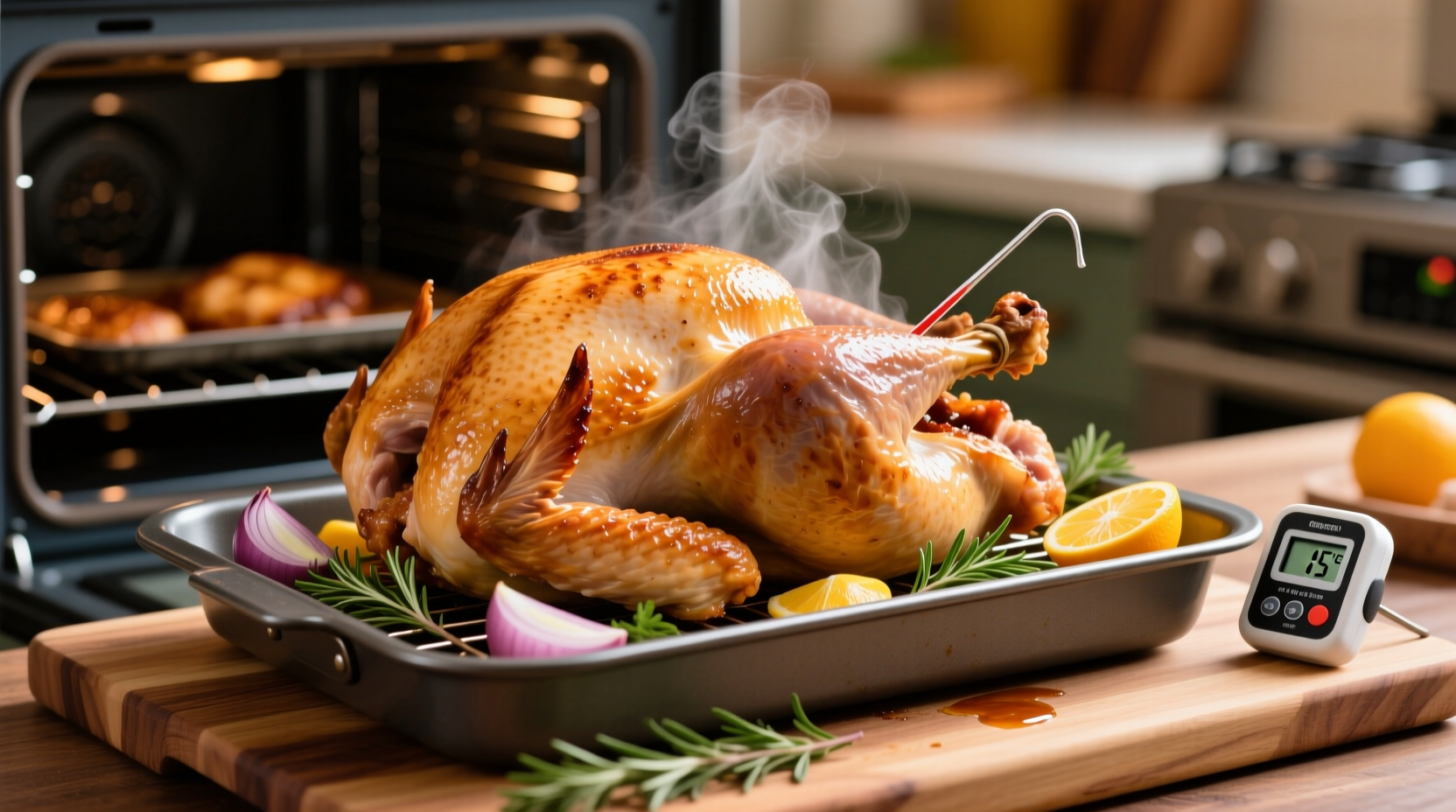
A 6 lb turkey breast requires 2 to 2.5 hours at 325°F to reach the safe internal temperature of 165°F. Always verify with a meat thermometer inserted into the thickest part, avoiding bone contact.
Perfectly Cooked Turkey Breast: Your Complete Timing Guide
Cooking a turkey breast properly balances food safety with optimal texture. Many home cooks struggle with dry, overcooked turkey or dangerously undercooked poultry. This guide delivers precise timing based on USDA food safety standards and professional chef techniques to ensure your 6-pound turkey breast turns out juicy and perfectly cooked every time.Why Proper Cooking Time Matters
Undercooked turkey risks salmonella and other foodborne illnesses, while overcooking creates dry, tough meat. The USDA Food Safety and Inspection Service confirms that poultry must reach 165°F internally to eliminate harmful bacteria. For a 6 lb turkey breast, timing varies based on oven temperature, cooking method, and whether the turkey is stuffed or bone-in.| Oven Temperature | Time per Pound | Total Time for 6 lb | Best For |
|---|---|---|---|
| 325°F (standard) | 20-25 minutes | 2-2.5 hours | Most reliable results |
| 350°F (faster) | 18-22 minutes | 1.8-2.2 hours | Time-constrained cooking |
| 300°F (slow roast) | 25-30 minutes | 2.5-3 hours | Maximum juiciness |
Step-by-Step Cooking Process
Preparation Essentials
Bring your turkey breast to room temperature for 30-60 minutes before cooking. Pat thoroughly dry with paper towels—this critical step ensures proper browning. Season generously, then place on a rack in a roasting pan with 1 cup of liquid (broth or water) in the bottom to prevent drying.Monitoring Cooking Progress
Insert an oven-safe meat thermometer into the thickest part, avoiding bone contact. Begin checking temperature after 1.5 hours of cooking. The temperature will rise more quickly during the final 30 minutes—this is when most overcooking occurs. The USDA's Food Safety Education resources confirm that turkey continues cooking during resting, so remove it at 160°F to reach the safe 165°F target.The Critical Resting Period
After removing from the oven, tent loosely with foil and let rest for 15-20 minutes. This allows juices to redistribute throughout the meat. Cutting too soon releases precious moisture, resulting in dry turkey. Professional chefs at the Culinary Institute of America emphasize that resting time is non-negotiable for juicy results.Common Mistakes to Avoid
- Guessing doneness—Always use a thermometer; visual cues alone are unreliable
- Opening the oven too frequently—Each peek drops temperature by 25-30°F, extending cooking time
- Skipping the resting period—Causes up to 20% moisture loss when carving
- Incorrect thermometer placement—Ensure it's in the thickest part, away from bone
Special Considerations
Bone-in turkey breasts require 15-20% more cooking time than boneless. If using a convection oven, reduce temperature by 25°F and check 20 minutes earlier. Brined turkey cooks slightly faster—begin checking at 1.75 hours. The FoodSafety.gov guidelines note that stuffing adds significant cooking time and creates food safety risks unless cooked separately.When Timing Varies: Context Boundaries
Several factors affect cooking time beyond weight:- Oven calibration accuracy (many home ovens vary by ±25°F)
- Starting temperature of turkey (chilled vs room temperature)
- Pan material (dark metal conducts heat faster than glass)
- Convection vs conventional oven settings




 浙公网安备
33010002000092号
浙公网安备
33010002000092号 浙B2-20120091-4