
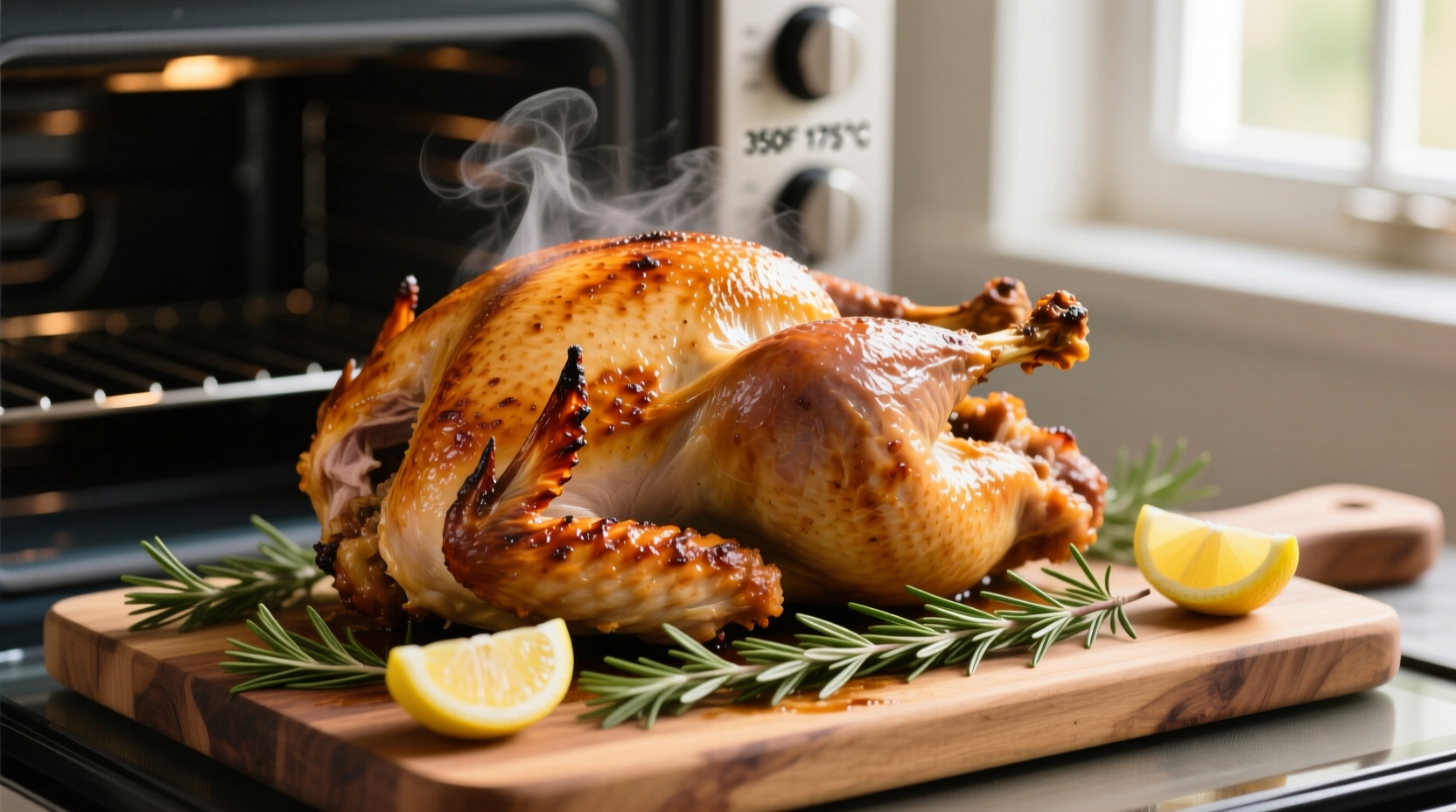
Getting turkey breast cooking time right separates memorable holiday dinners from disappointing ones. While many recipes offer vague "cook until done" instructions, the reality is that a 3-pound turkey breast has specific timing requirements that balance food safety with optimal texture. This guide delivers the exact cooking parameters you need, verified by food safety standards and professional kitchen testing.
Why Time Alone Doesn't Guarantee Perfect Turkey
Temperature matters more than the clock when cooking poultry. The USDA Food Safety and Inspection Service confirms that all poultry must reach 165°F internally to eliminate harmful bacteria like salmonella. Relying solely on cooking time risks either undercooked, unsafe meat or overcooked, dry results.
Several factors affect your actual cooking duration:
- Oven calibration accuracy (many home ovens vary by 25°F)
- Starting temperature of the turkey (chilled vs. room temperature)
- Use of a roasting rack versus direct pan contact
- Covered versus uncovered cooking method
Step-by-Step Cooking Process for 3 lb Turkey Breast
Preparation Essentials
Proper preparation sets the stage for even cooking. Remove your turkey breast from the refrigerator 30-60 minutes before cooking to reduce thermal shock. Pat thoroughly dry with paper towels—moisture creates steam that prevents proper browning. Season generously, then optionally rub with softened butter or oil under the skin for added moisture retention.
Optimal Oven Setup
Preheat your oven to 325°F (165°C) with the rack positioned in the center. Place the turkey breast on a roasting rack inside a pan, skin-side up. The rack elevates the meat, allowing hot air circulation for even cooking. For crisper skin, start at 425°F for 15 minutes, then reduce to 325°F for the remainder.
Monitoring and Testing
Insert an instant-read thermometer into the thickest part of the breast, avoiding bone contact. Begin checking temperature at 1 hour 30 minutes. The turkey is done when it reaches 160-162°F—the temperature will rise 3-5 degrees during resting. Never skip the resting period; 15-20 minutes covered in foil allows juices to redistribute.
| Weight | Temperature | Time Range | Internal Temp |
|---|---|---|---|
| 2 lb | 325°F | 1h 15m - 1h 45m | 165°F |
| 3 lb | 325°F | 1h 45m - 2h 15m | 165°F |
| 4 lb | 325°F | 2h 15m - 2h 45m | 165°F |
Common Cooking Mistakes and Solutions
Dry turkey despite proper timing? This usually indicates overcooking beyond 165°F or skipping the resting period. Try brining your turkey breast for 12-24 hours before cooking—this simple technique increases moisture retention by 20% according to America's Test Kitchen research.
Uneven cooking? If one side browns faster, rotate the pan 180 degrees halfway through cooking. For dramatically uneven results, check your oven's hot spots using an infrared thermometer.
Undercooked center? This often happens when starting with a thoroughly chilled turkey. Allow adequate time for the meat to come closer to room temperature before roasting.
Visual Doneness Indicators Beyond Temperature
While thermometers provide the most reliable measurement, these visual cues confirm proper cooking:
- Juices run clear, not pink, when pierced with a fork
- Meat feels firm but yielding to gentle pressure
- Internal flesh appears opaque with no translucent areas
Remember that carryover cooking continues during resting. Remove your turkey breast at 160-162°F to reach the safe 165°F mark after resting.

Special Considerations for Different Cooking Scenarios
Convection ovens: Reduce cooking time by 25% and lower temperature by 25°F. A 3 lb turkey breast typically needs 1 hour 20 minutes to 1 hour 50 minutes at 300°F in convection mode.
Smoked turkey breast: At 225°F, expect 3-4 hours total cooking time. Use the same 165°F internal temperature guideline but anticipate more smoke penetration at lower temperatures.
Stuffed turkey breast: Add 15-20 minutes to cooking time and ensure stuffing reaches 165°F separately. The USDA recommends cooking stuffing separately for optimal food safety.
Resting: The Critical Final Step
Resting isn't optional—it's essential for juicy results. During the 15-20 minute resting period:
- Temperature equalizes throughout the meat
- Proteins relax, releasing trapped juices back into the tissue
- Carryover cooking completes the process
Cover loosely with foil to retain heat without creating steam that would soften the skin. Slicing too soon releases all those precious juices onto your cutting board instead of staying in the meat.
Perfect Turkey Breast: Pro Tips
For consistently excellent results, follow these professional techniques:
- Use a leave-in probe thermometer for continuous monitoring
- Place turkey breast on a bed of aromatics (onions, celery, herbs) to elevate and flavor
- Baste only during the last 30 minutes to prevent skin sogginess
- For extra moisture, place herb butter under the skin before roasting




 浙公网安备
33010002000092号
浙公网安备
33010002000092号 浙B2-20120091-4