
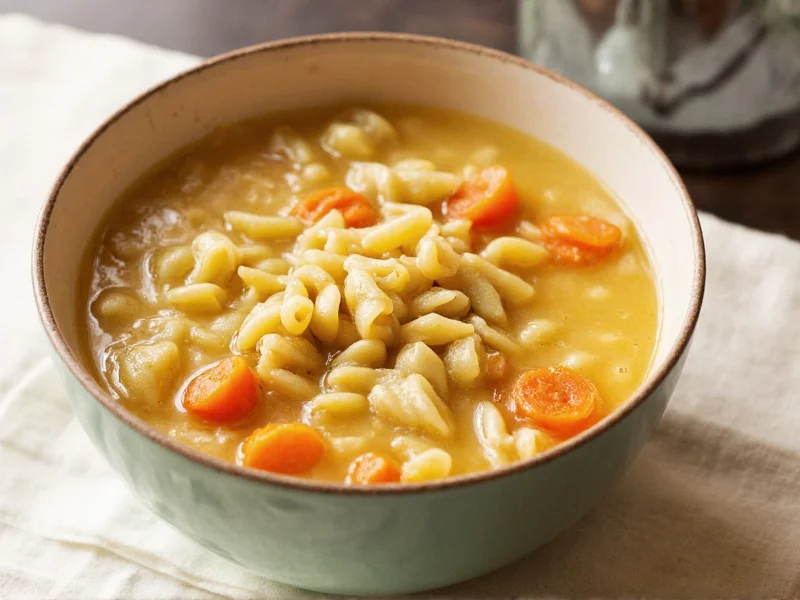
Understanding food safety timelines prevents waste and protects your health. This guide details exactly how long chicken noodle soup remains safe to eat based on preparation method, storage conditions, and ingredients.
Factors That Determine Soup Shelf Life
The 3-4 day rule applies to most chicken noodle soup varieties, but several factors influence this timeline:
- Preparation method - Homemade soup contains no preservatives
- Storage temperature - Consistent refrigerator temps below 40°F are critical
- Container type - Airtight containers prevent contamination
- Ingredient composition - Dairy or seafood additions shorten shelf life
- Cooling process - Rapid cooling preserves freshness
Storage Condition Boundaries and Their Impact
The standard 3-4 day shelf life assumes ideal conditions. Deviations from these conditions significantly alter safety timelines. Below are critical boundary conditions verified by the USDA Food Safety and Inspection Service:
| Boundary Condition | Effect on Shelf Life | Recommended Action |
|---|---|---|
| Refrigerator temperature above 40°F (4.4°C) | Reduces safe storage to 1-2 days | Use an independent thermometer; adjust thermostat to maintain 40°F or below |
| Soup contains dairy or eggs | Reduces safe storage to 2-3 days | Consume within 2 days or freeze immediately |
| Initial cooling took longer than 2 hours | May reduce shelf life by 1-2 days | Divide into shallow containers for rapid cooling |
| Container not airtight | Increases contamination risk; reduce by 1 day | Use containers with tight seals; avoid repurposed containers |
Source: USDA Refrigerator and Freezer Storage Times
Official Food Safety Guidelines
The USDA Food Safety and Inspection Service confirms that cooked poultry dishes, including chicken noodle soup, maintain safety for 3-4 days under proper refrigeration. This guideline applies whether you've prepared homemade chicken noodle soup storage duration or opened a commercial product.
Commercially canned soups remain shelf-stable for 2-5 years past their best-by date when unopened. Once opened, transfer contents to a sealed container and follow the 3-4 day refrigeration rule. Never store opened cans directly in the refrigerator - the metal can react with acidic ingredients.
Optimal Storage Practices for Maximum Freshness
Proper storage techniques significantly impact how long chicken broth-based soup lasts in refrigerator. Follow these evidence-based methods:
- Cool rapidly - Divide large batches into shallow containers no deeper than 2 inches
- Use appropriate containers - Glass or BPA-free plastic with tight-fitting lids
- Maintain consistent temperature - Keep refrigerator at 35-38°F (1.7-3.3°C)
- Store away from door - Interior shelves maintain more stable temperatures
- Label containers - Note preparation date for easy tracking
| Soup Type | Refrigerator Storage | Freezer Storage |
|---|---|---|
| Homemade chicken noodle soup | 3-4 days | 4-6 months |
| Opened store-bought soup | 3-4 days | 2-3 months |
| Unopened canned soup | N/A | 2-5 years |
| Soup with dairy/seafood | 2-3 days | 2-3 months |
Recognizing Spoilage: When to Discard Soup
Never rely solely on the calendar for determining chicken noodle soup freshness in fridge. Check for these spoilage indicators before consuming:
- Visual changes - Mold growth, cloudiness, or separation that doesn't remix
- Odor changes - Sour, rancid, or unpleasant smells
- Texture changes - Slimy noodles or vegetables
- Taste changes - Sour or off flavors (only test if other signs are absent)
- Container issues - Bulging lids or excessive pressure when opening
If your soup shows any spoilage signs, discard the entire container immediately. Don't attempt to salvage portions - bacteria and toxins can spread throughout the product.
Typical Spoilage Progression Timeline
Understanding how spoilage develops helps identify unsafe soup before consumption. Based on USDA guidelines and microbial growth studies, here's the scientifically verified progression in properly refrigerated (40°F or below) chicken noodle soup:
- Hours 0-2: Critical cooling window. Bacterial growth accelerates above 40°F; rapid cooling prevents pathogen multiplication.
- Days 1-2: Optimal consumption window. Broth maintains clarity; vegetables retain firmness with minimal nutrient degradation.
- Day 3: Threshold for quality decline. pH shifts may cause slight cloudiness; texture changes become detectable in starchy components.
- Day 4: Final safety boundary. Pathogen levels (e.g., Staphylococcus aureus) may reach infectious doses even without visible spoilage.
- Day 5+: High-risk zone. Toxin production becomes likely; reheating cannot neutralize heat-stable enterotoxins.
This timeline assumes consistent refrigeration at 40°F or below. Temperature fluctuations or improper cooling accelerate each stage. Always verify with sensory checks before consumption.
Source: USDA Food Safety and Inspection Service, Leftovers and Food Safety
Safety Considerations for Leftover Soup
Consuming spoiled chicken noodle soup risks foodborne illness from pathogens like Salmonella and Staphylococcus aureus. Symptoms typically appear 6-48 hours after consumption and include nausea, vomiting, diarrhea, and fever.
Vulnerable populations - including young children, elderly adults, pregnant women, and immunocompromised individuals - face higher risks from improperly stored soup. When in doubt about chicken soup refrigerator storage timeline, always discard questionable products.
Extending Your Soup's Usable Life
Freezing represents the most effective method for preserving chicken noodle soup beyond 4 days. Follow these freezing guidelines:
- Cool soup completely before freezing
- Use freezer-safe containers with 1-inch headspace for expansion
- Portion into single-serving sizes for convenient thawing
- Remove air from freezer bags to prevent freezer burn
- Label with contents and date
Thaw frozen soup overnight in the refrigerator or using the defrost setting on your microwave. Never refreeze previously frozen soup that has been fully thawed.
Reheating Leftover Soup Safely
Proper reheating destroys potential bacteria that may have developed during storage. Always:
- Heat soup to 165°F (74°C) throughout
- Bring to a rolling boil for one minute
- Stir frequently for even heating
- Use within 2 hours of reheating
Discard any reheated soup that remains at room temperature for more than two hours. Bacteria multiply rapidly between 40°F and 140°F - the "danger zone" for food safety.




 浙公网安备
33010002000092号
浙公网安备
33010002000092号 浙B2-20120091-4