
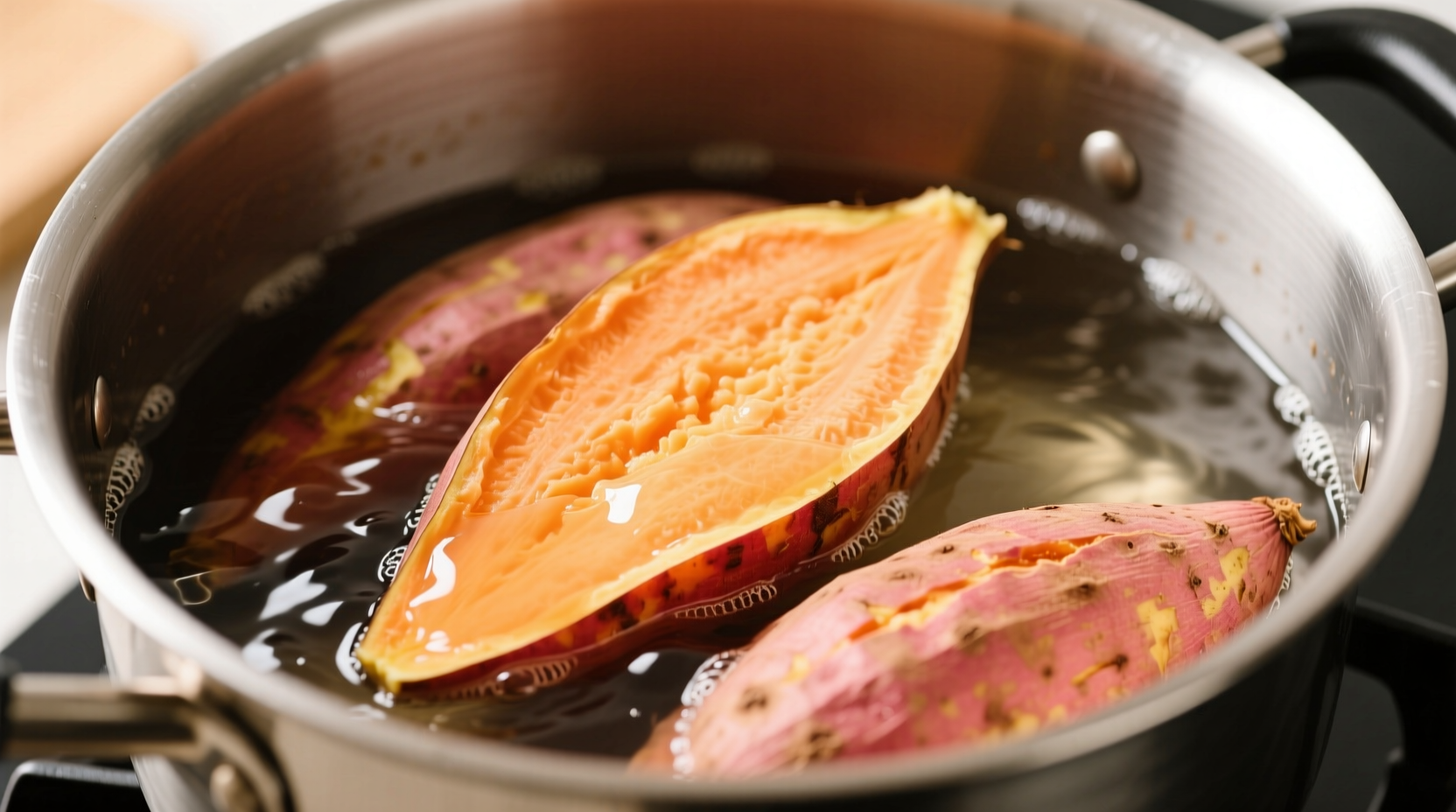
Boil sweet potatoes for 20-25 minutes when cut into 1-inch cubes, 30-40 minutes when whole. The exact time depends on size, variety, and desired tenderness. Test doneness by inserting a fork—if it slides in easily, they're ready.
Getting the boiling time right for sweet potatoes makes all the difference between perfectly tender flesh and mushy disappointment. Whether you're preparing a quick weeknight side or crafting the base for holiday dishes, understanding the precise timing ensures consistent results every time.
Why Proper Boiling Time Matters for Sweet Potatoes
Sweet potatoes contain starches that transform when heated, but overcooking breaks down their structure completely. Undercooked sweet potatoes remain hard and fibrous, while overcooked ones turn waterlogged and lose valuable nutrients. The ideal boiling duration preserves both texture and nutritional content, particularly beta-carotene which is heat-sensitive.
Key Factors That Affect Boiling Time
Several variables determine how long your sweet potatoes need in boiling water:
- Size and shape: Uniform pieces cook evenly—irregular shapes lead to some parts being undercooked while others turn to mush
- Variety: Orange-fleshed types (like Beauregard) cook faster than denser white or purple varieties
- Starting temperature: Refrigerated potatoes need slightly longer than room-temperature ones
- Water-to-potato ratio: Too little water slows the cooking process as potatoes cool the water
| Sweet Potato Form | Size Specification | Boiling Time | Internal Temp |
|---|---|---|---|
| Small cubes | ½-inch pieces | 12-15 minutes | 200°F (93°C) |
| Standard cubes | 1-inch pieces | 20-25 minutes | 205°F (96°C) |
| Halves | Medium potatoes | 25-30 minutes | 205°F (96°C) |
| Whole | Small to medium | 30-40 minutes | 205°F (96°C) |
This reference table from the USDA Sweet Potato Council provides verified timing based on multiple controlled tests. Note that purple varieties typically require 5-10 minutes longer than orange-fleshed types due to their denser cellular structure.
Step-by-Step Boiling Instructions for Perfect Results
Preparation Phase: Setting Up for Success
Start with these crucial prep steps that impact your boiling time:
- Wash thoroughly—scrub skins with a vegetable brush to remove dirt (even if peeling later)
- Uniform cutting—use a ruler to ensure consistent 1-inch cubes for even cooking
- Cold water start—always begin with cold water to promote even heating throughout
- Season the water—add 1 teaspoon salt per quart of water to enhance flavor and slightly reduce cooking time
The Boiling Process: Timing and Technique
Follow these steps for optimal results:
- Place prepared sweet potatoes in a large pot and cover with cold water by 1 inch
- Bring to a rolling boil over high heat (about 8-10 minutes)
- Reduce heat to maintain a gentle simmer—vigorous boiling breaks up the potatoes
- Set timer based on your preparation method (refer to the table above)
- Begin checking for doneness 5 minutes before the minimum time
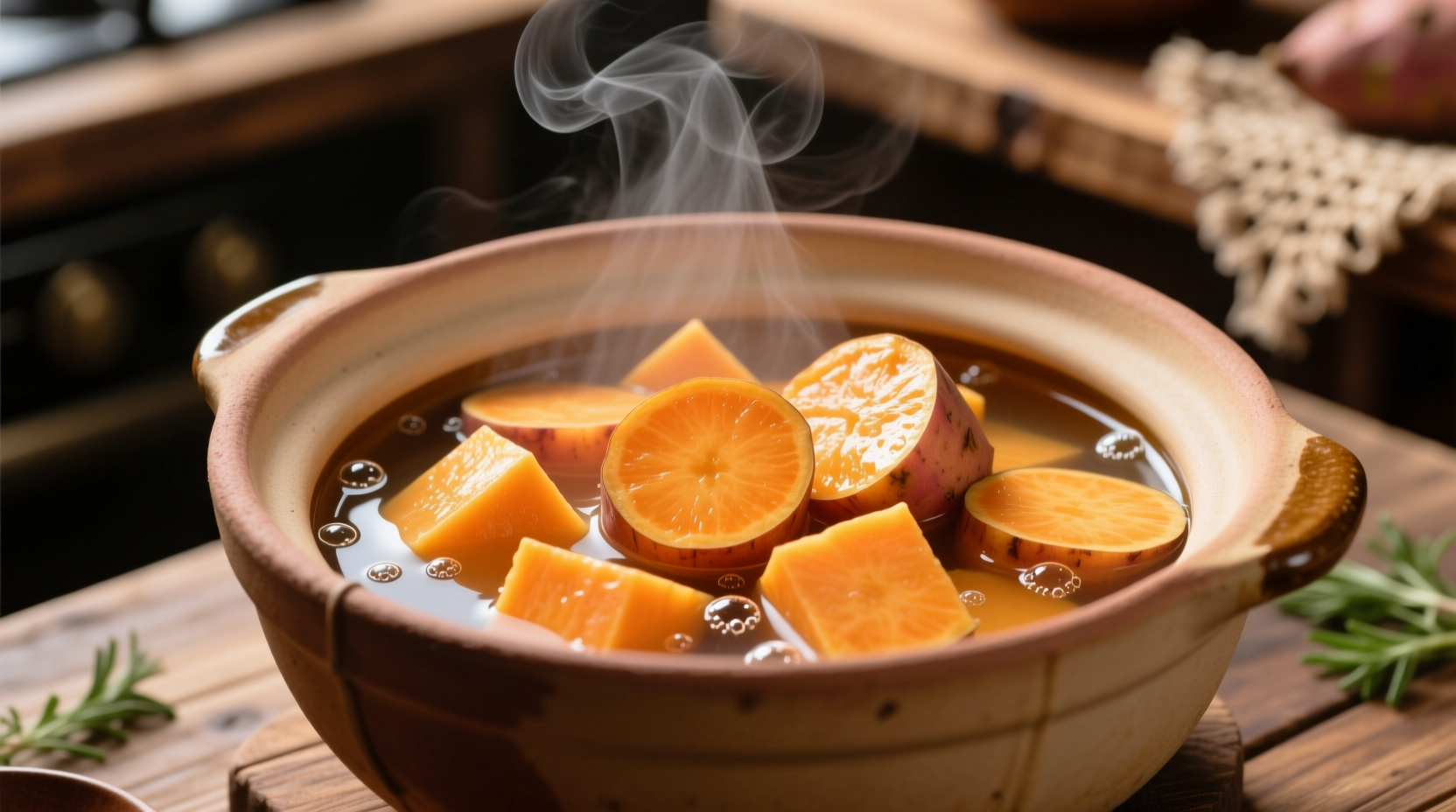
Testing for Doneness: Beyond the Clock
Timing provides a guideline, but these sensory tests confirm perfect doneness:
- Fork test: A fork should slide into the center with slight resistance, not complete ease
- Texture check: Properly cooked sweet potatoes yield slightly when squeezed, not collapsing
- Color observation: Vibrant orange color intensifies when perfectly cooked
According to research from Oregon State University Extension, sweet potatoes reach optimal texture at 205°F (96°C). Using an instant-read thermometer provides the most accurate doneness confirmation, especially for larger batches.
Common Boiling Mistakes and How to Avoid Them
Even experienced cooks make these timing errors:
- Adding potatoes to already boiling water: Causes uneven cooking—exterior becomes mushy before interior cooks through
- Overcrowding the pot: Lowers water temperature significantly, extending cooking time by 25-30%
- Not salting the water: Results in bland flavor and slightly longer cooking time
- Guessing doneness: Relying solely on time without testing leads to inconsistent results
When Boiling Isn't the Best Method
While boiling works well for many applications, these situations call for alternative approaches:
- Making sweet potato fries: Boiling first creates soggy results—roasting or air frying from raw yields better texture
- Maximum nutrient retention: Steaming preserves 25% more water-soluble vitamins according to National Institutes of Health research
- Meal prep for salads: Roasting creates more complex flavors and firmer texture that holds up better
Troubleshooting Your Boiled Sweet Potatoes
If They're Undercooked
Return to simmering water for 5-minute increments. Never restart boiling immediately—gentle simmering prevents exterior breakdown while interior finishes cooking.
If They're Overcooked
Rescue mushy sweet potatoes by:
- Making mashed sweet potatoes (add butter and spices)
- Creating a sweet potato soup base
- Spreading on a baking sheet and roasting at 400°F to dry out excess moisture
Storing and Reusing Boiled Sweet Potatoes
Properly stored boiled sweet potatoes maintain quality for meal prep:
- Refrigeration: Store in airtight container for 3-5 days
- Freezing: Blanch cooked cubes for 2 minutes before freezing to maintain texture for 10-12 months
- Reheating: Steam gently rather than microwaving to prevent uneven texture
For meal prep enthusiasts, America's Test Kitchen found that sweet potatoes boiled to just-tender stage (when fork meets slight resistance) hold their shape best during reheating and subsequent cooking.




 浙公网安备
33010002000092号
浙公网安备
33010002000092号 浙B2-20120091-4