
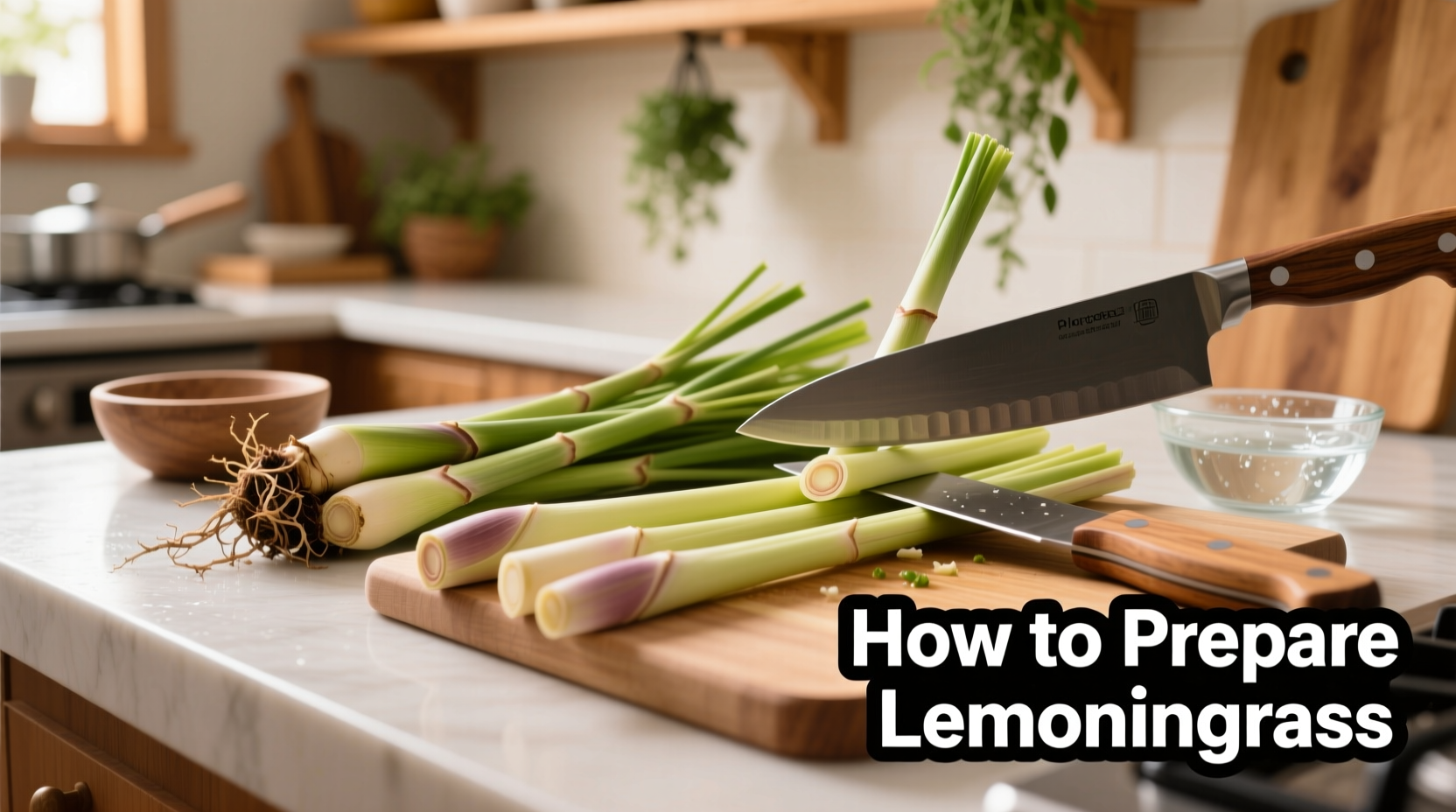
To prepare lemongrass for cooking, trim the woody root end and dry outer layers, then either finely mince the tender lower third, bruise the stalk for infusions, or blend into a paste. The fibrous upper portion is typically discarded as it's too tough to eat, while the pale bulbous base contains the most flavor.
Master Lemongrass Preparation in 5 Minutes
Lemongrass adds a bright, citrusy note to Southeast Asian dishes, but its tough fibers can frustrate home cooks. Proper preparation unlocks maximum flavor while avoiding unpleasant chewy bits in your finished dish. Whether you're making Thai curry, Vietnamese pho, or a Caribbean marinade, these professional techniques ensure perfect results every time.Choosing & Identifying Quality Lemongrass
Select stalks with firm, pale yellow bases and minimal browning. The lower third should feel dense and plump, while the upper portion naturally becomes more fibrous. Avoid stalks with dry, cracked ends or excessive yellowing, which indicates age. Fresh lemongrass should release a strong citrus aroma when squeezed.| Quality Indicator | Acceptable | Avoid |
|---|---|---|
| Color | Pale yellow base, light green upper | Brown spots, excessive yellowing |
| Texture | Firm, slightly moist | Dry, cracked, mushy |
| Aroma | Strong citrus scent when squeezed | Weak or musty smell |
Step-by-Step Preparation Methods
Basic Cleaning & Trimming
1. Remove dry outer layers (usually 1-2 layers) 2. Cut off woody root end (about ½ inch) 3. Trim dry grassy top (reserve for tea if desired) 4. Rinse under cold water to remove dirt The tender lower 4-6 inches contains the most flavor and is suitable for mincing. The upper portion works well for infusions but should be removed before serving.Technique 1: Fine Mincing for Curries & Stir-fries
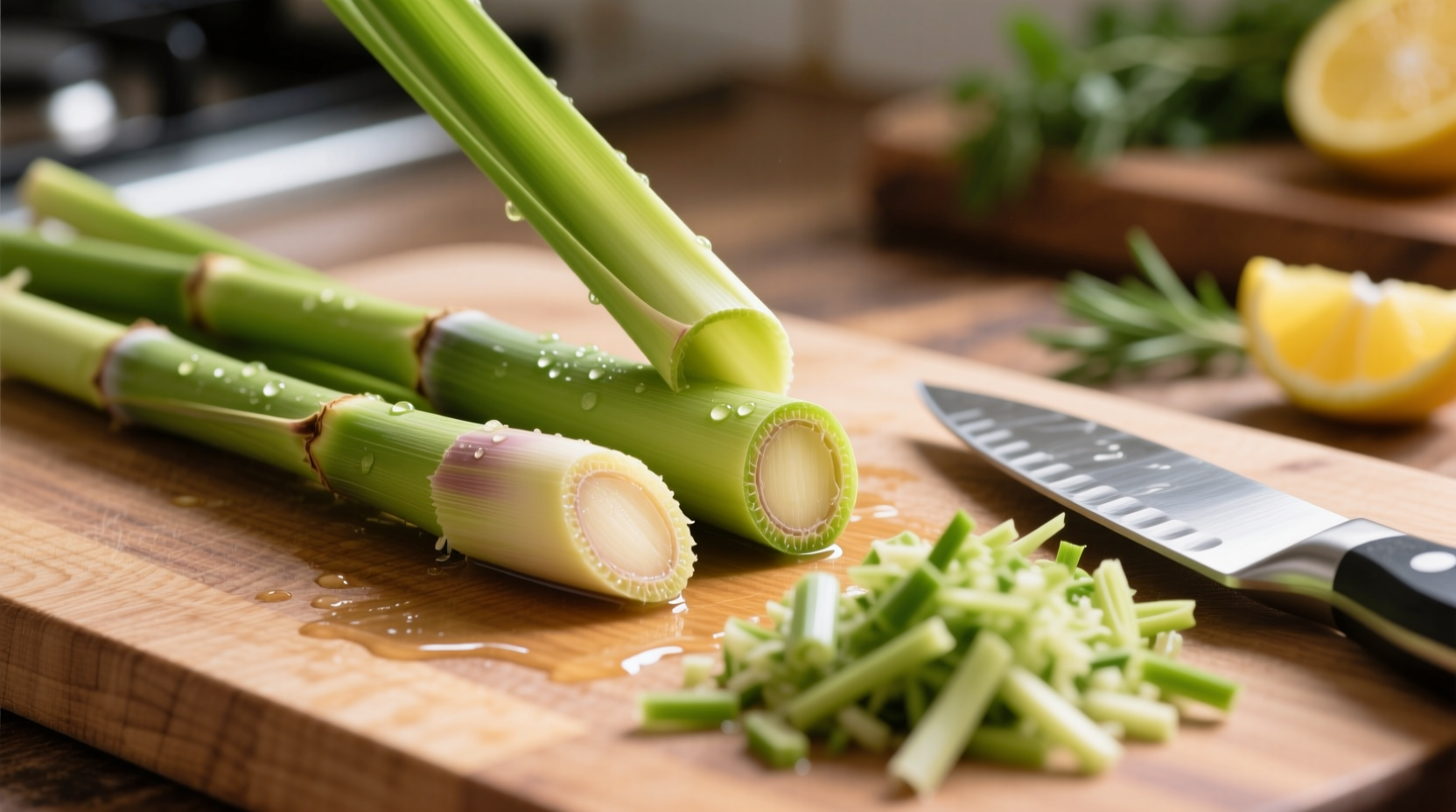
- Peel away dry outer layers to expose pale yellow stalk
- Cut off lower 4 inches of stalk
- Slice crosswise into thin rounds (⅛ inch)
- Rotate pieces 90 degrees and mince finely
- For smoother texture, blend with small amount of oil
Technique 2: Bruising for Infusions
For soups, broths, and teas where you'll remove the lemongrass before serving:- Trim root end and dry top portion
- Smash stalk with flat side of knife
- Cut into 2-3 inch pieces
- Add to liquid during cooking
- Remove before serving (fibers won't soften)
Advanced Preparation Tips
Knife Skills for Different Textures
Your cutting technique affects flavor release:- Fine mince: Maximum flavor distribution (ideal for curry pastes)
- Thin slices: Balanced flavor release (good for stir-fries)
- Whole bruised stalks: Subtle flavor infusion (best for broths)
No-Knife Alternative: The Freezer Method
For those without proper knife skills, freeze lemongrass stalks for 2 hours, then pound with a meat mallet. The fibers separate easily, allowing you to squeeze out the flavorful pulp while leaving tough fibers behind. This works particularly well for marinades and dressings.Storage Solutions for Unused Portions
Proper storage extends lemongrass freshness:- Refrigerator: Wrap in damp paper towel, store in airtight container (2-3 weeks)
- Freezer: Chop and freeze in ice cube trays with oil or water (6 months)
- Dry method: Slice thin and dehydrate for tea (store 6 months)
Avoid These Common Mistakes
Many home cooks struggle with lemongrass because of these errors:- Using the entire stalk: Only the lower portion is edible
- Over-processing: Creates bitter notes in finished dish
- Adding too late: Needs sufficient cooking time to release flavor
- Improper storage: Leads to rapid drying and flavor loss
When to Adjust Your Technique
Different cuisines require specific preparation:- Thai cooking: Finely minced for curry pastes
- Vietnamese pho: Bruised whole stalks for broth
- Caribbean jerk: Blended with other aromatics
- Indian chai: Thin slices for tea infusions




 浙公网安备
33010002000092号
浙公网安备
33010002000092号 浙B2-20120091-4