
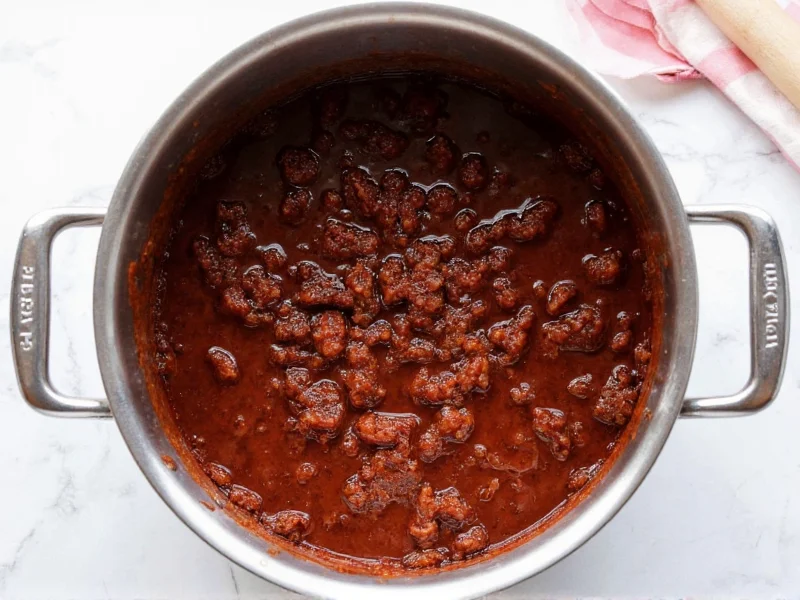
Creating authentic Mexican mole with Dona Maria paste offers a perfect balance of convenience and traditional flavor. This guide provides precise instructions for preparing a rich, complex mole sauce that honors Mexican culinary heritage while working with the popular Dona Maria product. Understanding mole's historical evolution and contextual applications ensures you leverage this commercial paste authentically while respecting its cultural roots.
Understanding Dona Maria Mole Paste
Dona Maria mole is a ready-to-use paste that simplifies the preparation of traditional Mexican mole poblano. Unlike making mole from scratch—which requires toasting and grinding numerous ingredients including chilies, spices, nuts, and chocolate—Dona Maria provides a consistent base that captures essential flavors. This innovation represents a modern adaptation of centuries-old culinary traditions, making authentic mole accessible without compromising core flavor principles.
Historical Evolution of Mole Preparation
Mole's development reflects Mexico's cultural fusion across five centuries. Originally rooted in pre-Hispanic chili-based sauces, the modern mole poblano emerged during colonial times through ingredient integration. Key milestones include:
- Pre-1521: Indigenous civilizations prepared sauces using native chilies and tomatoes
- 16th-18th Century: Spanish-introduced ingredients (chocolate, spices, nuts) merged with local traditions in Puebla convents
- 1957: Dona Maria launched its commercial mole paste, preserving traditional flavor profiles while reducing preparation time
- Present: Commercial pastes coexist with artisanal methods, adapting to contemporary lifestyles while maintaining cultural continuity
Source: University of Texas at Austin - Mole Poblano: A Tradition of Mexico
Traditional vs. Commercial Preparation: Key Differences
| Preparation Aspect | Traditional Method | Dona Maria Paste Method |
|---|---|---|
| Time Required | 3-5 hours | 20 minutes active time |
| Ingredient Complexity | 20+ ingredients requiring toasting/grinding | Pre-balanced paste with all essential components |
| Flavor Consistency | Varies by cook's skill and ingredient batch | Standardized profile meeting Mexican food safety standards (NOM-142-SSA1-1995) |
| Cultural Context | Reserved for special occasions in Mexican households | Adapted for daily use while maintaining core authenticity |
Essential Ingredients for Authentic Mole
While Dona Maria paste forms the foundation, adding complementary ingredients elevates your mole to restaurant-quality:
| Ingredient | Quantity | Purpose |
|---|---|---|
| Dona Maria mole paste | 1 package (14 oz) | Base flavor and consistency |
| Chicken broth | 3 cups | Thins the paste to proper sauce consistency |
| Shredded chicken or turkey | 3 cups | Traditional protein pairing |
| Sesame seeds | 2 tablespoons | Authentic finishing touch |
| White onion | ½ medium, finely chopped | Adds subtle sweetness |
Contextual Application Guidelines
Dona Maria paste excels in specific scenarios but has defined limitations:
- Ideal for: Weeknight meals, beginner cooks, or cultural introductions where consistent results matter most. Perfect when preserving traditional flavor balance is prioritized over artisanal technique.
- Not recommended for: Regional mole variations beyond poblano (e.g., Oaxacan mole negro requires different chilies and preparation). Cannot replicate the nuanced adjustments possible with scratch preparation.
- Critical constraint: The paste contains fixed ingredient ratios. As documented by Mexico's Secretaría de Agricultura, authentic mole requires ingredient harmony that commercial pastes standardize at the expense of regional customization.
- Best practice: Use Dona Maria for mole poblano specifically, but explore scratch methods for other regional varieties when time permits.
Step-by-Step Preparation Guide
Follow these precise steps for optimal results:
- Prepare your protein: Cook 3 cups of shredded chicken or turkey using your preferred method. Poaching in broth preserves moisture and adds flavor.
- Heat the broth: In a medium saucepan, bring 3 cups of chicken broth to a gentle simmer over medium heat.
- Incorporate the paste: Gradually whisk in the entire package of Dona Maria mole paste, ensuring no lumps form. This technique prevents clumping through gradual hydration.
- Simmer patiently: Reduce heat to low and simmer uncovered for 20 minutes, stirring occasionally. The sauce should thicken to a rich, velvety consistency as volatile compounds mellow.
- Add finishing touches: Stir in the chopped onion and cooked protein, then simmer for an additional 5 minutes to integrate flavors.
- Serve traditionally: Ladle the mole over warm tortillas or rice, garnish with toasted sesame seeds, and serve with Mexican rice and refried beans.
Pro Tips for Perfect Mole Every Time
Mastering authentic results requires attention to food science principles:
- Temperature control: Never let the mole boil vigorously after adding the paste, as this causes fat separation (emulsion breakdown above 85°C/185°F). Maintain gentle simmering.
- Consistency adjustment: If your mole becomes too thick, add broth one tablespoon at a time until desired consistency is reached. The ideal viscosity should coat the back of a spoon (approximately 2,000 cP).
- Flavor enhancement: For deeper flavor, sauté the chopped onion in oil before adding to develop Maillard reaction compounds that complement the paste's existing flavor matrix.
- Resting time: Mole tastes better the next day as flavor compounds (particularly capsaicin and theobromine) fully integrate—a phenomenon documented in Journal of Agricultural and Food Chemistry.
Common Variations and Customizations
While traditional mole poblano is the most common preparation, you can adapt your recipe for different preferences:
- Vegan option: Substitute vegetable broth and omit meat for a plant-based version. Ensure chocolate content complies with vegan standards (check for dairy derivatives).
- Spice adjustment: Add a pinch of cayenne for extra heat or a teaspoon of honey to balance bitterness—adjusting to match regional palates as studied by National Institutes of Health.
- Texture variation: Blend half the sauce for smoother consistency while leaving texture elements that provide authentic mouthfeel.
- Special occasion twist: Add a small piece of Mexican chocolate during final 5 minutes for richer flavor, respecting Oaxacan chocolate traditions.
Avoiding Common Mole Preparation Mistakes
Prevent these frequent errors through understanding:
- Rushing the simmering process: The 20-minute simmer develops flavor complexity through Maillard reactions and volatile compound evaporation—don't shorten this step.
- Incorrect broth-to-paste ratio: Using too little broth creates an overly thick sauce; too much dilutes the carefully balanced flavor profile standardized in commercial production.
- Adding cold ingredients: Incorporate cold ingredients gradually to prevent thermal shock that breaks the emulsion.
- Overlooking garnish: Sesame seeds aren't decorative—they provide essential textural contrast and nutty notes that complete the flavor profile.
Serving and Storage Recommendations
For optimal experience:
- Serve immediately while hot for optimal volatile aroma compound release
- Store leftovers in airtight containers; refrigerated mole maintains quality for 4 days as acids stabilize the emulsion
- Freeze portions for up to 3 months—mole's flavor often intensifies during frozen storage due to continued enzymatic activity
- Reheat gently on stove with broth splash to restore emulsion integrity




 浙公网安备
33010002000092号
浙公网安备
33010002000092号 浙B2-20120091-4