
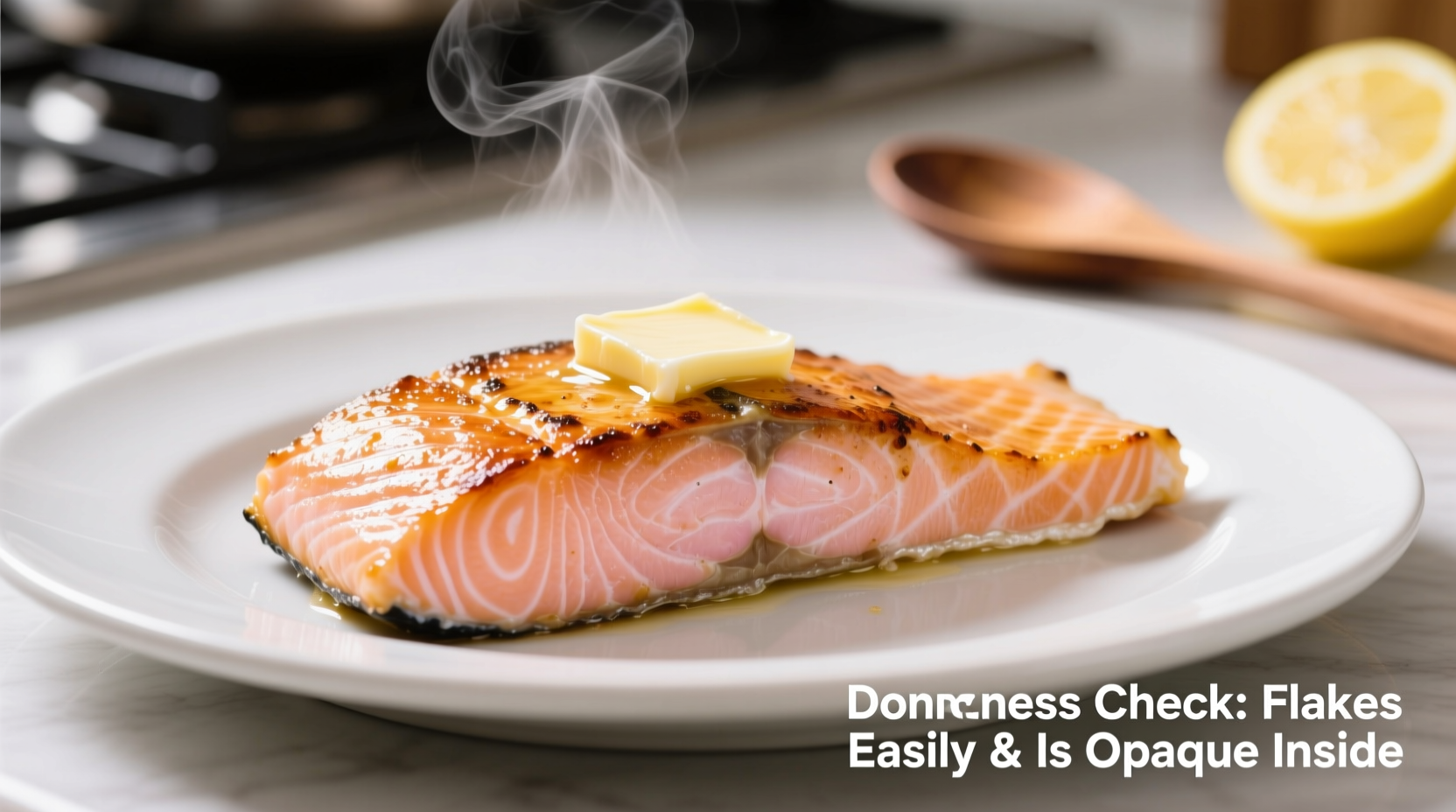
Perfectly cooked salmon transforms from a delicate, translucent raw state to a tender yet firm texture that practically melts in your mouth. Getting it right matters because overcooked salmon becomes dry and chalky, while undercooked fish risks foodborne illness. Whether you're pan-searing, baking, or grilling, knowing exactly when your salmon is done separates amateur attempts from restaurant-quality results.
The Temperature Method: Your Most Reliable Indicator
Professional chefs and food safety experts agree that temperature is the gold standard for determining salmon doneness. An instant-read thermometer eliminates guesswork and delivers consistent results every time.
| Doneness Level | Internal Temperature | Visual & Textural Characteristics |
|---|---|---|
| Medium-Rare | 120-125°F (49-52°C) | Slightly translucent center, very moist, minimal flaking |
| Medium | 125-130°F (52-54°C) | Translucent center gone, flakes easily with slight resistance |
| Medium-Well | 130-135°F (54-57°C) | Fully opaque, flakes with gentle pressure, moist texture |
| Fully Cooked | 140-145°F (60-63°C) | Firm texture, fully opaque, flakes easily (USDA recommendation) |
According to the U.S. Food and Drug Administration, fish should be cooked to a minimum internal temperature of 145°F (63°C) or until the flesh is opaque and flakes easily. However, many culinary professionals prefer salmon at lower temperatures (125-130°F) for superior texture and moisture retention, as the fish continues to cook from residual heat after removal from the heat source—a process called carryover cooking.
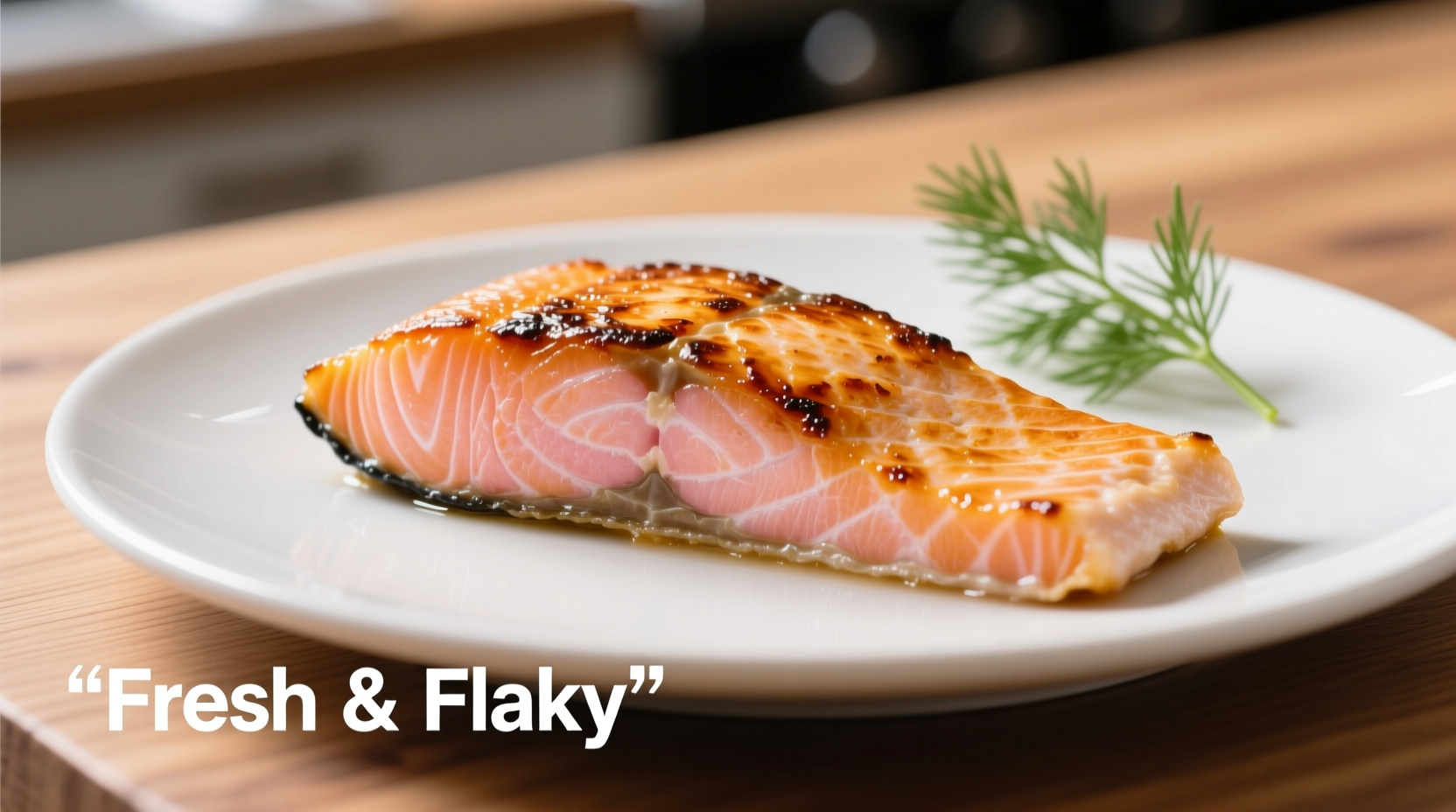
The Flaking Test: No Thermometer Required
When you don't have a thermometer handy, the flaking test provides a reliable alternative. Here's how to execute it properly:
- Wait for the right moment - Don't test too early, as premature flaking will cause the fish to fall apart
- Use a fork gently - Insert at the thickest part at a 90-degree angle
- Twist slightly - A quarter-turn should separate the layers if properly cooked
- Assess the resistance - Cooked salmon should separate with minimal pressure but still feel moist
Many home cooks mistakenly believe salmon should be completely firm and dry when done. In reality, properly cooked salmon remains moist and slightly tender—it shouldn't crumble at the slightest touch but should separate into distinct flakes with gentle pressure.
Visual Indicators You Can Trust
As salmon cooks, it undergoes several visible transformations that serve as helpful indicators:
- Color change - Shifts from deep, translucent pink to a lighter, opaque salmon color
- Surface moisture - Raw salmon appears wet and glossy; cooked salmon develops a matte finish
- White albumin appearance - Small amounts of white protein (albumin) may appear as it cooks, but excessive albumin indicates overcooking
- Shape retention - Properly cooked salmon maintains its shape without shrinking excessively
Understanding these visual cues requires recognizing context boundaries. Different cooking methods produce varying visual results—pan-seared salmon develops a golden crust while baked salmon maintains a more uniform appearance. Freshness also affects appearance; previously frozen salmon may release more moisture during cooking, potentially confusing visual assessment.
Cooking Time Guidelines (With Important Caveats)
While timing can serve as a rough guide, numerous factors affect cooking duration:
- Thickness - A 1-inch thick fillet typically takes 8-10 minutes total cooking time
- Cooking method - Grilling cooks faster than baking; sous vide requires precise timing
- Starting temperature - Room-temperature salmon cooks more evenly than refrigerated
- Heat source intensity - High heat sears quickly but risks uneven cooking
For pan-searing, cook skin-side down for 75% of total time, then flip for the remainder. The USDA emphasizes that timing alone shouldn't determine doneness, as variables like fish thickness and cooking equipment significantly impact results.
Troubleshooting Common Salmon Cooking Issues
Even experienced cooks encounter these salmon challenges:
- Sticking to the pan - Indicates the fish isn't ready to flip; properly seared salmon releases naturally
- Uneven cooking - Results from inconsistent thickness; try "butterflying" thicker portions
- Excessive albumin - Caused by high heat or slow cooking; both lead to protein leakage
- Dry texture - Almost always from overcooking; remember carryover cooking continues the process
When faced with slightly undercooked salmon, return it to gentle heat for 30-60 seconds rather than continuing full-power cooking. For overcooked fish, a flavorful sauce can help restore moisture, though prevention remains the best approach.
Special Considerations for Different Cooking Methods
Each cooking technique presents unique indicators of doneness:
- Grilling - Look for lift-off resistance and distinct grill marks before attempting to flip
- Poaching - Requires careful temperature monitoring as visual cues are less pronounced
- Sous vide - Precision cooking eliminates guesswork but requires proper timing
- Smoking - Temperature monitoring is essential as visual changes happen slowly
Professional chefs often combine methods—searing after oven cooking, for example—to achieve perfect results. This layered approach requires understanding how each stage affects the final doneness.
Practical Tips for Consistent Results
Implement these professional techniques for foolproof salmon every time:
- Pat dry before cooking - Moisture creates steam instead of proper searing
- Bring to room temperature - Cold fish cooks unevenly; remove from refrigerator 20 minutes before cooking
- Use the right thermometer - Instant-read models provide accuracy within 3-5 seconds
- Account for carryover cooking - Remove salmon 5-10 degrees below target temperature
- Rest before serving - Allows juices to redistribute for maximum moisture retention
Remember that salmon continues cooking after removal from heat—typically rising 5-10 degrees in internal temperature during the resting period. This crucial detail separates perfectly cooked salmon from dry, overcooked disappointment.
How can you tell if salmon is cooked without a thermometer?
Without a thermometer, check for flakiness with a fork at the thickest part—if it separates into distinct flakes with gentle pressure but remains moist, it's done. The color should change from translucent to opaque pink, and the surface should lose its glossy appearance. Press gently with your finger; properly cooked salmon should feel firm yet slightly yielding.
Is it safe to eat salmon at 125 degrees Fahrenheit?
Yes, salmon at 125°F (medium-rare) is safe for most healthy adults when sourced from reputable suppliers. While the FDA recommends 145°F for complete pathogen elimination, high-quality salmon from trusted sources can be safely consumed at lower temperatures. The fish continues cooking from residual heat after removal from the heat source, typically rising 5-10 degrees during resting.
Why does my salmon release white substance when cooking?
The white substance is albumin, a protein that coagulates when exposed to heat. Some albumin is normal, but excessive amounts indicate overcooking or cooking at too high a temperature. To minimize albumin, cook salmon at moderate temperatures and avoid overcooking. The presence of some albumin doesn't affect safety or flavor, though it may indicate slightly less optimal cooking technique.
How long should salmon rest after cooking?
Salmon should rest for 5-10 minutes after cooking, depending on thickness. This resting period allows the internal temperature to stabilize and juices to redistribute throughout the fish. Resting ensures maximum moisture retention and more even doneness. Cover loosely with foil to maintain warmth without trapping steam that could soften the crust.
Can you eat salmon that's still slightly translucent in the middle?
Yes, salmon with a slightly translucent center (around 125-130°F) is considered medium-rare and preferred by many chefs for optimal texture and moisture. This is safe for most healthy adults when using high-quality, fresh salmon from reputable sources. The translucent appearance indicates perfect doneness for those who prefer moist, tender salmon rather than fully opaque, firm texture.




 浙公网安备
33010002000092号
 浙B2-20120091-4