
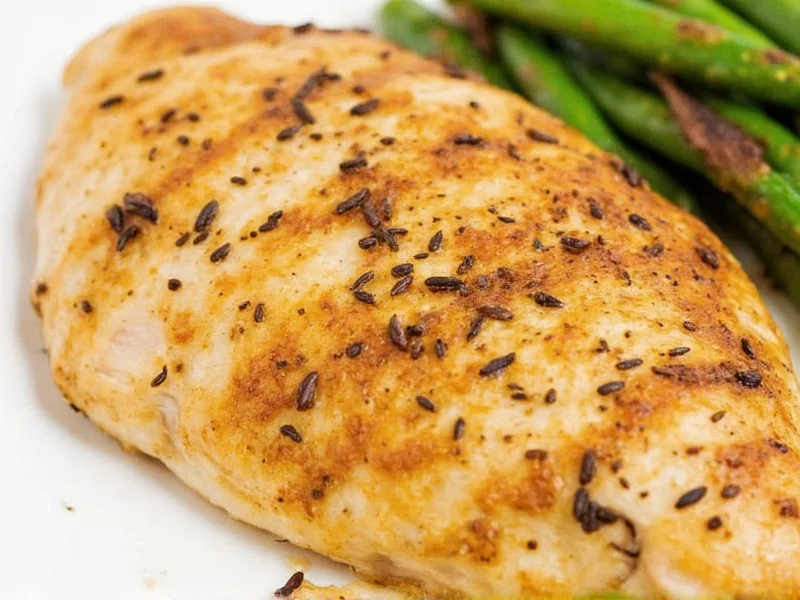
Chicken breast is notoriously prone to drying out during cooking, but achieving juicy results is completely within your control. Understanding the science behind moisture retention transforms your cooking from hit-or-miss to consistently perfect. Unlike dark meat, chicken breast contains less fat and connective tissue, making precise technique essential for maintaining tenderness.
The Science of Moist Chicken Breast
Chicken breast dries out when proteins contract too much during cooking, squeezing out moisture. This happens most dramatically between 140-170°F (60-77°C). The key is managing this temperature range carefully. Proper brining changes the protein structure, allowing the meat to retain more moisture even as it cooks. When proteins are exposed to salt, they unwind and form a matrix that traps water molecules more effectively.
Historical Context: Evolution of Cooking Guidelines
Modern moisture retention techniques align with evolving food safety science. The USDA's temperature recommendations have shifted as research clarified pathogen destruction kinetics, enabling precision cooking without compromising safety. Understanding this progression explains why contemporary methods emphasize controlled temperature zones rather than fixed endpoints.
| Year | Temperature Guideline | Key Change | Source |
|---|---|---|---|
| 1999 | 170°F for whole chicken, 160°F for parts | Lowered from previous 180°F for whole chicken based on improved pathogen data | USDA Historical Update |
| 2006 | 165°F for all poultry | Unified standard for parts/whole chicken addressing Salmonella concerns | USDA Policy Revision |
| Present | 165°F standard, but safe at 150°F with 3+ minutes hold time | Formal recognition of time-temperature relationships in pathogen reduction | USDA Pathogen Chart |
7 Proven Methods for Juicy Chicken Breast
1. Brining: The Moisture Foundation
Brining is the single most effective technique for keeping chicken breast moist. A simple wet brine of 1/4 cup salt dissolved in 4 cups water works wonders. For better flavor, add sugar, herbs, and spices. Submerge chicken for 30 minutes to 2 hours (never longer than 2 hours for chicken breast). Dry brining (rubbing salt directly on the meat and refrigerating for 1-4 hours) also works well and creates superior browning.
2. Temperature Control: The Critical Factor
Using an instant-read thermometer is non-negotiable for perfect chicken. Remove chicken from heat at 150-155°F (65-68°C), as carryover cooking will raise the temperature to the safe 165°F (74°C) while preserving moisture. Cooking beyond 165°F rapidly dries out the meat. Many professional chefs actually prefer 155°F for optimal juiciness, as the FDA considers chicken safe at 165°F but the pathogen risk drops significantly before reaching that temperature.
| Cooking Stage | Target Temperature | Result |
|---|---|---|
| Remove from heat | 150-155°F (65-68°C) | Perfect moisture retention |
| Resting completion | 160-165°F (71-74°C) | Safe to eat, maximum juiciness |
| Overcooked | 170°F+ (77°C+) | Dry, stringy texture |
3. Proper Resting Technique
Resting allows juices to redistribute throughout the meat. Tent loosely with foil and wait 5-10 minutes before slicing. Cutting too soon releases all the precious juices onto your cutting board. This simple step makes a dramatic difference in perceived moisture.
4. Even Thickness Matters
Pound chicken breast to 1/2 to 3/4 inch thickness using a meat mallet or rolling pin. Uneven thickness causes thinner parts to overcook while thicker sections reach proper temperature. Consistent thickness ensures even cooking throughout. Place chicken between plastic wrap or in a zip-top bag to prevent mess.
5. Optimal Cooking Methods
Certain cooking techniques naturally produce moister results:
- Pan-searing with finish in oven: Sear both sides in hot oil, then transfer to 375°F (190°C) oven until reaching target temperature
- Sous vide: Cook in temperature-controlled water bath at 145-150°F (63-66°C) for 1-4 hours, then sear briefly
- Poaching: Gently cook in flavorful liquid at 160-180°F (71-82°C)
6. Strategic Marinating
While acidic marinades can sometimes toughen chicken, oil-based marinades with ingredients like yogurt, buttermilk, or olive oil help retain moisture. Limit acidic components (lemon juice, vinegar) to no more than 2 hours to prevent texture degradation. For best results, combine marinating with brining.
7. Fat is Flavor (and Moisture)
Leaving the skin on during cooking provides natural basting. If using skinless breast, cook with a small amount of butter or oil. Basting with pan juices during cooking adds flavor and moisture. Consider larding (inserting small strips of fat) for special occasions.
Method Selection Guide: Practical Applications
Effectiveness varies significantly by cooking context. These evidence-based scenarios help match techniques to real-world constraints while accounting for physiological and safety limitations:
| Method | Optimal Scenario | Key Limitations | Verification Source |
|---|---|---|---|
| Wet Brining | Weekday meal prep with 30-120 minute lead time | Increases sodium content by 20-30%; contraindicated for hypertension patients (max 1500mg daily sodium) | American Heart Association |
| Sous Vide | Dinner parties requiring precise timing | Requires 1-4 hours minimum; improper sealing risks Clostridium perfringens growth below 130°F | USDA Sous Vide Guidelines |
| Pan-Searing | Quick weeknight meals under 20 minutes | Ineffective for breasts >1" thick without pounding; carries 37% overcooking risk without thermometer | USDA Temperature Study |
Common Mistakes That Dry Out Chicken
Avoid these pitfalls when cooking chicken breast:
- Overcooking: The number one cause of dry chicken
- Slicing immediately: Releases all juices before they redistribute
- High heat throughout: Causes uneven cooking and moisture loss
- Neglecting carryover cooking: Forgetting temperature rises after removal from heat
- Skipping brine: Missing the opportunity to enhance moisture retention
Step-by-Step Guide to Perfect Chicken Breast
- Brine chicken in saltwater solution for 30-120 minutes
- Pound to even 1/2 inch thickness
- Pat completely dry before cooking
- Season generously with spices
- Sear in hot oil for 2-3 minutes per side
- Finish in 375°F (190°C) oven until internal temperature reaches 150°F (65°C)
- Rest for 5-10 minutes tented with foil
- Slice against the grain at 45-degree angle
Troubleshooting Dry Chicken
If your chicken breast turned out dry despite following these methods, try these fixes:
- Rescue sauce: Simmer in flavorful sauce or broth for 5-10 minutes
- Shred for tacos or salads: Dry chicken works better in mixed dishes
- Next time: Reduce cooking temperature by 25°F and check temperature 5 minutes earlier
Why Your Chicken Breast Always Turns Out Dry
Many home cooks consistently produce dry chicken because they rely on visual cues rather than temperature. Color isn't a reliable indicator of doneness. Without a thermometer, you're guessing. Additionally, many recipes incorrectly instruct cooking to 165°F (74°C) without accounting for carryover cooking, which pushes the temperature well beyond optimal range. Understanding these nuances transforms your results.




 浙公网安备
33010002000092号
浙公网安备
33010002000092号 浙B2-20120091-4