
Hosting a successful party means keeping your delicious dishes at the perfect temperature from setup to the last guest departure. Nothing ruins a gathering faster than cold appetizers or lukewarm entrees. This comprehensive guide delivers professional-tested methods that work for home entertainers, whether you're hosting an intimate dinner or a large celebration with 50 guests.
Food Safety First: The Critical Temperature Threshold
Before exploring warming techniques, understand the food safety imperative: the USDA Food Safety and Inspection Service mandates that hot foods must remain above 140°F (60°C) to prevent bacterial growth in the "danger zone" (40°F-140°F). This isn't just recommendation—it's a critical food safety requirement that protects your guests.
| Warming Method | Effective Temperature Range | Maximum Safe Duration | Best For |
|---|---|---|---|
| Chafing Dishes with Fuel Cans | 140°F-165°F | 2-4 hours | Buffet service, large gatherings |
| Slow Cookers on Warm Setting | 145°F-160°F | 4-6 hours | Stews, soups, saucy dishes |
| Insulated Thermal Containers | 135°F-150°F | 1-3 hours | Transporting food, small gatherings |
| Oven Warming (Low Temp) | 170°F-200°F | 30-90 minutes | Finishing dishes, last-minute warming |
Pre-Party Planning: Setting Up for Temperature Success
Professional caterers begin temperature planning 24 hours before service. Start by categorizing your menu items by their ideal serving temperatures and heat sensitivity. Delicate fish fillets require different handling than hearty chili. The National Restaurant Association recommends grouping foods into three categories:
- High-risk items (meats, dairy-based sauces): Require continuous warming above 140°F
- Moderate-risk items (vegetable dishes, breads): Can safely sit 1-2 hours before warming
- Low-risk items (chips, crackers, most desserts): No warming needed
Calculate your equipment needs based on guest count—aim for one warming station per 15-20 guests to prevent overcrowding and temperature drops. Always have backup fuel cans or extension cords ready, as equipment failure is the #1 cause of temperature issues according to industry surveys.
Essential Warming Equipment That Actually Works
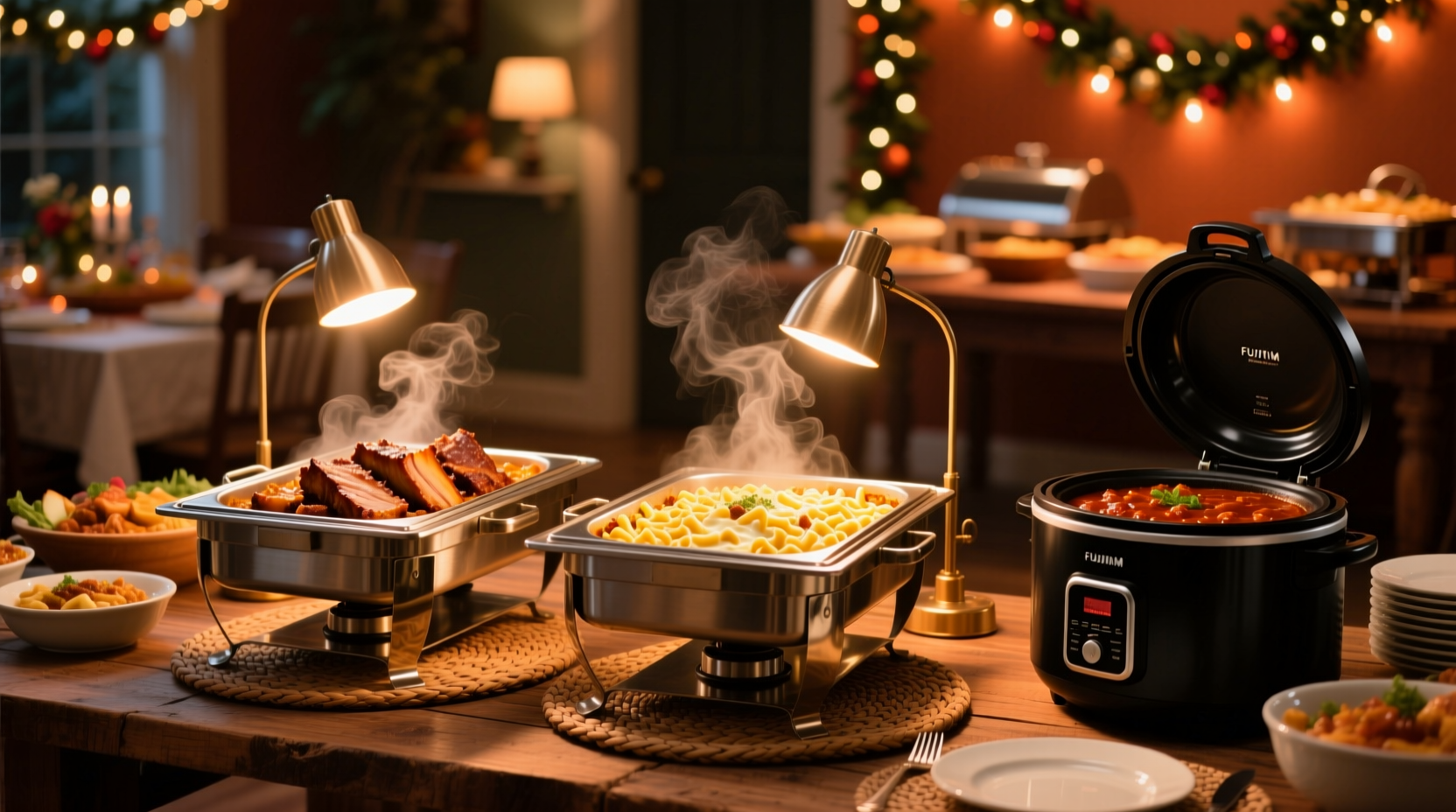
Chafing Dishes: The Catering Industry Standard
Professional catering companies rely on chafing dishes for good reason. When properly set up with water in the base pan and quality fuel cans, they maintain consistent 140°F+ temperatures for 3-4 hours. Key setup tips:
- Fill the water pan halfway with hot (not boiling) water before lighting fuel cans
- Use high-quality, name-brand fuel cans for consistent burn rates
- Place dishes away from drafts or air conditioning vents
- Check water levels hourly and replenish with hot water as needed
Slow Cookers: Your Secret Weapon for Moist Foods
Modern programmable slow cookers maintain perfect warming temperatures without overcooking. For party use:
- Transfer food from cooking to warming mode before guests arrive
- Keep lids on until guests start serving to maintain heat
- Add broth or sauce periodically to prevent drying
- Use multiple small slow cookers rather than one large unit for better temperature control
Creative DIY Solutions When Professional Equipment Isn't Available
When chafing dishes aren't an option, these tested household alternatives work surprisingly well:
The Towel-Insulated Tray Method
Line a baking sheet with aluminum foil, place hot food on it, then wrap thoroughly with clean kitchen towels. This maintains safe temperatures for 45-60 minutes for small batches. The University of Minnesota Extension confirms this method works for short-term warming when monitored with a thermometer.
Thermal Container Transport System
Preheat insulated containers by filling with boiling water for 5 minutes, then empty and immediately add hot food. This technique, recommended by food safety experts at foodsafety.gov, keeps food above 140°F for 1-2 hours during transport.
Food-Specific Warming Strategies
Not all foods respond the same to warming methods. Tailor your approach:
- Casseroles & Baked Dishes: Cover with foil and use oven warming at 200°F. Remove foil 10 minutes before serving for crisp topping.
- Meat Entrees: Use indirect warming methods (like chafing dishes) rather than direct heat to prevent overcooking. USDA guidelines recommend checking internal temperature hourly.
- Appetizers & Finger Foods: Keep warm in a low oven (170°F) on baking sheets, covered with foil. Rotate batches every 30 minutes.
- Soups & Sauces: Maintain in slow cookers on 'warm' setting, stirring every hour to distribute heat evenly.
Timing and Rotation: The Professional Catering Approach
Top caterers use a strategic food rotation system that home entertainers can easily adapt:
- Batch Preparation: Cook food in smaller batches rather than one large quantity
- Staggered Warming: Only put out 30-45 minutes worth of food at a time
- Temperature Monitoring: Check food temps hourly with an instant-read thermometer
- Strategic Replacement: Replace depleted dishes with fresh, hot portions from your warming station
This method prevents food from sitting too long at unsafe temperatures while maintaining optimal serving quality. The National Caterers Association reports this approach reduces food waste by 35% while improving guest satisfaction.
Troubleshooting Common Warming Problems
When issues arise, professional caterers follow these protocols:
- Food cooling too quickly: Add additional fuel cans under chafing dishes or increase oven temperature by 10-15 degrees
- Food drying out: Add moisture barriers like broth, sauce, or a damp paper towel under foil coverings
- Temperature fluctuations: Consolidate food into fewer containers to maintain heat concentration
- Equipment failure: Have a backup plan like oven warming or immediate guest service of affected items
Remember: when in doubt about food safety, follow the USDA's clear guidance—"When food is in doubt, throw it out." Better to run out of food than risk guest illness.
Final Pro Tips for Flawless Food Temperature Management
Seasoned entertainers know these often-overlooked details make the difference:
- Pre-warm your serving dishes with hot water to add 5-10 minutes of extra warmth retention
- Place warming equipment away from high-traffic areas to minimize heat loss from frequent opening
- Use darker colored serving dishes which retain heat better than light-colored ones
- For extended events, implement a "fresh batch" schedule every 90 minutes for high-risk items




 浙公网安备
33010002000092号
浙公网安备
33010002000092号 浙B2-20120091-4