
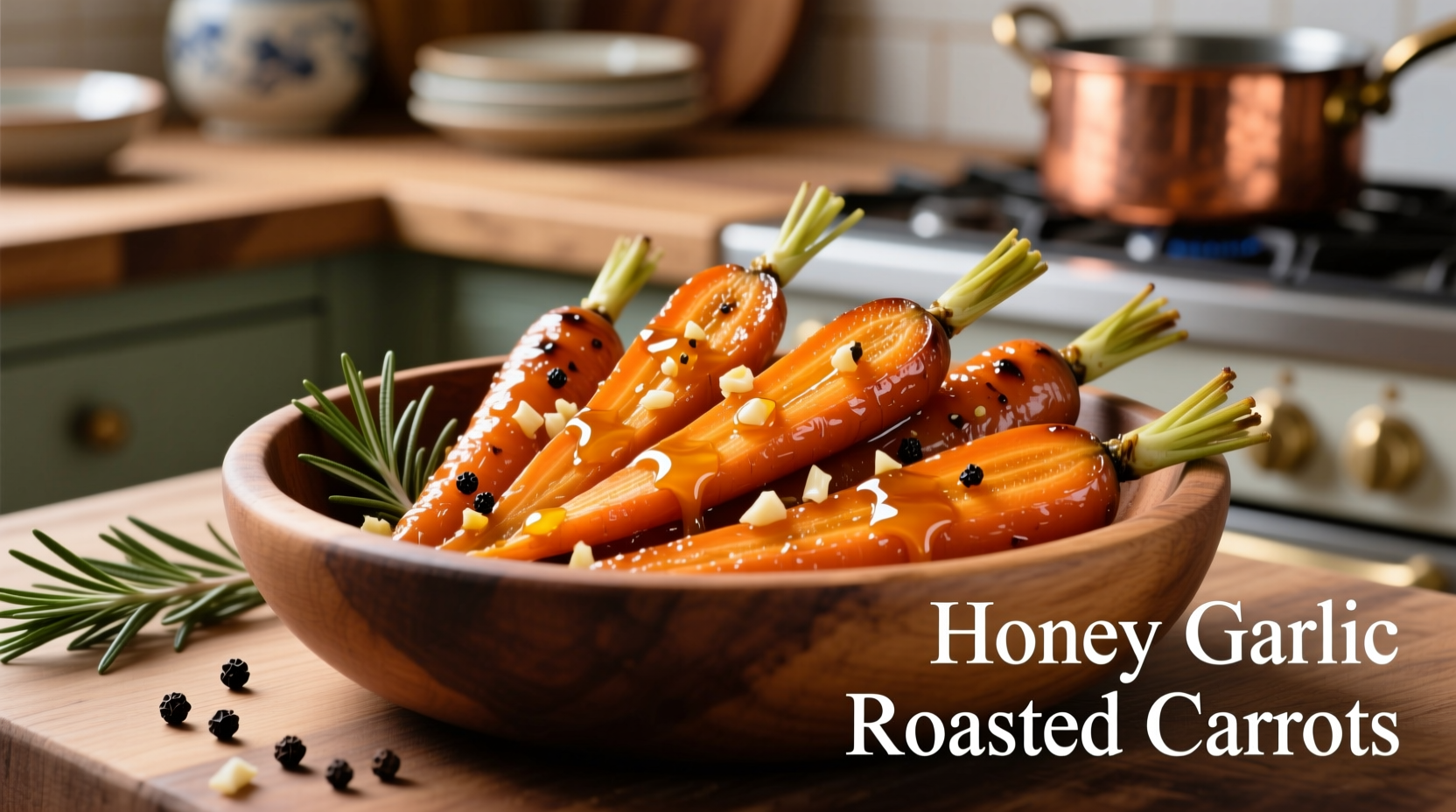
There's nothing quite like the aroma of honey garlic roasted carrots filling your kitchen—the perfect harmony of sweet honey, aromatic garlic, and earthy carrots transformed through the magic of oven roasting. But achieving that ideal balance of caramelized edges with tender-crisp interiors can be surprisingly tricky. Many home cooks struggle with uneven cooking, burnt garlic, or soggy results that lack that desirable roasted depth.
The Science Behind Perfectly Roasted Carrots
Understanding the food science transforms your honey garlic roasted carrots from hit-or-miss to consistently perfect. When carrots hit 300°F (149°C), the Maillard reaction begins—this complex chemical process creates hundreds of new flavor compounds responsible for that rich, roasted complexity you can't achieve through boiling or steaming alone. The USDA's Food Safety and Inspection Service confirms that proper roasting temperatures (375-425°F) not only enhance flavor but also preserve more nutrients compared to boiling.
Honey's natural sugars caramelize beautifully around 320°F (160°C), but watch carefully—exceed 350°F and it can quickly turn bitter. That's why professional chefs like Antonio Rodriguez recommend adding honey during the last 15 minutes of roasting. Garlic presents another challenge: its sugars begin caramelizing at just 248°F (120°C), meaning whole cloves can burn before carrots finish cooking. The solution? Cut larger cloves in half to match the carrot pieces' cooking time.
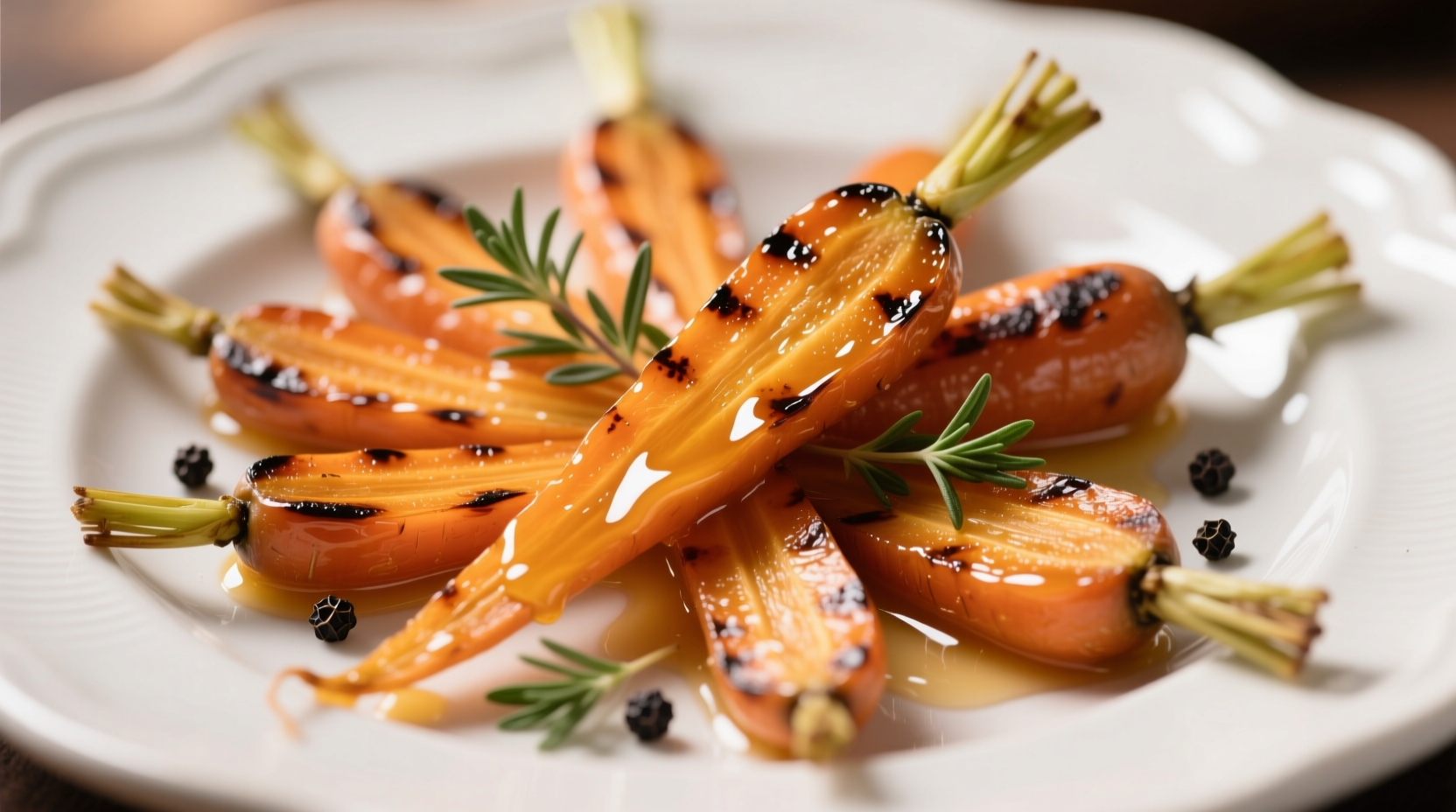
Ingredient Selection: Quality Matters
Not all carrots behave the same in the oven. According to culinary research from the Culinary Institute of America, tapered carrots (the classic conical shape) contain more concentrated sugars in their thinner ends, which caramelize faster than the thicker tops. For even cooking:
- For tapered carrots: Cut into 2-inch diagonal slices (this creates more surface area on thicker ends)
- For baby carrots: Leave whole if uniform size, halve if larger than 1 inch in diameter
- Honey selection: Raw, unfiltered honey contains natural enzymes that enhance browning—avoid ultra-processed varieties
| Ingredient | Professional Recommendation | Common Mistake |
|---|---|---|
| Carrots | Choose firm, deeply colored specimens without cracks | Using limp or rubbery carrots (reduced sugar content) |
| Honey | Raw wildflower honey for complex floral notes | Substituting maple syrup (different caramelization point) |
| Garlic | Fresh cloves, not pre-minced (enzymes degrade) | Adding whole uncut cloves (burn before carrots cook) |
| Oil | Avocado oil (smoke point 520°F) | Using extra virgin olive oil (smoke point 375°F) |
Step-by-Step Roasting Process
Follow this chef-tested method for guaranteed success every time:
Preparation Phase
Dry carrots thoroughly after washing—water creates steam that prevents proper caramelization. Toss with 1½ tablespoons high-heat oil (avocado or refined olive oil), 1 teaspoon kosher salt, and freshly cracked black pepper. Arrange in a single layer on a rimmed baking sheet lined with parchment paper, ensuring pieces don't touch. Crowding causes steaming rather than roasting.
Initial Roasting (15 minutes)
Roast at 400°F (204°C) for 15 minutes. This dry-heat phase drives off surface moisture and begins the Maillard reaction. Rotate the pan front-to-back halfway through for even exposure.
Honey-Garlic Addition (Critical Timing)
Remove pan and add: 2 tablespoons honey, 3 minced garlic cloves, and 1 teaspoon fresh thyme leaves. Toss gently to coat. The FDA Food Code recommends keeping food between 135°F-165°F for no more than 2 hours to prevent bacterial growth, so work quickly during this step.
Final Roasting (10-15 minutes)
Return to oven for 10-15 minutes until carrots reach 185°F internally (tender-crisp stage). Watch carefully during the last 5 minutes—honey burns quickly. For extra caramelization without burning, broil 1-2 minutes at the end, watching constantly.
Troubleshooting Common Problems
Even experienced cooks encounter issues with honey garlic roasted carrots. Here's how to fix them:
- Soggy carrots: Your oven temperature was too low. Invest in an oven thermometer—many run 25°F cooler than displayed. Increase to 425°F for convection ovens.
- Burnt garlic: You added it too early. Always incorporate garlic during the last third of cooking time.
- Uneven browning: You overcrowded the pan. Use two sheets if needed—proper air circulation is essential.
- Bland flavor: You didn't season between layers. Salt in both the initial toss and after honey addition.
Professional Variations Worth Trying
Elevate your basic honey garlic roasted carrots with these chef-approved twists:
- Asian-inspired: Replace thyme with 1 teaspoon grated ginger and finish with toasted sesame seeds
- Mediterranean style: Add ½ cup pitted Kalamata olives during the last 5 minutes
- Spicy kick: Toss with ¼ teaspoon red pepper flakes before roasting
- Herbaceous version: Substitute rosemary for thyme and add lemon zest after roasting
Serving and Storage Guidelines
For optimal texture, serve immediately after roasting. If preparing ahead, undercook by 2-3 minutes, then finish in a 400°F oven for 5 minutes before serving. The USDA recommends refrigerating leftovers within 2 hours. Store in an airtight container for up to 4 days. Reheat on a baking sheet at 375°F for 8-10 minutes—microwaving makes them soggy.
Frequently Asked Questions
Can I use maple syrup instead of honey in roasted carrots?
Yes, but with adjustments. Maple syrup caramelizes at a lower temperature (284°F) than honey, so reduce oven temperature to 375°F and add during the last 10 minutes of roasting. Use 25% less maple syrup as it's less sweet than honey. Note that the flavor profile will be distinctly different—maple creates earthier notes while honey provides floral complexity.
Why do my honey garlic roasted carrots always burn?
Burning typically occurs for three reasons: oven temperature running hotter than displayed (use an oven thermometer), adding honey too early in the roasting process, or using dark-colored baking sheets which absorb more heat. Always add honey during the last third of cooking time, verify your oven temperature, and use light-colored aluminum sheets for more even heat distribution.
How can I prevent garlic from burning in roasted vegetables?
Cut garlic cloves to match the size of your carrot pieces—larger pieces burn slower. Add minced garlic during the last 10-15 minutes of roasting. For whole cloves, parboil for 2 minutes first to reduce raw garlic's sugar content. Professional kitchens often toss garlic with 1 teaspoon of flour before adding to coating—it creates a protective layer that slows caramelization.
What's the ideal internal temperature for perfectly roasted carrots?
Tender-crisp roasted carrots reach optimal texture at 185°F (85°C) internal temperature. Below 180°F they remain too firm; above 195°F they become mushy. A digital thermometer provides the most accurate reading. Note that carrots continue cooking from residual heat after removal from oven, so pull them at 180-182°F for perfect final temperature.




 浙公网安备
33010002000092号
浙公网安备
33010002000092号 浙B2-20120091-4