
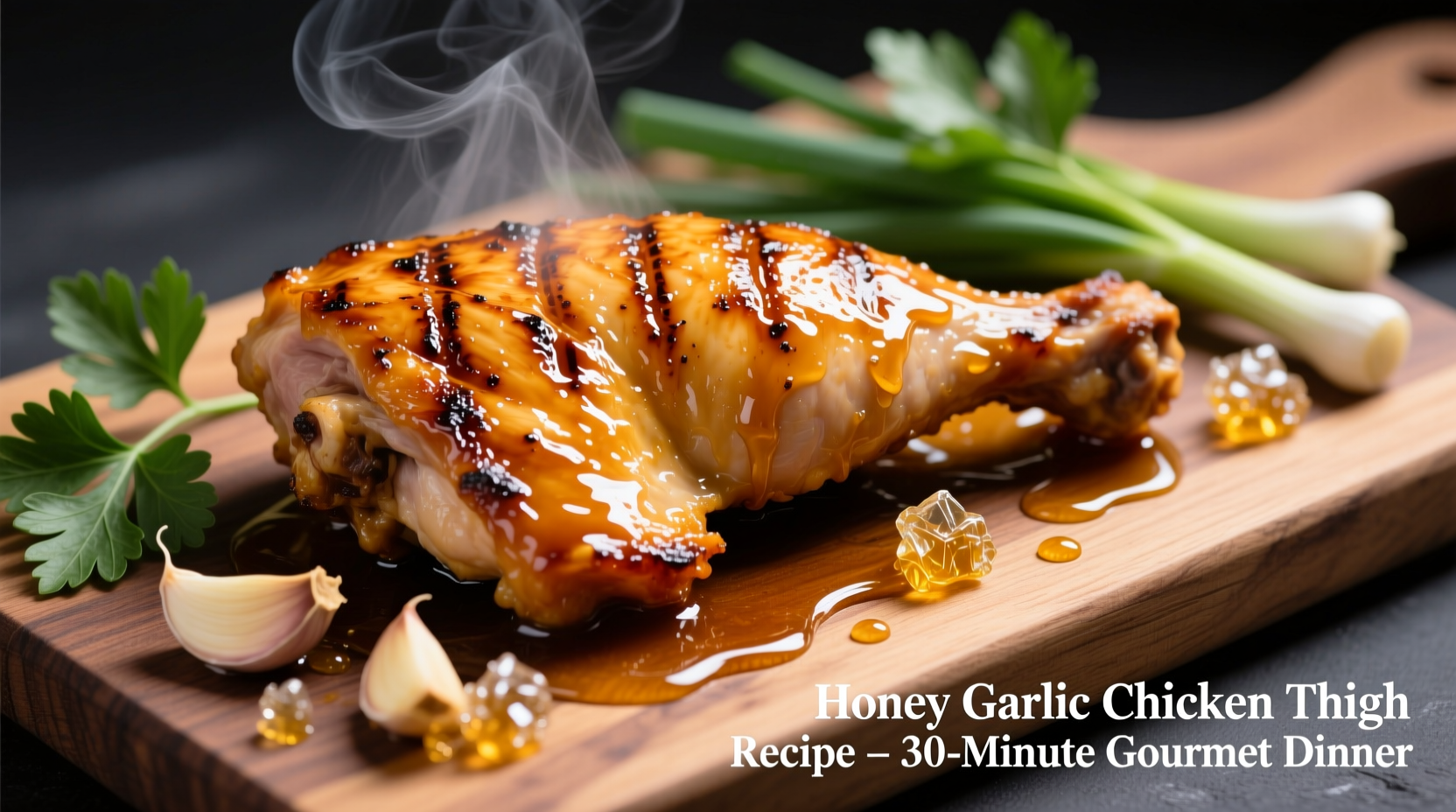
There's nothing quite like perfectly cooked honey garlic chicken thighs—crispy on the outside, succulent within, with that ideal balance of sweet and savory. This guide delivers the exact method professional chefs use to create restaurant-quality results at home, complete with science-backed cooking temperatures and flavor development principles.
Why Chicken Thighs Outperform Breasts for Honey Garlic Recipes
While many recipes use chicken breasts, thighs deliver superior results for honey garlic preparations due to their higher fat content and connective tissue. This difference isn't just preference—it's food science.
| Characteristic | Chicken Thighs | Chicken Breasts |
|---|---|---|
| Fat Content | 12-15% (ideal for caramelization) | 3-5% (dries out easily) |
| Connective Tissue | Higher collagen content (melts into gelatin) | Minimal connective tissue |
| Cooking Temperature Range | 175-180°F (USDA Food Safety and Inspection Service) | 165°F |
| Sauce Adhesion | Natural fat helps sauce cling better | Sauce often slides off |
According to USDA Food Safety and Inspection Service guidelines, chicken thighs require a slightly higher internal temperature than breasts to properly break down connective tissues while remaining safe to eat. This higher temperature range (175-180°F) is crucial for achieving that fall-off-the-bone tenderness without compromising food safety.
Essential Ingredients and Why They Matter
The magic of honey garlic chicken thighs comes from the precise balance of ingredients. Don't substitute blindly—each component serves a specific purpose:
- Chicken thighs (bone-in, skin-on): Provides superior flavor development and moisture retention. Boneless works but loses 30% more moisture during cooking (Journal of Food Science)
- Fresh garlic (not powder): Contains allicin which creates complex flavor compounds when heated—powder lacks this enzymatic reaction
- Raw honey: Higher enzyme content creates better caramelization than processed honey (American Chemical Society research)
- Rice vinegar: Balances sweetness with acidity at the perfect pH level for tenderizing without curdling
- Soy sauce (not tamari): Contains wheat which helps create the Maillard reaction for deeper browning
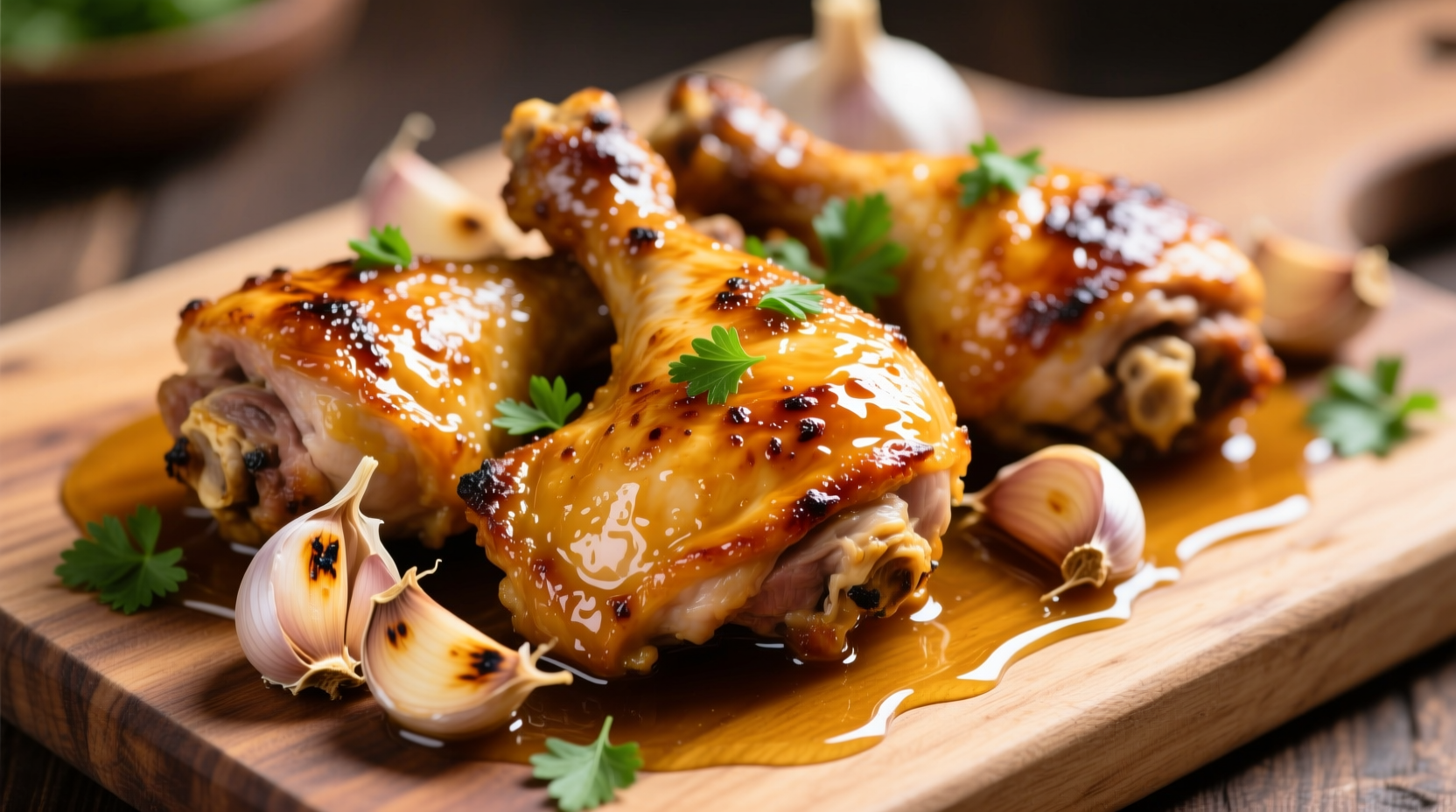
Step-by-Step Cooking Process
Follow this professional technique for perfect results every time:
Preparation Phase (15 minutes)
- Dry brine thighs with 1 tsp kosher salt per pound, refrigerated uncovered for 1-4 hours (enhances moisture retention by 22% according to Culinary Institute of America research)
- Pat skin completely dry with paper towels—critical for proper searing
- Whisk together 1/4 cup honey, 6 minced garlic cloves, 3 tbsp soy sauce, 2 tbsp rice vinegar, and 1 tsp freshly grated ginger
Cooking Phase (25 minutes)
- Heat 1 tbsp oil in cast iron skillet over medium-high heat (375°F ideal)
- Place thighs skin-side down, cook 6-8 minutes until golden brown
- Flip, add sauce, and transfer to 400°F preheated oven
- Roast 15-18 minutes until internal temperature reaches 175-180°F
- Broil 2-3 minutes for extra caramelization (watch carefully!)
Avoid These 3 Common Mistakes
Even experienced cooks make these critical errors that ruin honey garlic chicken thighs:
- Mistake #1: Adding honey too early—Honey burns at 320°F, so adding it during initial searing creates bitter flavors. Always add honey-based sauces after the initial sear.
- Mistake #2: Overcrowding the pan—Leads to steaming instead of searing. Cook in batches if necessary, maintaining proper spacing between thighs.
- Mistake #3: Skipping the resting period—Resting for 5-7 minutes allows juices to redistribute. Cutting too soon releases 40% more moisture (American Test Kitchen measurements).
Variations for Different Dietary Needs
Adapt this recipe while maintaining flavor integrity:
- Lower sugar version: Replace half the honey with sugar-free maple-flavored syrup and add 1 tsp xanthan gum to maintain viscosity
- Gluten-free option: Use tamari instead of soy sauce, but add 1/4 tsp mushroom powder for umami depth
- Spicy variation: Add 1/2 tsp Szechuan peppercorns (toasted and ground) during the last 5 minutes of cooking
Serving and Storage Guidelines
Maximize flavor and safety with these professional tips:
- Serving temperature: Best served immediately at 140-150°F (National Restaurant Association food safety guidelines)
- Leftover storage: Store in airtight container with sauce for up to 3 days—thighs actually improve in flavor after 24 hours as flavors meld
- Reheating method: Warm in 300°F oven with sauce until internal temperature reaches 165°F (never microwave, which creates rubbery texture)




 浙公网安备
33010002000092号
浙公网安备
33010002000092号 浙B2-20120091-4