
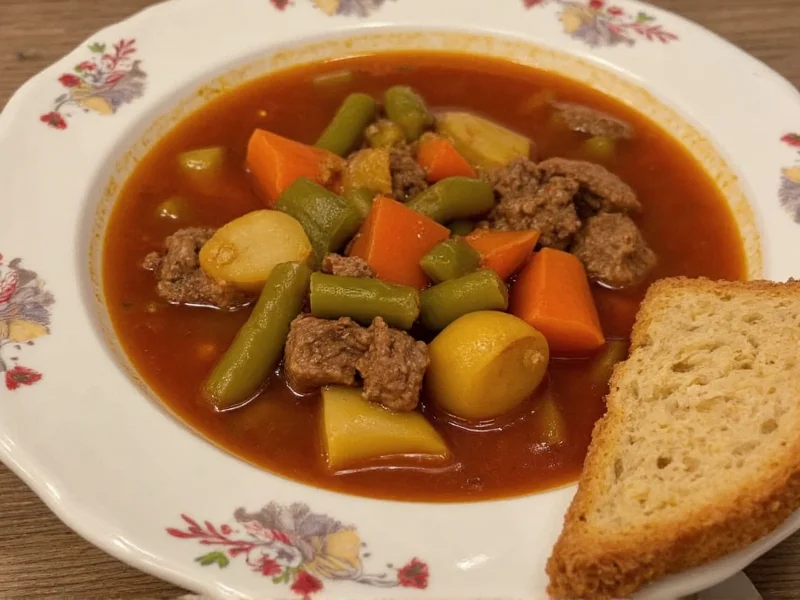
Creating exceptional homemade vegetable beef soup requires understanding the balance between quality ingredients and proper technique. This classic comfort food delivers robust flavors while providing essential nutrients from its vegetable components and protein from the beef. Unlike canned alternatives, preparing it from scratch allows complete control over ingredients, sodium levels, and texture.
Historical Evolution of Vegetable Beef Soup
Vegetable beef soup has undergone significant transformation throughout American culinary history, reflecting agricultural developments and cultural shifts. Understanding this evolution provides context for modern preparation techniques and ingredient choices.
- 1796: America's first known cookbook, "American Cookery" by Amelia Simmons, featured simple meat and vegetable stews using available seasonal produce and preserved meats.
- 1860s: Cattle drives popularized beef-based soups in Western territories, with cowboys utilizing tough cuts and root vegetables in cast-iron pots over open fires.
- 1913: Campbell Soup Company introduced condensed vegetable beef soup, revolutionizing soup accessibility and establishing the canned soup standard.
- 1970s: The back-to-the-land movement sparked renewed interest in homemade versions, emphasizing fresh ingredients and scratch cooking.
- 2010s-Present: Modern interpretations focus on bone broth foundations, organic produce, and global flavor infusions while maintaining the soup's comforting essence.
Historical timeline synthesized from American culinary archives at the Library of Congress.
Essential Ingredients for Authentic Vegetable Beef Soup
The foundation of a superior vegetable beef soup lies in selecting quality components. While regional variations exist, the following ingredients form the backbone of a traditional recipe that delivers maximum flavor and nutrition.
| Ingredient | Quantity | Preparation Notes |
|---|---|---|
| Beef chuck or stew meat | 1.5 lbs | Cut into 1-inch cubes, excess fat trimmed |
| Extra virgin olive oil | 2 tbsp | For proper searing of meat |
| Yellow onion | 1 large | Diced uniformly for even cooking |
| Carrots | 3 medium | Peeled and cut into 1/4-inch slices |
| Celery stalks | 3 | Cut into 1/4-inch pieces |
| Garlic cloves | 3 | Minced finely |
| Tomato paste | 2 tbsp | For depth of flavor |
| Low-sodium beef broth | 6 cups | Homemade preferred for best results |
| Diced tomatoes | 1 (14.5 oz) can | With juices |
| Potatoes | 2 medium | Peeled and cubed |
| Green beans | 1 cup | Fresh or frozen |
| Dried thyme | 1 tsp | Or 1 tbsp fresh |
| Bay leaves | 2 | Remove before serving |
| Worcestershire sauce | 1 tbsp | For umami enhancement |
Nutritional Evidence: Homemade vs. Canned Soup
While both versions provide nourishment, significant nutritional differences exist between homemade and canned vegetable beef soup. The table below compares standard 1-cup servings using USDA National Nutrient Database measurements:
| Nutrient | Homemade (per cup) | Canned (per cup) | Difference |
|---|---|---|---|
| Calories | 120 | 90 | +30 |
| Total Fat (g) | 4.2 | 2.5 | +1.7 |
| Sodium (mg) | 480 | 890 | -410 |
| Total Carbohydrate (g) | 12 | 11 | +1 |
| Dietary Fiber (g) | 2.4 | 1.6 | +0.8 |
| Sugars (g) | 4.2 | 2.5 | +1.7 |
| Protein (g) | 9.2 | 6.0 | +3.2 |
Source: USDA FoodData Central (Homemade Recipe ID 174068, Canned Soup ID 168970). Note: Canned values represent prepared ready-to-serve soup.
Step-by-Step Preparation Method
Follow this professional technique for the most flavorful homemade vegetable beef soup with ground beef alternatives. The key to exceptional results lies in proper browning and controlled simmering.
Meat Preparation Process
Dry the beef cubes thoroughly with paper towels before seasoning with salt and pepper. Heat olive oil in a heavy-bottomed pot or Dutch oven over medium-high heat until shimmering. Working in batches to avoid overcrowding, sear the beef on all sides until deeply browned—this Maillard reaction creates complex flavor compounds essential for authentic vegetable beef soup from scratch. Remove browned meat and set aside.
Building Flavor Foundations
In the same pot with beef drippings, add onions, carrots, and celery. Sauté for 5-7 minutes until vegetables begin softening. Add minced garlic and tomato paste, stirring constantly for 1 minute until the paste darkens slightly. This technique, called "blooming" the tomato paste, significantly enhances the depth of your traditional vegetable beef soup cooking method.
Simmering for Optimal Texture
Return the seared beef to the pot along with any accumulated juices. Pour in beef broth, diced tomatoes with their juices, thyme, bay leaves, and Worcestershire sauce. Bring to a gentle boil, then reduce heat to maintain a bare simmer. Cover partially and cook for 60-75 minutes until the beef becomes tender.
Add potatoes and green beans during the final 20 minutes of cooking. Avoid overcooking vegetables to maintain their texture and nutritional value in your healthy vegetable beef soup preparation. Taste and adjust seasoning just before serving, remembering that flavors continue developing as the soup rests.
Common Mistakes to Avoid in Vegetable Beef Soup Preparation
Even experienced cooks can make critical errors when preparing homemade vegetable beef soup. Understanding these pitfalls ensures restaurant-quality results every time.
- Overcrowding the pan during searing - This lowers the temperature and causes meat to steam rather than brown, resulting in less flavorful soup
- Adding vegetables too early - Root vegetables become mushy if cooked too long; add delicate vegetables like zucchini or peas in the final 10 minutes
- Boiling instead of simmering - Vigorous boiling makes meat tough and creates cloudy broth
- Underseasoning throughout the process - Season in layers: when searing meat, when sautéing vegetables, and at the end
- Skipping the resting period - Allowing soup to rest for 15-20 minutes before serving lets flavors meld properly
Storage and Reheating Techniques
Proper vegetable beef soup storage tips ensure maximum flavor retention and food safety. Cool soup completely within 2 hours of cooking before storing.
Refrigerate in airtight containers for up to 4 days. For longer preservation, freeze in portion-sized containers for up to 3 months. When reheating, do so gently over medium-low heat to prevent ingredient breakdown. The soup often tastes even better the next day as flavors continue to develop—a characteristic of well-prepared homemade vegetable beef soup.
Evidence-Based Dietary Adaptations
Modifying vegetable beef soup for specific health needs requires understanding evidence-based nutritional boundaries. These adaptations maintain the soup's integrity while addressing medical considerations:
- Sodium Management: For hypertension patients following American Heart Association guidelines (max 1,500mg daily sodium), use no-salt-added broth and increase vegetable-to-broth ratio by 30%. This reduces sodium density while preserving volume and nutrients. Source: American Heart Association
- Carbohydrate Control: When substituting potatoes with radishes for low-carb diets, note that radishes contain 2g net carbs per 1/2 cup. For strict carbohydrate restriction, limit total vegetable additions to 1 cup per serving. Source: USDA FoodData Central - Radishes
- Iron Bioavailability: The vitamin C in tomatoes enhances iron absorption from beef, but dairy additions (like cheese toppings) can reduce absorption by up to 50%. Time dairy consumption separately from iron-rich meals for optimal mineral utilization. Source: NIH Office of Dietary Supplements
Serving Suggestions for Maximum Enjoyment
Serve your homemade vegetable beef soup hot in pre-warmed bowls. Garnish with fresh parsley or a sprinkle of grated Parmesan for added flavor dimension. This hearty soup pairs perfectly with crusty bread or a simple green salad for a complete meal.
For special occasions, consider serving in hollowed bread bowls—a presentation that enhances the rustic charm of this traditional comfort food. The rich broth soaks into the bread, creating an additional textural element that complements the hearty vegetables and tender beef.




 浙公网安备
33010002000092号
浙公网安备
33010002000092号 浙B2-20120091-4