
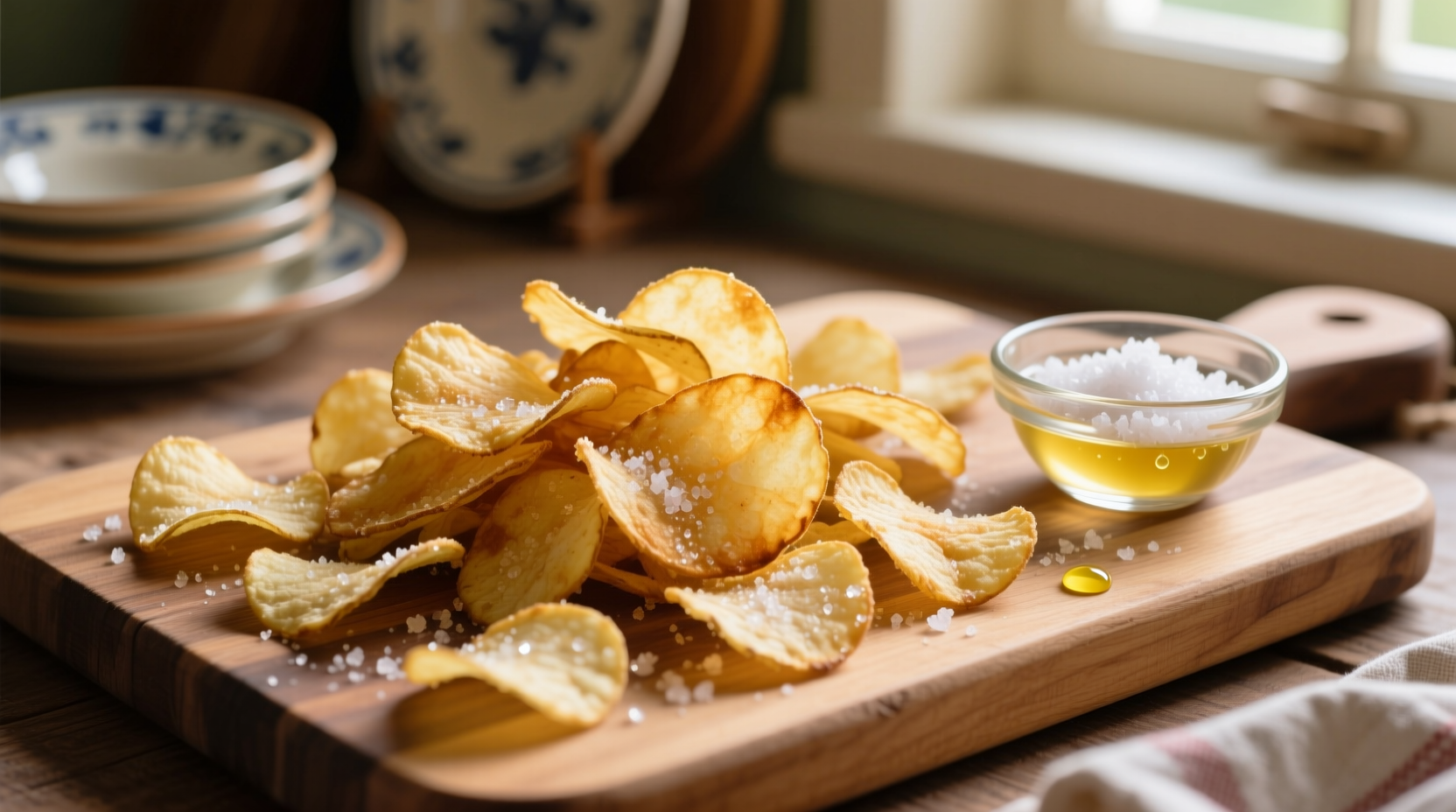
Creating perfect homemade salt and vinegar potato chips requires understanding the science behind crispiness and flavor absorption. Unlike commercial versions that use malt vinegar powder and artificial seasonings, authentic homemade chips rely on proper potato preparation and vinegar application techniques that maximize natural flavor penetration.
The Science Behind Crispy Homemade Chips
Professional chefs know that achieving restaurant-quality crispy baked salt and vinegar potato chips starts with understanding starch chemistry. When potatoes soak in cold water, they release excess starch that would otherwise cause chips to stick together and become soggy during cooking. The ideal soaking time is 30-60 minutes - any longer and you lose valuable flavor compounds.
According to USDA food safety guidelines, the optimal frying temperature for potato chips is between 350-375°F (175-190°C). At this temperature range, moisture evaporates quickly while the exterior forms a crisp barrier, preventing oil absorption. For baked salt and vinegar chips without deep fryer, a 400°F (204°C) oven with proper air circulation delivers comparable results.
| Preparation Method | Calories per Serving | Sodium Content | Key Ingredients |
|---|---|---|---|
| Homemade (our recipe) | 140 | 180mg | Potatoes, vinegar, sea salt |
| Store-Bought Brand A | 155 | 290mg | Potatoes, vinegar powder, maltodextrin, artificial flavors |
| Store-Bought Brand B | 160 | 310mg | Potatoes, modified food starch, vinegar solids, preservatives |
This nutritional comparison, based on data from the USDA FoodData Central, shows why healthy homemade salt and vinegar potato chips are superior. Without artificial additives and excessive sodium, homemade versions deliver cleaner flavor with better nutritional profile.
Step-by-Step Preparation Guide
Follow this professional chef-tested method for perfect salt and vinegar chips from scratch:
Ingredient Selection
Choose high-starch potatoes like Russets or Yukon Golds for optimal crispiness. Avoid waxy varieties like red potatoes, which contain less starch and won't crisp properly. For the vinegar component, use 100% pure distilled white vinegar - its clean acidity penetrates chips better than malt vinegar.
Preparation Process
- Slice potatoes uniformly to 1/16 inch thickness using a mandoline slicer
- Soak slices in ice water for 30 minutes to remove excess starch
- Dry thoroughly with clean kitchen towels - moisture is the enemy of crispiness
- Fry in batches at 365°F for 2-3 minutes until golden
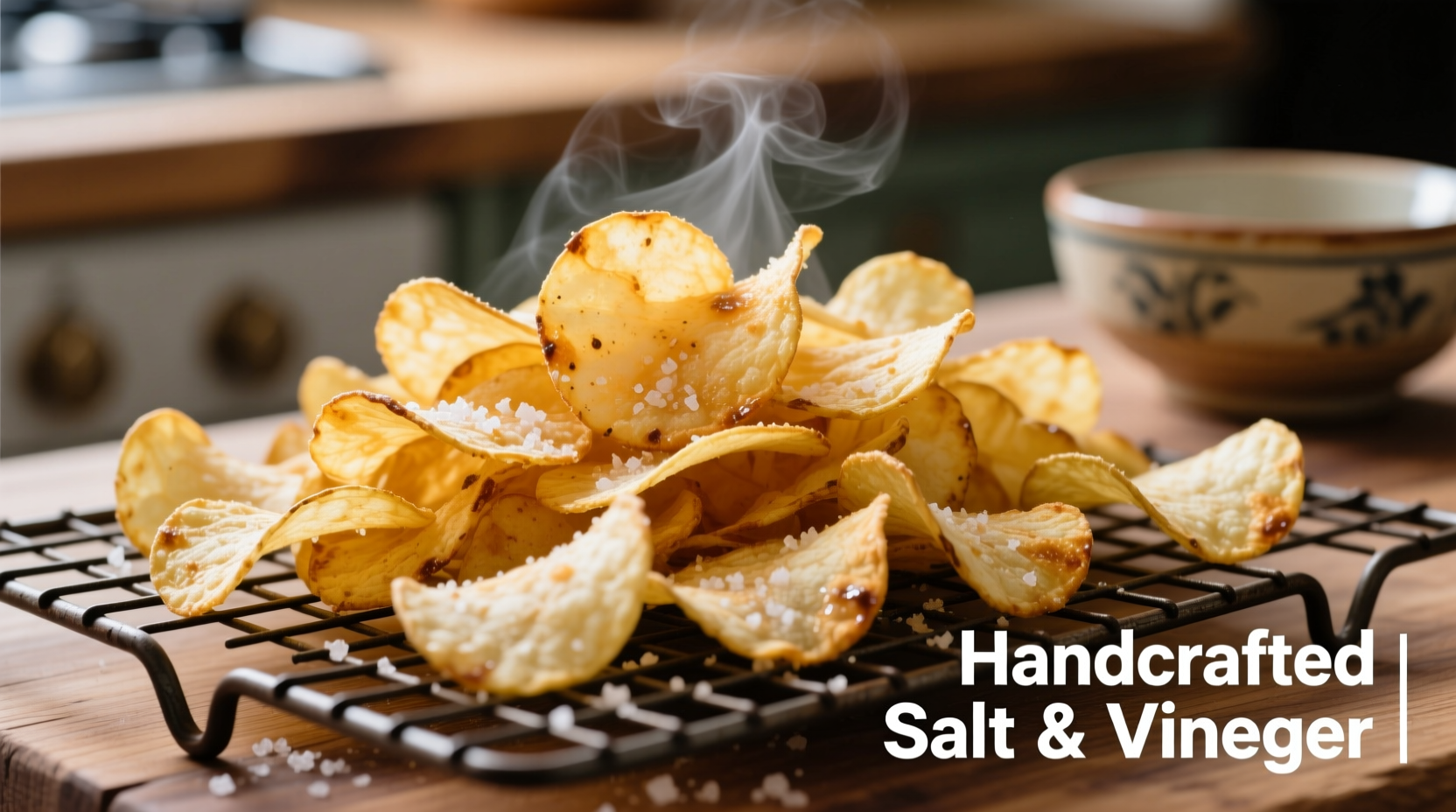
- Drain immediately on wire racks, not paper towels (traps steam)
- Spray with vinegar mist while chips are still hot
- Season with fine sea salt immediately after vinegar application
Troubleshooting Common Issues
Even experienced home cooks encounter challenges with making salt and vinegar chips at home. Here's how to solve the most frequent problems:
Soggy Chips
This occurs when potatoes aren't dried properly before frying or when oil temperature drops too low. Maintain consistent oil temperature using a thermometer, and never overcrowd the frying basket. For oven-baked salt and vinegar potato chips, ensure proper spacing on baking sheets to allow air circulation.
Uneven Seasoning
The secret to evenly distributed flavor is applying vinegar as a fine mist while chips are still hot, followed immediately by salt. The heat creates tiny pores in the chip surface that absorb the vinegar, while the residual oil helps the salt adhere. Never toss chips in seasoning - this creates clumping.
Storage and Serving Recommendations
For best results, consume freshly made salt and vinegar potato chips within 24 hours. Store in airtight containers with a silica packet to absorb moisture. Avoid refrigeration, which introduces humidity that destroys crispness. When serving, pair with creamy dips like sour cream and chive to balance the tangy flavor profile.
Historical Context of Salt and Vinegar Chips
Salt and vinegar chips originated in the UK during the 1950s as an alternative to traditional salted varieties. The first commercial version appeared in 1956 by Tayto in Ireland, using a vinegar powder coating process. Unlike modern authentic homemade salt and vinegar chips, early commercial versions used malt vinegar powder because liquid vinegar would make the chips soggy during packaging.




 浙公网安备
33010002000092号
浙公网安备
33010002000092号 浙B2-20120091-4