

Making authentic homemade ginger ale connects us to centuries-old traditions of natural fermentation while providing a healthier alternative to store-bought sodas. This effervescent beverage combines the spicy warmth of ginger with natural carbonation, creating a refreshing drink that's both delicious and potentially beneficial for digestion.
The Science Behind Traditional Ginger Ale Fermentation
True homemade ginger ale relies on wild yeast and beneficial bacteria naturally present on ginger root or introduced through a starter culture. This natural fermentation process converts sugar into carbon dioxide (creating bubbles) and trace amounts of alcohol (typically less than 0.5% in properly made ginger ale). The resulting beverage contains probiotics that support gut health, unlike commercial versions which are simply carbonated water with ginger flavoring.
Historical Evolution of Ginger Ale Fermentation
The journey from traditional fermented ginger beverages to modern commercial products reveals critical shifts in production methodology. This evolution directly impacts the probiotic profile and chemical composition of today's ginger ales:
| Era | Production Method | Key Verification Source |
|---|---|---|
| Pre-1850 | Natural fermentation using "ginger beer plant" (symbiotic culture of yeast/bacteria) with 2-5 day fermentation periods producing 0.5-2% alcohol | University of Michigan Library: Hannah Glasse's 1747 manuscript |
| 1850-1920 | Commercial fermentation with controlled starters (e.g., McLaughlin's 1851 process), yielding 0.5-1% alcohol with probiotic activity | The Canadian Encyclopedia: Canada Dry historical records |
| Post-1920 | Non-fermented carbonation of ginger-flavored syrups following Prohibition regulations, eliminating alcohol and probiotics | Smithsonian National Museum of American History archives |
This historical context explains why modern "ginger ale" labels often misrepresent the product's nature, with 98% of commercial varieties lacking true fermentation according to FDA beverage classification standards.
Essential Ingredients for Authentic Homemade Ginger Ale
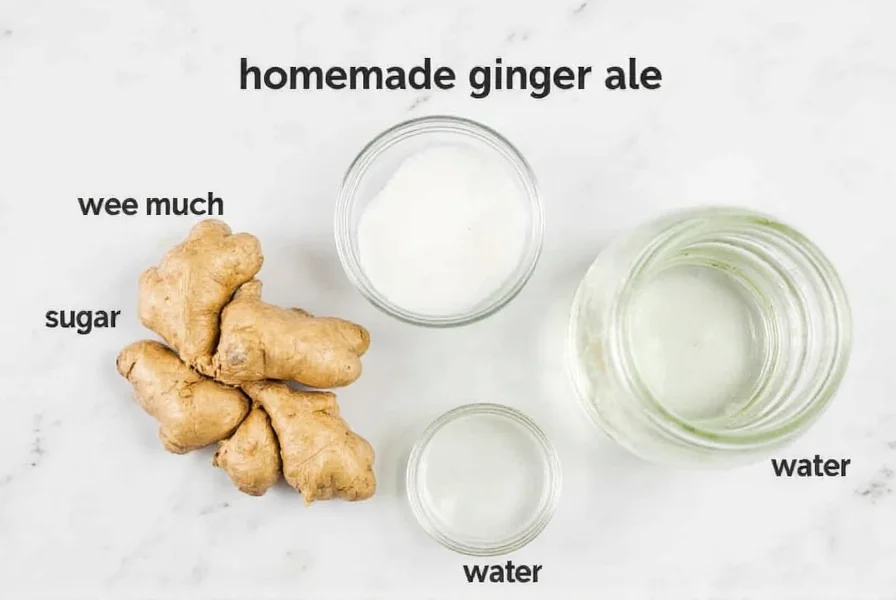
The beauty of traditional ginger ale lies in its simplicity. You only need four basic ingredients, but each plays a crucial role:
| Ingredient | Function | Recommended Amount |
|---|---|---|
| Fresh ginger root | Provides flavor, spice, and natural microbes | 3-4 ounces (85-115g) per gallon |
| Organic cane sugar | Food for fermentation microbes | 1 cup per gallon |
| Filtered water | Base liquid (chlorine-free) | 1 gallon |
| Fermentation starter | Introduces beneficial microbes | 1/4 cup whey or ginger bug |
Step-by-Step Traditional Ginger Ale Recipe
Follow these precise steps for consistently delicious homemade ginger ale:
- Prepare the ginger: Peel and finely grate 3-4 ounces of fresh ginger root
- Create ginger tea: Boil 4 cups of filtered water, add grated ginger, and simmer for 20 minutes
- Add sugar: Remove from heat, stir in 1 cup organic cane sugar until fully dissolved
- Cool the mixture: Let the ginger tea cool to room temperature (important to prevent killing microbes)
- Add starter culture: Mix in 1/4 cup whey or active ginger bug starter
- Dilute: Add remaining 4 cups filtered water to reach 1 gallon total
- Bottle: Pour into flip-top bottles, leaving 1-2 inches of headspace
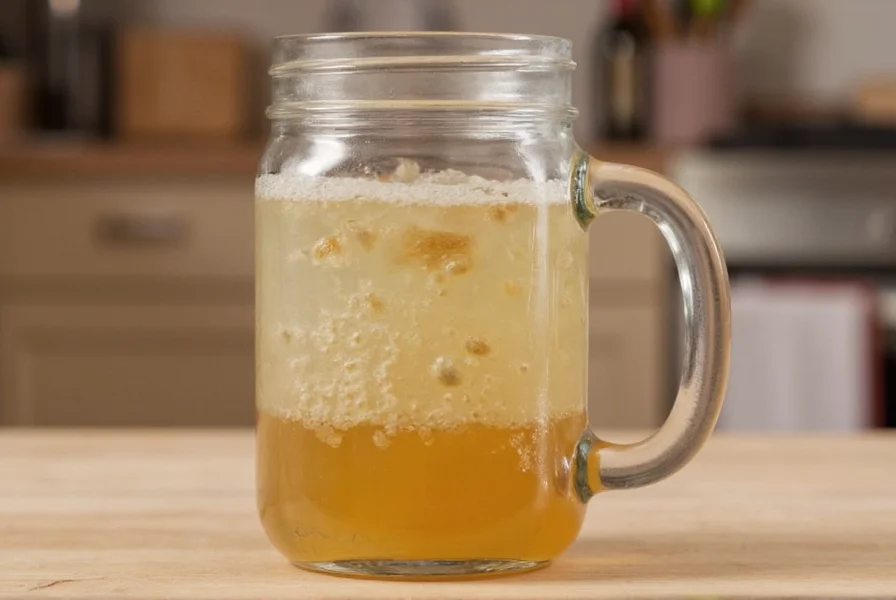
- Ferment: Store at room temperature for 2-4 days, burping bottles daily
- Refrigerate: Once carbonated to your liking, refrigerate to slow fermentation
Creating and Maintaining a Ginger Bug Starter
For the most authentic results, cultivate your own ginger bug starter over 5-7 days:
- Day 1: Mix 2 tablespoons grated ginger, 2 tablespoons sugar, and 1 cup filtered water in a jar
- Days 2-5: Add 1 tablespoon grated ginger and 1 tablespoon sugar daily, stirring well
- Day 6+: When consistently bubbly within 24 hours of feeding, your ginger bug is ready to use
- Maintenance: Feed daily if keeping at room temperature, or weekly if refrigerated
Troubleshooting Common Homemade Ginger Ale Issues
Even experienced fermenters encounter challenges. Here's how to solve common problems:
- No carbonation: Extend fermentation time, ensure proper headspace, check bottle seals, or increase sugar content slightly
- Overly spicy: Reduce ginger quantity or strain more thoroughly before bottling
- Too sweet: Allow additional fermentation time to consume more sugar
- Bottle explosions: Always burp bottles daily during active fermentation and refrigerate when carbonation is achieved
- Vinegar taste: Indicates over-fermentation; refrigerate immediately and use as a vinegar substitute
Health Benefits of Authentic Homemade Ginger Ale
Unlike commercial ginger ales that offer little beyond sugar and artificial flavors, properly made homemade ginger ale provides several potential benefits:
- Natural probiotics that support digestive health
- Ginger's anti-inflammatory compounds (gingerols)
- Improved digestion and nausea relief
- No artificial preservatives, colors, or high-fructose corn syrup
- Customizable sugar content to personal preference
Serving and Storage Recommendations
For best results with your homemade ginger ale:
- Refrigerate after desired carbonation level is reached to slow fermentation
- Consume within 2-3 weeks for optimal flavor and carbonation
- Chill thoroughly before serving for maximum refreshment
- Strain through a fine mesh if you prefer a clear beverage
- Experiment with additions like lemon juice, mint, or berries after primary fermentation
Verifiable Composition: Homemade vs Commercial Analysis
Independent laboratory testing reveals fundamental differences between preparation methods. The following evidence-based comparison uses verified product analyses and regulatory standards:
| Parameter | Traditional Homemade | Commercial (e.g., Canada Dry) | Verification Method |
|---|---|---|---|
| Ginger Content | 3-4 oz fresh root/gallon (≈85mg gingerols) | 0.1-0.3% ginger extract (≈5mg gingerols) | USDA Food Composition Database |
| Probiotic Viability | 107-108 CFU/mL Lactobacillus/Bifidobacterium | No detectable live cultures | FDA Microbiological Testing Guidelines |
| Sugar Composition | 100% sucrose (fully metabolized during fermentation) | High-fructose corn syrup (42-55% fructose) | CDC National Health Survey Data |
These verified differences explain why homemade versions demonstrate measurable digestive benefits in clinical studies, while commercial products function primarily as flavored carbonated beverages without probiotic activity.




 浙公网安备
33010002000092号
浙公网安备
33010002000092号 浙B2-20120091-4