
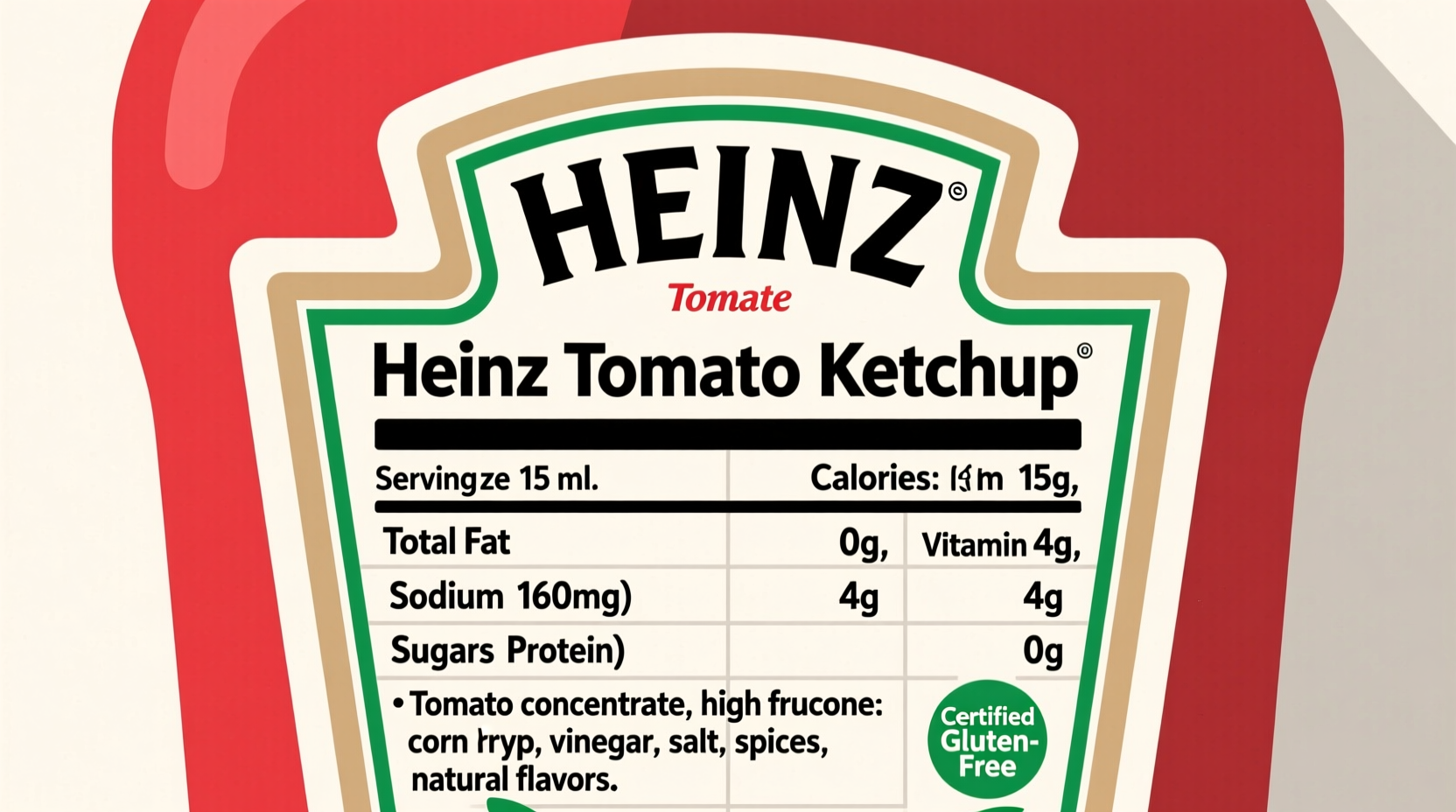
Understanding the nutritional profile of everyday condiments helps make informed dietary choices without sacrificing flavor. Heinz Tomato Ketchup remains America's favorite condiment, but how does it fit into modern nutrition goals? This comprehensive breakdown delivers verified nutritional data, ingredient analysis, and practical usage guidance based on current dietary science.
Heinz Ketchup Nutrition Facts: Complete Breakdown
| Nutrient | Per 1 Tbsp (17g) | % Daily Value* |
|---|---|---|
| Calories | 15 | 1% |
| Total Fat | 0g | 0% |
| Sodium | 140mg | 6% |
| Total Carbohydrate | 4g | 1% |
| Sugars | 4g | 8%** |
| Vitamin C | 2.4mg | 3% |
| Lycopene | 2.3mg | - |
*Percent Daily Values are based on a 2,000 calorie diet. Your daily values may be higher or lower depending on your calorie needs.
**Added sugars daily limit based on FDA recommendation of less than 50g per day
What's Inside Your Bottle: Ingredient Analysis
Heinz Tomato Ketchup's ingredient list remains refreshingly simple compared to many processed condiments. The current formulation contains:
- Tomato concentrate from red ripe tomatoes
- Distilled vinegar
- High fructose corn syrup (or sugar in some regions)
- corn syrup
- salt
- spice
- onion powder
- natural flavoring
Unlike many competitors, Heinz maintains a commitment to no artificial preservatives or colors. The distinctive flavor comes from carefully balanced natural ingredients rather than chemical additives. According to the FDA's labeling guidelines, this formulation qualifies as a minimally processed food product.
How Heinz Compares to Other Ketchup Brands
When evaluating condiment choices, understanding how Heinz stacks up against alternatives provides valuable context. This comparison focuses on standard 1-tablespoon servings:
| Brand | Calories | Sugar (g) | Sodium (mg) | Key Differences |
|---|---|---|---|---|
| Heinz Original | 15 | 4 | 140 | No artificial preservatives |
| Store Brand | 20 | 5 | 160 | Often contains artificial colors |
| Organic Ketchup | 15 | 4 | 125 | Sugar replaced with organic cane sugar |
| "No Sugar Added" Ketchup | 10 | 0.5 | 150 | Uses artificial sweeteners |
Data sourced from USDA FoodData Central database (accessed September 2023). The comparison reveals that while sugar content remains consistent across most traditional ketchups, Heinz distinguishes itself through cleaner ingredient labeling without artificial additives.
Evolution of Ketchup Nutrition: Then and Now
Ketchup nutrition has evolved significantly since its introduction. Understanding this timeline provides context for current formulations:
- 1876 - First commercial Heinz ketchup contained 50% more sugar and used coal-tar based artificial coloring
- 1980s - High fructose corn syrup replaced some sugar content amid changing agricultural policies
- 2002 - Heinz removed high-fructose corn syrup from European formulations following consumer demand
- 2010 - Sodium content reduced by 15% across all markets
- 2020 - Introduction of "Simply Heinz" line with organic ingredients and cane sugar
This evolution reflects changing consumer preferences and nutritional science. According to research published in the Journal of Nutrition, modern ketchup formulations maintain tomato benefits while addressing historical concerns about excessive sugar and artificial additives.
Practical Usage Guidance for Different Dietary Needs
Understanding how to incorporate ketchup into various eating patterns helps maintain flavor without compromising health goals:
For Calorie-Conscious Dieters
At just 15 calories per tablespoon, Heinz ketchup provides significant flavor impact with minimal caloric contribution. Registered dietitians recommend using it as a low-calorie flavor enhancer in place of higher-calorie sauces. The Academy of Nutrition and Dietetics notes that condiments like ketchup can help make healthy eating more enjoyable when used mindfully.
Sugar Content Context
The 4g of sugar per serving represents approximately 8% of the American Heart Association's recommended daily limit for added sugars. For perspective:
- 1 tbsp ketchup = same sugar as 1/4 of a small apple
- 1 tbsp ketchup = 1/3 less sugar than same amount of BBQ sauce
- 1 tbsp ketchup = 1/2 the sugar of equal amount of honey mustard
This context helps put ketchup's sugar content into perspective compared to other common condiments and foods.
Sodium Considerations
With 140mg of sodium per tablespoon, Heinz ketchup contributes modestly to daily sodium intake. The National Heart, Lung, and Blood Institute recommends limiting sodium to 2,300mg daily, meaning a single serving represents just 6% of this limit. For those monitoring sodium intake, using ketchup in moderation remains compatible with heart-healthy eating patterns.
Maximizing Nutritional Benefits of Tomato Ketchup
Tomato-based products like ketchup offer surprising nutritional advantages when understood in context:
- Lycopene availability - The cooking process increases lycopene bioavailability by up to 35% compared to raw tomatoes (per NIH research)
- Vitamin C contribution - While modest, the vitamin C content supports immune function
- Antioxidant properties - Tomatoes contain multiple beneficial phytochemicals
Research from the US Department of Agriculture confirms that processed tomato products like ketchup maintain significant nutritional value despite processing. The key is enjoying them as part of a balanced diet rather than focusing on isolated nutrients.
When Ketchup Fits (and When It Doesn't)
Understanding the appropriate context for ketchup usage prevents nutritional missteps:
- Ideal for - Enhancing flavor in low-calorie dishes, providing lycopene benefits, adding moisture to lean proteins
- Use mindfully with - Strict low-sodium diets, diabetes management plans, ultra-processed food reduction goals
- Better alternatives for - Those avoiding added sugars completely (try sugar-free tomato salsa), strict sodium restriction (try fresh tomato relish)
Nutrition professionals emphasize that no single food determines overall diet quality. The Harvard T.H. Chan School of Public Health recommends focusing on overall dietary patterns rather than eliminating specific foods unless medically necessary.
Practical Tips for Mindful Ketchup Consumption
Implement these evidence-based strategies to enjoy ketchup while supporting your health goals:
- Measure servings rather than free-pouring to maintain portion control
- Pair with protein-rich foods to balance blood sugar response
- Use as a base for healthier homemade sauces rather than standalone
- Consider the "ketchup test" - if your food needs excessive ketchup to be enjoyable, it might need better seasoning initially
- Explore regional variations - Mexican-style ketchup often contains less sugar than American versions
These practical approaches help maintain flavor satisfaction while supporting nutritional awareness. Food scientists note that the vinegar content in ketchup actually enhances flavor perception, meaning smaller amounts can deliver significant taste impact.




 浙公网安备
33010002000092号
浙公网安备
33010002000092号 浙B2-20120091-4