
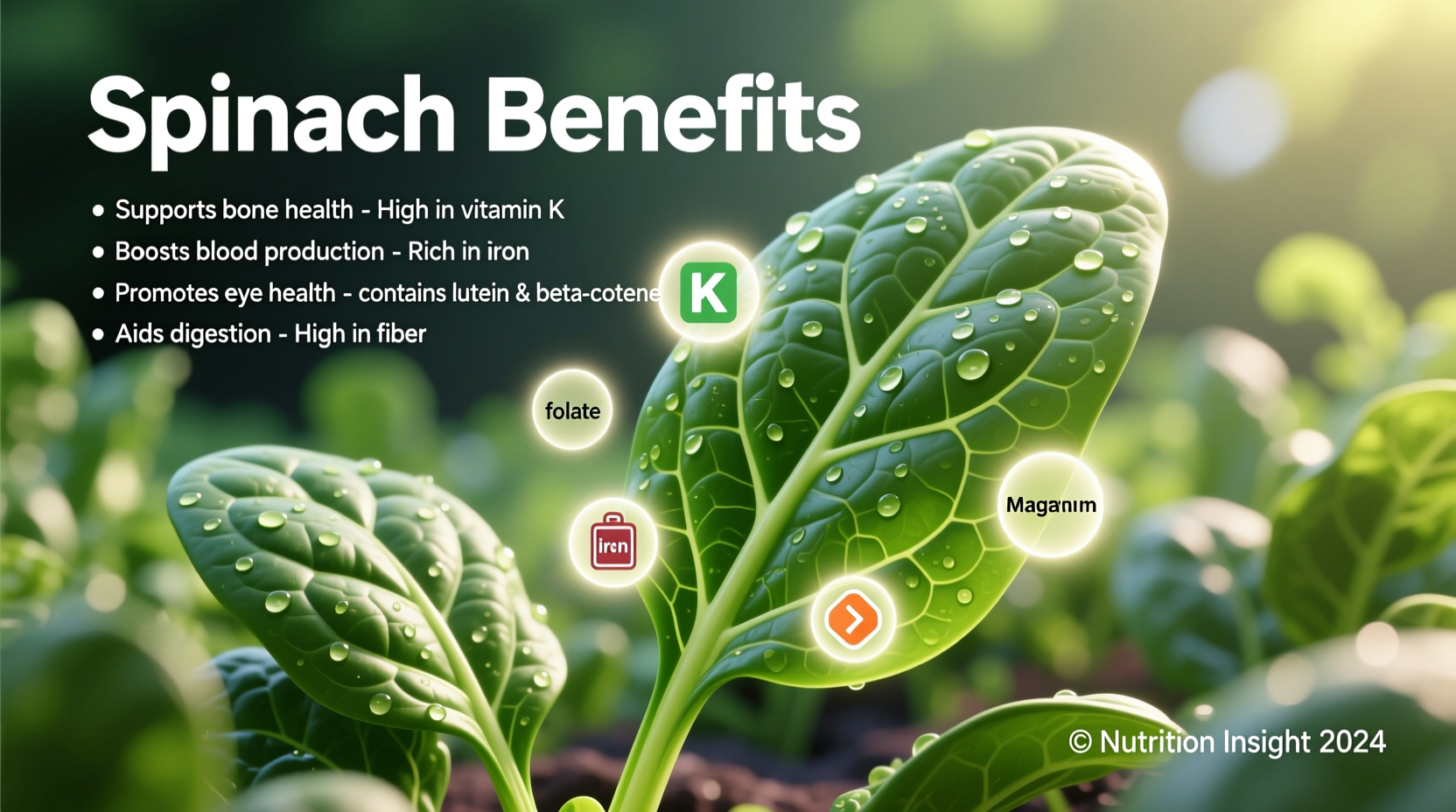
Discover why this leafy green powerhouse has been celebrated in culinary traditions for centuries. In this comprehensive guide, you'll learn exactly how spinach benefits your body, the science-backed evidence supporting these claims, and practical ways to maximize its nutritional impact in your daily meals.
Nutritional Powerhouse: What Makes Spinach Special
Spinach isn't just another green vegetable - it's a concentrated source of essential nutrients that work synergistically to support your health. Unlike many vegetables that excel in one or two nutrients, spinach delivers a remarkably broad spectrum of vitamins, minerals, and phytonutrients.
| Nutrient | Per 100g Raw | Daily Value % | Compared to Kale |
|---|---|---|---|
| Vitamin K | 483 mcg | 402% | 2.3x higher |
| Vitamin A | 469 mcg | 52% | 1.8x higher |
| Folate | 194 mcg | 49% | 2.1x higher |
| Magnesium | 79 mg | 19% | 1.3x higher |
| Iron | 2.7 mg | 15% | 1.2x higher |
Nutritional comparison based on USDA FoodData Central data. Values represent raw spinach versus raw kale per 100g serving.
This nutrient density explains why spinach consistently ranks among the top functional foods in dietary research. According to the National Institutes of Health, leafy greens like spinach contribute significantly to meeting daily micronutrient requirements while providing powerful antioxidant compounds.
Science-Backed Health Benefits of Spinach
Heart Health Protection
Spinach contains high levels of dietary nitrates that convert to nitric oxide in your body, helping to relax blood vessels and improve circulation. A study published in Hypertension found that consuming nitrate-rich vegetables like spinach reduced systolic blood pressure by 4-5 mmHg in just 24 hours. The potassium content in spinach (558mg per cooked cup) also helps counteract sodium's effects on blood pressure.
Vision Preservation and Eye Health
The lutein and zeaxanthin in spinach accumulate in your retina, acting as natural sunglasses that filter harmful blue light. Research from the National Eye Institute shows that higher dietary intake of these carotenoids reduces the risk of age-related macular degeneration by up to 43%. One cup of cooked spinach provides approximately 19.7mg of lutein and zeaxanthin - more than any other commonly consumed vegetable.
Bone Strength and Density Support
While calcium often gets the spotlight for bone health, vitamin K is equally crucial as it activates osteocalcin, the protein that binds calcium to bones. With over 800% of your daily vitamin K in just one cooked cup, spinach significantly contributes to bone mineralization. A long-term study in the American Journal of Clinical Nutrition found that higher vitamin K intake correlated with a 22% lower risk of hip fractures in older adults.
Blood Sugar Management
The alpha-lipoic acid in spinach has been shown to improve insulin sensitivity and lower glucose levels. According to research published in PLOS ONE, this compound reduces oxidative stress in diabetic patients and may help prevent diabetic neuropathy. Spinach's high magnesium content (157mg per cooked cup) also plays a critical role in glucose metabolism, with numerous studies linking adequate magnesium intake to reduced type 2 diabetes risk.
Anti-Inflammatory and Antioxidant Effects
Spinach contains more than a dozen different flavonoid compounds with potent anti-inflammatory properties. A comprehensive review in Nutrients journal highlighted how spinach's unique combination of kaempferol, quercetin, and other polyphenols reduces markers of inflammation like C-reactive protein. These compounds work synergistically to protect your cells from oxidative damage that contributes to chronic disease development.
Maximizing Spinach's Nutritional Benefits
Preparation Methods That Boost Absorption
How you prepare spinach dramatically affects nutrient availability. Cooking spinach increases the bioavailability of carotenoids like beta-carotene and lutein by breaking down cell walls. However, vitamin C content decreases with heat. For optimal nutrient retention:
- Lightly steam for 3-5 minutes to preserve water-soluble vitamins while increasing carotenoid absorption
- Add a small amount of healthy fat (olive oil, avocado) to enhance absorption of fat-soluble vitamins
- Pair with vitamin C-rich foods like citrus or bell peppers when eating raw to improve non-heme iron absorption
- Avoid overcooking which can reduce folate content by up to 50%
Daily Intake Recommendations
For significant health benefits, aim for at least 1-2 cups of cooked spinach or 2-3 cups raw per day. The Dietary Guidelines for Americans recommend consuming 1.5-2 cups of dark green vegetables weekly, but research suggests greater benefits from more frequent consumption. A Harvard T.H. Chan School of Public Health analysis indicates that people consuming leafy greens at least once daily show slower cognitive decline compared to those eating them less than once a week.
Practical Incorporation Strategies
You don't need to choke down plain spinach to reap its benefits. Try these chef-approved techniques:
- Smoothie blending: Add a handful to fruit smoothies (the sweetness masks any bitterness)
- Omelet enhancement: Sauté with garlic and fold into eggs
- Pasta integration: Stir into tomato sauce during the last few minutes of cooking
- Grain boosting: Mix into cooked quinoa, rice, or farro
- Spinach pesto: Blend with basil, nuts, olive oil, and garlic for a nutrient-dense sauce
Important Considerations and Limitations
Understanding Oxalate Content
Spinach contains oxalates (about 750mg per cooked cup), which can bind to calcium and potentially contribute to kidney stone formation in susceptible individuals. If you have a history of calcium-oxalate kidney stones:
- Pair spinach with calcium-rich foods during the same meal to reduce oxalate absorption
- Consider alternating with lower-oxalate greens like kale or lettuce
- Boiling spinach and discarding the water can reduce oxalate content by up to 50%
For most people, the health benefits of spinach far outweigh potential concerns about oxalates. The National Kidney Foundation emphasizes that dietary restrictions should be personalized based on individual health status rather than applying blanket recommendations.
Seasonal and Sourcing Considerations
Spinach quality varies significantly by season and growing method:
- Spring and fall produce the sweetest, most tender spinach
- Winter spinach tends to be more bitter but higher in certain nutrients
- Organic vs conventional: Spinach frequently appears on the Environmental Working Group's "Dirty Dozen" list due to pesticide residues. If buying conventional, thoroughly wash leaves
- Storage tips: Keep unwashed in airtight container with paper towel for up to 5 days; avoid storing near ethylene-producing fruits
Frequently Asked Questions
Is raw or cooked spinach more nutritious?
Cooked spinach provides higher bioavailability of carotenoids like beta-carotene and lutein, while raw spinach retains more vitamin C and folate. For maximum overall nutrition, include both forms in your diet. Cooking reduces spinach's volume significantly, allowing you to consume more nutrients in a single serving.
How much spinach should I eat daily for health benefits?
For significant health benefits, aim for 1-2 cups of cooked spinach or 2-3 cups raw per day. Research shows that consuming leafy greens at least once daily is associated with slower cognitive decline and reduced chronic disease risk compared to less frequent consumption.
Can spinach help with weight loss?
Yes, spinach can support weight management due to its extremely low calorie density (only 7 calories per cup raw) while providing fiber and nutrients that promote satiety. The thylakoids in spinach have been shown in studies to reduce hunger and cravings, potentially helping with portion control.
Does spinach really improve iron levels?
Spinach contains non-heme iron (2.7mg per 100g), but its absorption is enhanced when paired with vitamin C. While not as readily absorbed as heme iron from animal sources, regular spinach consumption combined with vitamin C-rich foods can contribute to maintaining healthy iron levels, particularly for vegetarians and vegans.




 浙公网安备
33010002000092号
浙公网安备
33010002000092号 浙B2-20120091-4