
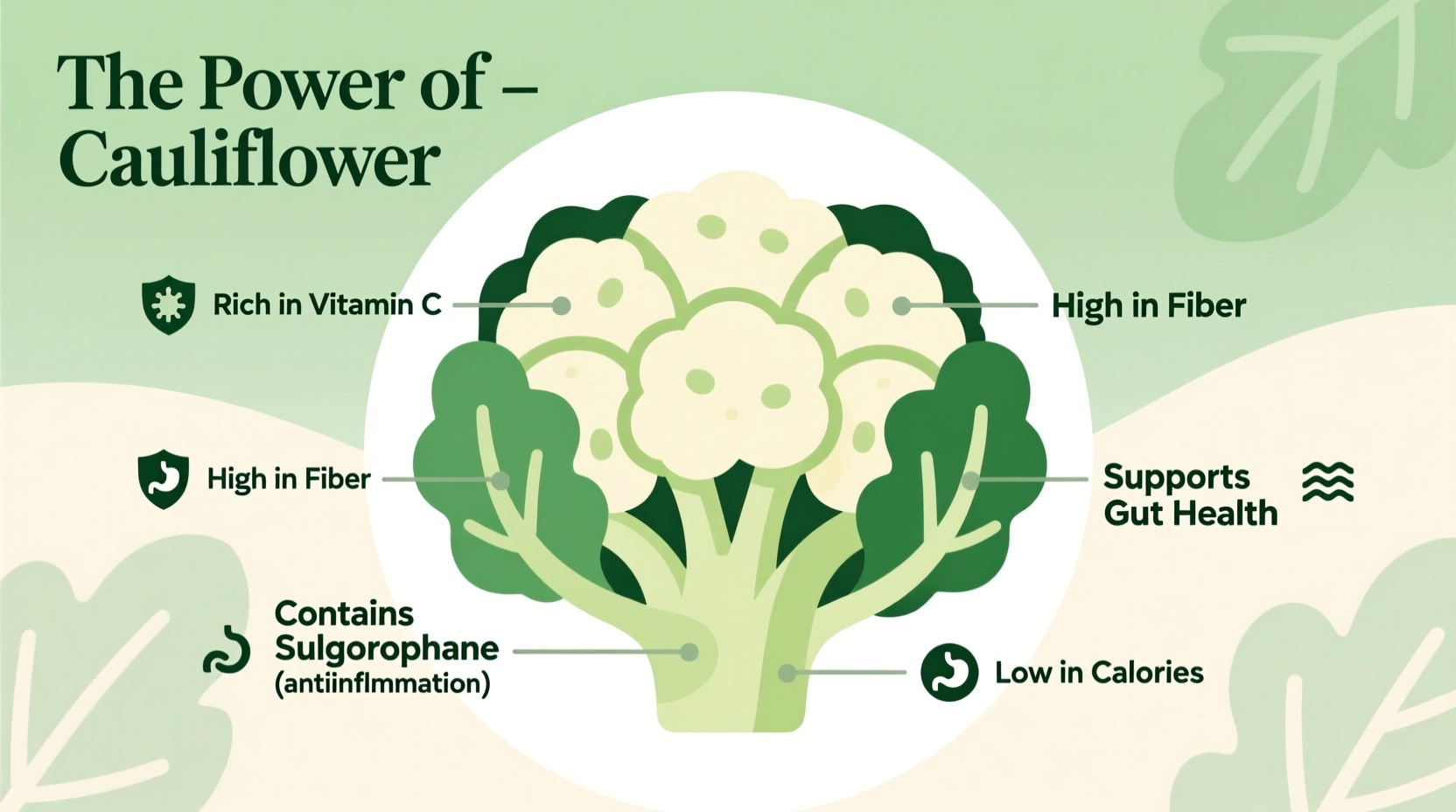
Why Cauliflower Deserves a Regular Spot in Your Kitchen
Most people relegate cauliflower to the background of their vegetable drawer, but this humble cruciferous vegetable packs a powerful nutritional punch. Unlike trendy superfoods that come and go, cauliflower has stood the test of time as a nutritional powerhouse with benefits supported by decades of scientific research. What makes cauliflower special isn't just what it contains, but how those compounds interact with your body's systems.
The Nutritional Powerhouse Profile
Before diving into specific health benefits, let's examine what makes cauliflower nutritionally unique. One cup (100g) of raw cauliflower contains:
| Nutrient | Amount per Cup | % Daily Value |
|---|---|---|
| Calories | 25 | 1% |
| Vitamin C | 48.2mg | 77% |
| Vitamin K | 16.6mcg | 14% |
| Folate | 57mcg | 14% |
| Potassium | 320mg | 9% |
| Dietary Fiber | 2.5g | 9% |
This impressive nutrient profile forms the foundation for cauliflower's health-promoting properties. Unlike many vegetables that excel in one or two areas, cauliflower delivers across multiple nutritional categories essential for whole-body health.
Cancer Prevention: The Cruciferous Connection
Cauliflower belongs to the cruciferous vegetable family, which includes broccoli, kale, and Brussels sprouts. These vegetables contain glucosinolates, sulfur-containing compounds that break down into biologically active substances like indole-3-carbinol and sulforaphane during chopping, chewing, or digestion.
According to research from the National Cancer Institute, these compounds have demonstrated potential in laboratory studies to inhibit cancer development through multiple mechanisms. Sulforaphane, in particular, has shown promise in activating protective enzymes and helping eliminate potential carcinogens from the body.
While human studies are ongoing, population research suggests that regular consumption of cruciferous vegetables correlates with reduced risk of certain cancers, particularly lung, colorectal, breast, and prostate cancers. The American Institute for Cancer Research recommends including cruciferous vegetables regularly as part of a cancer-preventive diet.

Heart Health: More Than Just Fiber
Your cardiovascular system benefits significantly from regular cauliflower consumption. The combination of fiber, potassium, and anti-inflammatory compounds creates a powerful trifecta for heart health.
A 2020 study published in the American Journal of Clinical Nutrition followed over 50,000 participants for 23 years and found that higher intake of cruciferous vegetables correlated with a 16% lower risk of atherosclerosis. The researchers attributed this to cauliflower's ability to reduce oxidative stress and inflammation in blood vessels.
Additionally, the fiber content helps manage cholesterol levels by binding to bile acids in the digestive tract, prompting the liver to pull cholesterol from the bloodstream to create new bile acids. The potassium content also helps regulate blood pressure by counteracting sodium's effects.
Digestive Health: Beyond Basic Fiber
Cauliflower provides both soluble and insoluble fiber, but its real digestive advantage comes from being a natural prebiotic. The fiber in cauliflower feeds beneficial gut bacteria, which then produce short-chain fatty acids like butyrate that nourish colon cells.
Research from the Harvard T.H. Chan School of Public Health indicates that diets rich in cruciferous vegetables improve gut microbiome diversity, which is increasingly recognized as crucial for overall health. A diverse microbiome supports not only digestion but also immune function, mental health, and inflammation control.
Brain Function and Development Support
Choline, a nutrient found abundantly in cauliflower, plays a critical role in brain development and function. One cup provides approximately 47mg of choline, contributing significantly to your daily needs.
According to the National Institutes of Health, choline is essential for producing acetylcholine, a neurotransmitter vital for memory, mood, and muscle control. During pregnancy, adequate choline intake supports fetal brain development and may reduce the risk of neural tube defects.
Practical Ways to Maximize Cauliflower's Benefits
To get the most from cauliflower's nutritional profile, preparation matters. Here's what the research shows:
- Don't overcook: Light steaming (5-6 minutes) preserves more glucosinolates than boiling. A study in the Journal of Agricultural and Food Chemistry found steaming retained 90% of cauliflower's beneficial compounds compared to 60% with boiling.
- Include healthy fats: Pair cauliflower with olive oil or avocado to enhance absorption of fat-soluble compounds.
- Add mustard seed: Research shows that the myrosinase enzyme in mustard seed powder helps convert glucosinolates to active compounds, boosting potential health benefits.
- Try fermented options: Fermented cauliflower (like cauliflower "sauerkraut") increases probiotic content while preserving nutrients.
Contextual Considerations: When Cauliflower Might Not Be Ideal
While cauliflower offers numerous benefits, certain individuals should approach it with awareness:
- People with thyroid conditions: Cauliflower contains goitrogens, which may interfere with thyroid function in sensitive individuals when consumed in extremely large quantities. However, cooking significantly reduces goitrogenic activity, and moderate consumption is generally safe for most people with thyroid issues.
- Those with IBS: The high FODMAP content in cauliflower may trigger symptoms for some with irritable bowel syndrome. Consulting a registered dietitian can help determine appropriate portions.
- People on blood thinners: The vitamin K content in cauliflower is substantial enough that those taking warfarin should maintain consistent intake rather than dramatic fluctuations.
The key is moderation and preparation method. For most people, the benefits of regular cauliflower consumption far outweigh potential concerns, especially when incorporated as part of a varied diet.
Incorporating Cauliflower Into Your Daily Routine
You don't need to eat plain steamed cauliflower to reap its benefits. Try these practical approaches:
- Rice cauliflower and use as a base for stir-fries (retains more nutrients than traditional rice)
- Add raw cauliflower florets to salads for crunch and nutrient density
- Roast with olive oil and spices for enhanced flavor and better nutrient absorption
- Blend into smoothies (you won't taste it but will get the nutritional benefits)
- Use as a pizza crust alternative for a low-carb, high-nutrient option
How Cauliflower Compares to Other Cruciferous Vegetables
While all cruciferous vegetables offer health benefits, cauliflower has some unique advantages:
| Vegetable | Calories per Cup | Vitamin C | Unique Compounds | Best Preparation |
|---|---|---|---|---|
| Cauliflower | 25 | 77% DV | Isothiocyanates | Light steaming |
| Broccoli | 55 | 135% DV | Sulforaphane | Raw or lightly steamed |
| Brussels Sprouts | 56 | 124% DV | Gluconasturtiin | Roasting |
| Kale | 33 | 89% DV | Kaempferol | Massaged raw or sautéed |
What makes cauliflower particularly versatile is its mild flavor profile and ability to take on other flavors, making it easier to incorporate regularly compared to more strongly flavored cruciferous vegetables.
Maximizing Your Cauliflower Experience
To ensure you're getting the most from your cauliflower:
- Choose heads with tight, creamy-white florets and fresh green leaves
- Store whole heads in a paper bag in the refrigerator for up to two weeks
- Wash just before use to maintain freshness
- Leave the core intact until ready to prepare to preserve nutrients
- Consider growing your own for peak freshness and nutrient density




 浙公网安备
33010002000092号
浙公网安备
33010002000092号 浙B2-20120091-4