
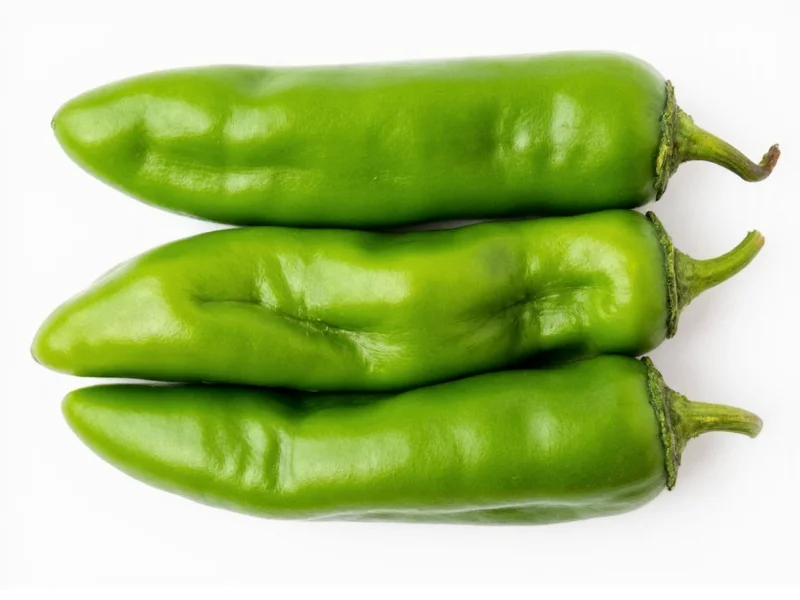
When exploring the hatch green chile scoville scale rating, it's essential to understand that New Mexico's famous Hatch Valley produces chiles with remarkable flavor complexity alongside their variable heat profile. These green chiles, harvested primarily between August and September, represent New Mexico's state vegetable and carry a Protected Designation of Origin status, meaning authentic Hatch chiles must be grown in the Hatch Valley region.
Understanding the Scoville Scale and Chile Heat Measurement
The Scoville scale, developed by pharmacist Wilbur Scoville in 1912, measures the pungency or 'heat' of chili peppers and other spicy foods. Originally determined through human taste testing, modern laboratories now use high-performance liquid chromatography (HPLC) to measure capsaicinoid concentrations—the compounds responsible for the burning sensation—and convert these measurements to Scoville Heat Units (SHU).
For those curious about how hot are hatch green chiles compared to other common peppers, understanding the scale's reference points helps contextualize their position:
| Pepper Variety | Scoville Heat Units (SHU) | Heat Level Classification |
|---|---|---|
| Hatch Green Chile (mild) | 1,000-2,500 | Mild |
| Hatch Green Chile (hot) | 5,000-8,000 | Medium |
| Jalapeño | 2,500-8,000 | Medium |
| Serrano | 10,000-23,000 | Medium-Hot |
| Habanero | 100,000-350,000 | Very Hot |
Historical Evolution of Hatch Green Chiles
The development of Hatch green chiles reflects centuries of agricultural adaptation in New Mexico's Rio Grande Valley. Key milestones demonstrate how cultivation practices shaped their distinctive characteristics:
- Pre-1500s: Indigenous Pueblo communities cultivated ancestral chile varieties
- 1913: New Mexico State University established formal chile breeding programs
- 1950s: Development of 'New Mexico No. 6' cultivar standardized commercial production
- 1970s: Introduction of 'Joe E. Parker' variety expanded heat profile diversity
- 1992: Founding of the Chile Pepper Institute at NMSU advanced scientific research
- 2014: Official trademark registration of "Hatch Chile" protected geographical identity
This progression explains why modern Hatch chiles exhibit such variability in heat levels compared to historically uniform heirloom varieties. The evolution continues through ongoing research at New Mexico State University's agricultural programs (Chile Pepper Institute Historical Timeline).
Factors Influencing Hatch Green Chile Heat Levels
The hatch green chile heat range varies considerably due to several environmental and agricultural factors. Understanding these variables explains why two Hatch chiles from the same harvest might deliver dramatically different heat experiences.
Soil composition and water stress significantly impact capsaicin production. Chiles grown in nutrient-poor soil or subjected to moderate water stress often develop higher capsaicin concentrations as a defense mechanism. The unique mineral composition of the Hatch Valley's soil contributes to the distinctive flavor profile that makes these chiles so prized.
Ripeness stage directly affects heat perception. Green Hatch chiles harvested earlier in the season tend to be milder, while those left to mature longer develop more capsaicin. As chiles ripen and turn red, their heat often intensifies, though the flavor becomes sweeter and more complex.
Specific cultivar plays a crucial role in determining potential heat. Popular Hatch varieties include:
- Big Jim - Typically milder (2,000-5,000 SHU)
- Silvia - Medium heat (4,000-6,000 SHU)
- Joe E. Parker - Hotter variety (6,000-8,000 SHU)
Hatch Green Chile vs. Other Popular Peppers
When comparing hatch green chile vs jalapeno heat, the relationship isn't straightforward. While jalapeños generally range from 2,500-8,000 SHU, Hatch green chiles span a similar range but with important distinctions. Mild Hatch varieties sit comfortably below most jalapeños in heat, while hot-labeled Hatch chiles can match or slightly exceed standard jalapeños.
The key difference lies in flavor complexity. Hatch chiles offer earthy, grassy notes with subtle smokiness when roasted, whereas jalapeños deliver brighter, sharper heat. This flavor dimension makes Hatch chiles particularly valuable in Southwestern cuisine, where their heat serves as just one component of a complex flavor profile.
For those exploring scoville scale for new mexico chiles, it's worth noting that New Mexico produces several chile varieties beyond Hatch. The 'New Mexico No. 6' and 'New Mexico 6-4' cultivars, often labeled simply as 'New Mexico chiles,' typically range from 500-7,000 SHU, overlapping significantly with Hatch varieties but generally leaning toward the milder end of the spectrum.
Practical Applications and Contextual Considerations
Understanding the hatch green chile scoville rating helps home cooks and professional chefs select appropriate varieties for different dishes. Mild Hatch chiles work beautifully in dishes where subtle heat complements other flavors without overwhelming them—think cheeseburgers, macaroni and cheese, or creamy soups.
Optimal Use Cases and Limitations
Hatch green chiles excel in specific culinary contexts but have important boundaries that affect performance:
- Texture Constraints: Fresh Hatch chiles lose structural integrity when cooked beyond 30 minutes, making them unsuitable for long-simmered dishes like chili con carne where texture degradation occurs (NMSU Extension Guide H-231).
- Freezing Limitations: While frozen Hatch chiles preserve flavor well for sauces and soups, their cellular structure breaks down during thawing, rendering them ineffective in dishes requiring crisp texture like chile rellenos.
- Heat Variability Challenge: The inconsistent SHU range makes fresh Hatch chiles impractical for commercial applications requiring precise heat control, where standardized products like dried chile powder are preferred (New Mexico Department of Agriculture Certification Standards).
- Regional Authenticity Requirement: Only chiles grown in the 250-mile Hatch Valley region develop the characteristic terroir-driven flavor profile; substitutes from other regions lack the mineral-rich soil composition essential for authentic taste.
Hotter varieties shine in traditional New Mexican dishes like stacked green chile cheeseburgers, enchiladas, and posole, where their heat cuts through rich ingredients. When roasting Hatch chiles—a traditional preparation method that enhances their natural sweetness—the blistered skin should be removed, as it contains concentrated capsaicin that can make even mild varieties unexpectedly hot.
For those concerned about managing heat levels, remember that capsaicin concentrates primarily in the chile's placenta (the white ribs and seeds). Removing these elements significantly reduces heat while preserving flavor. Additionally, dairy products like sour cream or cheese effectively neutralize capsaicin's burning sensation, making them perfect accompaniments to hotter Hatch varieties.
Seasonality and Authenticity of Hatch Green Chiles
True Hatch green chiles are only available fresh during their short harvest season from late July through September. This limited availability contributes to their culinary significance and the annual 'Hatch Chile Festival' held each August. During the off-season, frozen or canned Hatch chiles maintain their distinctive flavor, though texture differences affect certain applications.
Be aware that the term 'Hatch' has become somewhat generic in marketing. Only chiles grown in the Hatch Valley of New Mexico qualify as authentic Hatch chiles. Other regions produce similar varieties but lack the terroir that gives genuine Hatch chiles their distinctive flavor profile. When shopping, look for the 'Hatch Chile' certification logo to ensure authenticity.




 浙公网安备
33010002000092号
浙公网安备
33010002000092号 浙B2-20120091-4