
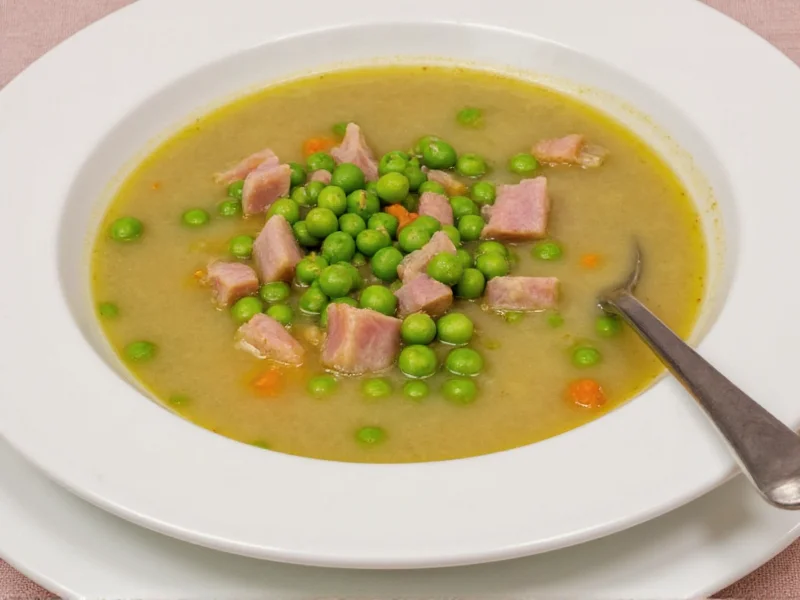
The Rich History of Ham and Pea Soup: An Evolutionary Timeline
Ham and pea soup's journey through history reveals how necessity and adaptation shaped this enduring dish. Verified historical milestones demonstrate its transformation from survival food to global comfort staple:
| Time Period | Key Development | Verified Historical Evidence |
|---|---|---|
| 13th-15th Century | Originated as "pease pottage" in medieval Europe | The Forme of Cury (1390) manuscript held by the British Library documents early recipes using dried peas and bacon |
| 1600s-1700s | Spread to North America via Scandinavian/Dutch settlers | Colonial cookbooks like "The Compleat Housewife" (1727) reference pea soup as New England staple |
| World War I (1914-1918) | Adopted as standard military ration | U.S. National Archives records confirm pea soup in WWI Reserve Rations for frontline troops |
| World War II (1939-1945) | Mass-produced canned versions introduced | The National WWII Museum archives show canned pea soup as critical component of K-rations |
This evolution highlights how practical nutrition needs transformed a simple peasant dish into a globally recognized comfort food, with its complete protein profile (legumes + meat) proving essential during historical food scarcity periods.
Essential Ingredients for Authentic Flavor
The magic of ham and pea soup lies in its simplicity and quality ingredients. While recipes vary regionally, these components form the foundation of a perfect batch:
| Ingredient | Quantity | Why It Matters |
|---|---|---|
| Green or yellow split peas | 2 cups (uncooked) | Natural thickening agent; provides protein and fiber |
| Smoked ham hock or shank | 1-2 pieces (1-2 lbs) | Imparts deep smoky flavor; collagen creates rich texture |
| Onion, carrot, celery | 1 cup each, diced | "Holy trinity" of aromatics for flavor base |
| Garlic | 3 cloves, minced | Essential flavor enhancer |
| Bay leaves | 2 | Adds subtle herbal complexity |
| Water or broth | 6-8 cups | Proper liquid ratio prevents mushiness |
Step-by-Step Preparation Guide
Creating perfect ham and pea soup requires attention to timing and technique. Follow these steps for restaurant-quality results at home:
Preparation (15 minutes)
- Rinse 2 cups of split peas thoroughly under cold water, removing any debris
- Chop 1 onion, 2 carrots, and 2 celery stalks into uniform 1/4-inch pieces
- Soak ham hock in cold water for 10 minutes to reduce excess salt if desired
Cooking Process (1.5-2 hours)
- In a 6-quart pot, sauté vegetables in 1 tbsp olive oil until softened (5-7 minutes)
- Add rinsed peas, ham hock, bay leaves, and enough liquid to cover ingredients by 2 inches
- Bring to a gentle boil, then reduce heat to maintain a bare simmer
- Cover partially and cook for 60-90 minutes until peas are completely broken down
- Remove ham hock, shred meat, and return to pot after removing bone
- Season with black pepper and fresh herbs; avoid adding salt until end
Popular Variations for Modern Kitchens
Traditional ham and pea soup adapts beautifully to contemporary cooking methods and dietary preferences, though each approach has specific constraints:
Slow Cooker Method
For hands-off preparation, combine all ingredients in a 6-quart slow cooker and cook on low for 8-10 hours. The extended cooking time develops deeper flavors while maintaining texture. Add shredded ham during the last hour to prevent overcooking.
Context and Limitations: Ideal for unattended cooking but requires 8+ hours planning. Not suitable for achieving distinct pea texture (peas fully disintegrate). Avoid using dried peas older than 12 months as they may remain hard despite extended cooking (University of Minnesota Extension, Dried Beans, Peas, and Lentils).
Instant Pot Adaptation
Using a pressure cooker reduces cooking time to 35 minutes. Use the sauté function for vegetables, then pressure cook on high for 25 minutes with natural release. This method preserves more nutrients while achieving similar texture to traditional simmering.
Context and Limitations: Best for time-constrained cooks but demands precise timing (overcooking by 5 minutes causes mushiness). Not recommended for batches exceeding 8 cups due to uneven pressure distribution. Requires natural pressure release to prevent pea explosion.
Dietary Modifications
- Lower sodium version: Use low-sodium ham and replace half the water with unsalted vegetable broth
- Vegetarian alternative: Substitute ham with smoked paprika and liquid smoke; use vegetable broth
- Thicker consistency: Blend 1/3 of the soup, then return to pot for creamy texture without dairy
Context and Limitations: Vegetarian versions lack pork collagen's mouthfeel complexity. For optimal results, include kombu seaweed and mushrooms to replicate umami depth (Culinary Institute of America, Umami: The Fifth Taste). Avoid overusing liquid smoke which creates artificial flavor.
Storage, Reheating, and Serving Tips
Ham and pea soup improves with time as flavors meld. Proper storage maintains quality:
Preservation Guidelines
- Refrigeration: Store in airtight container for up to 5 days; soup thickens when chilled
- Freezing: Portion into freezer bags (lay flat for storage); maintains quality for 3 months
- Reheating: Add liquid when reheating as soup thickens significantly; never boil vigorously
Ideal Serving Combinations
Pair your homemade ham and pea soup with:
- Freshly baked crusty bread or cornbread for dipping
- Simple green salad with vinaigrette dressing
- Sharp cheddar cheese biscuits for contrast
- Apple slices or chutney for sweet counterpoint
Nutritional Profile and Health Benefits
One 1.5-cup serving of traditional ham and pea soup provides:
- Approximately 280 calories
- 18g protein (complete protein when combined with ham)
- 15g dietary fiber (60% of daily value)
- Rich in vitamins A, B, and K from vegetables
- Good source of iron and potassium
The combination of legumes and meat creates a balanced meal that promotes satiety and stable blood sugar levels. The high fiber content supports digestive health while the protein aids muscle maintenance.
Troubleshooting Common Issues
Even experienced cooks encounter challenges with pea soup. Here's how to solve frequent problems:
Texture Problems
- Too thin: Simmer uncovered for 15-20 minutes to reduce; or blend 1/4 of soup and return to pot
- Too thick: Add warm broth or water 1/4 cup at a time until desired consistency
- Grainy texture: Indicates undercooked peas; continue simmering with additional liquid
Flavor Adjustments
- Overly salty: Add peeled potato chunks while simmering to absorb excess salt
- Lacking depth: Stir in 1 tsp soy sauce or 1/2 cup dry white wine during final 10 minutes
- Too smoky: Balance with 1 tbsp apple cider vinegar or lemon juice before serving
Perfecting Your Ham and Pea Soup Technique
Mastering this classic dish requires understanding key principles beyond basic recipes. The quality of your ham dramatically affects the final product—opt for bone-in, smoked varieties with visible marbling. Avoid quick-soaking methods for peas as they compromise texture. For optimal flavor development, maintain a bare simmer rather than a rolling boil. The soup's natural thickening occurs as starches release from the peas, so resist adding flour or cornstarch which creates an artificial texture. Remember that pea soup traditionally thickens significantly upon cooling, so adjust consistency accordingly when serving leftovers.




 浙公网安备
33010002000092号
浙公网安备
33010002000092号 浙B2-20120091-4