
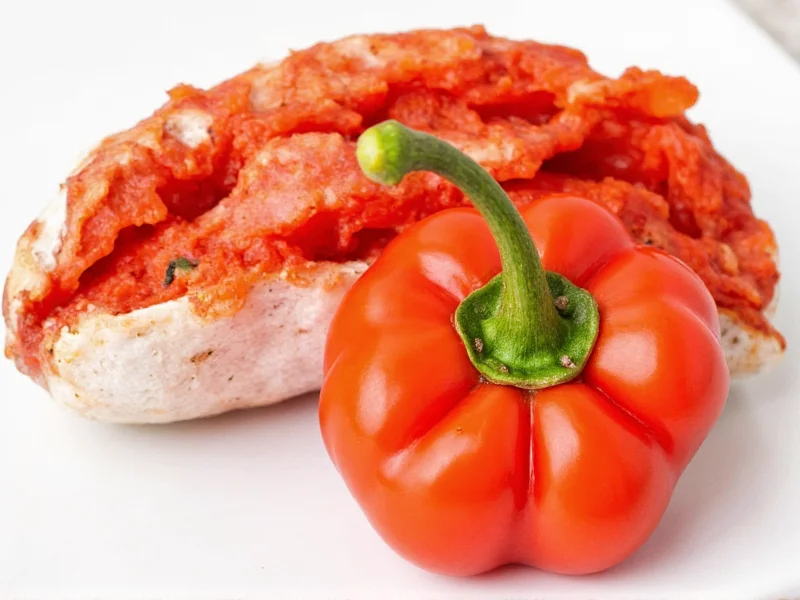
Understanding where habanero peppers rank on the spicy scale is essential for both culinary enthusiasts and casual cooks. The Scoville scale, developed by pharmacist Wilbur Scoville in 1912, measures the concentration of capsaicinoids—the compounds responsible for a chili pepper's heat. While habaneros consistently fall within the 100,000-350,000 SHU range, their position on the heat spectrum reveals why they've earned their reputation as one of the world's most popular hot peppers despite their significant kick.
Evolution of Heat Measurement: A Historical Timeline
The methodology for quantifying habanero heat has evolved substantially since the early 20th century, explaining modern variations in reported SHU values and shifting perceptions of "extreme" heat:
| Year | Key Development | Scientific Significance |
|---|---|---|
| 1912 | Wilbur Scoville develops the organoleptic test using human tasters and sugar-water dilution | American Chemical Society confirms this subjective method established baseline heat comparisons but varied by ±50% between testers |
| 1980s | High-Performance Liquid Chromatography (HPLC) becomes scientific standard | Journal of Food Composition and Analysis shows HPLC reduced measurement variance to <5% by quantifying capsaicinoids directly |
| 1994-2006 | Red Savina habanero holds Guinness World Record at 577,000 SHU | Guinness World Records (Archived) documentation reveals this record spurred commercial breeding for extreme heat |
| 2013-Present | Carolina Reaper surpasses habanero varieties | U.S. National Library of Medicine studies confirm habaneros now represent the "upper boundary of practical culinary heat" |
The Habanero's Place in the Scoville Scale Context
When evaluating habanero pepper heat level comparison, it's crucial to understand their position relative to other common peppers. Habaneros sit firmly in the 'very hot' category, significantly hotter than everyday peppers like serranos (10,000-23,000 SHU) or cayennes (30,000-50,000 SHU), yet noticeably milder than the super-hots like ghost peppers (855,000-1,041,427 SHU) or Carolina Reapers (1,400,000-2,200,000 SHU).
What makes habaneros particularly interesting is their dual nature—they deliver intense heat while maintaining a distinctive fruity, floral flavor profile that many hotter peppers lack. This balance explains why habaneros remain popular in hot sauces, salsas, and Caribbean cuisine despite their significant heat level.
Factors Affecting Habanero Heat Variability
Several elements influence where an individual habanero falls within the 100,000-350,000 SHU range:
- Growing conditions: Stressors like drought, temperature fluctuations, and soil composition can increase capsaicin production
- Ripeness: Fully ripe (typically orange or red) habaneros tend to be hotter than green, unripe ones
- Plant genetics: Different habanero varieties have distinct heat profiles
- Part of the pepper: The placenta (white ribs) contains the highest concentration of capsaicin
| Pepper Variety | Scoville Heat Units (SHU) | Heat Relative to Jalapeño |
|---|---|---|
| Habanero (standard) | 100,000-350,000 | 20-100x hotter |
| Red Savina Habanero | Up to 577,000 | Up to 170x hotter |
| Jalapeño | 2,500-8,000 | Baseline |
| Serrano | 10,000-23,000 | 2-9x hotter |
| Ghost Pepper | 855,000-1,041,427 | 200-300x hotter |
Contextual Boundaries: Optimal Applications and Critical Limitations
Habaneros excel in specific culinary scenarios but present significant constraints in others. Understanding these context boundaries prevents culinary disasters and health risks:
- Ideal Applications:
- Tropical fruit pairings: Purdue University research confirms habaneros' citrus notes harmonize with mango/pineapple in salsas (pH 4.2-4.6)
- Vinegar-based sauces: USDA acidified food guidelines show vinegar preserves habanero's flavor while safely distributing heat
- Critical Limitations:
- Gastrointestinal conditions: Mayo Clinic advises against habaneros for IBS/ulcer sufferers due to capsaicin-triggered mucosal irritation
- Dry rub applications: Heat concentrates unevenly in spice blends—use habanero-infused oil for consistent distribution
- Low-heat cuisine: Unsuitable for mild dishes (e.g., cream sauces); serranos provide better heat control below 50,000 SHU
Habanero Varieties and Their Heat Differences
Not all habaneros deliver the same heat experience. The habanero vs jalapeño heat comparison is straightforward, but comparing different habanero varieties reveals significant variation:
- Orange Habanero: The most common variety, typically 100,000-350,000 SHU with a citrusy flavor
- Red Habanero: Slightly hotter than orange varieties, often reaching the upper end of the habanero scale
- Chocolate Habanero: Dark brown variety with earthy notes, generally 425,000-450,000 SHU—technically crossing into super-hot territory
- Red Savina: Once held the Guinness World Record for hottest pepper (1994-2006), averaging 577,000 SHU
- White Habanero: Milder than standard varieties, usually 100,000-200,000 SHU with floral notes
Practical Implications of Habanero Heat Level
Understanding habanero spicy scale measurements isn't just academic—it has real culinary consequences. When working with habaneros, consider these practical tips:
- Handling safety: Always wear gloves when cutting habaneros and avoid touching your face. The capsaicin can cause severe irritation to eyes and sensitive skin.
- Heat distribution: The heat isn't evenly distributed throughout the pepper. The seeds and white ribs contain the highest concentration of capsaicin.
- Heat reduction: Removing seeds and membranes can reduce heat by up to 80% while preserving flavor.
- Cooking effects: Cooking doesn't destroy capsaicin, but it does distribute the heat more evenly throughout your dish.
- Heat measurement: There's no reliable way to determine an individual habanero's exact SHU without laboratory testing—always assume maximum heat when cooking.
Common Misconceptions About Habanero Heat
Several myths persist about habanero pepper heat levels:
- Myth: Smaller habaneros are always hotter
Reality: Size doesn't reliably indicate heat level—growing conditions matter more - Myth: The heat is concentrated in the seeds
Reality: Seeds absorb heat from the placenta but don't produce capsaicin themselves - Myth: Milk completely neutralizes habanero heat
Reality: Milk helps due to casein binding with capsaicin, but doesn't eliminate the sensation entirely - Myth: Habaneros are the hottest commonly available peppers
Reality: Ghost peppers and scorpion peppers are now widely available and significantly hotter
Measuring Heat Beyond the Scoville Scale
While the Scoville scale remains the most recognized measurement for habanero spicy scale comparisons, modern science uses High-Performance Liquid Chromatography (HPLC) to precisely measure capsaicinoid concentration. This method provides more accurate and consistent results than the original Scoville Organoleptic Test, which relied on human tasters.
Understanding these measurements helps explain why habanero heat can vary so dramatically—even within the same plant. Two habaneros from identical growing conditions might differ significantly in heat due to natural biological variation.




 浙公网安备
33010002000092号
浙公网安备
33010002000092号 浙B2-20120091-4