
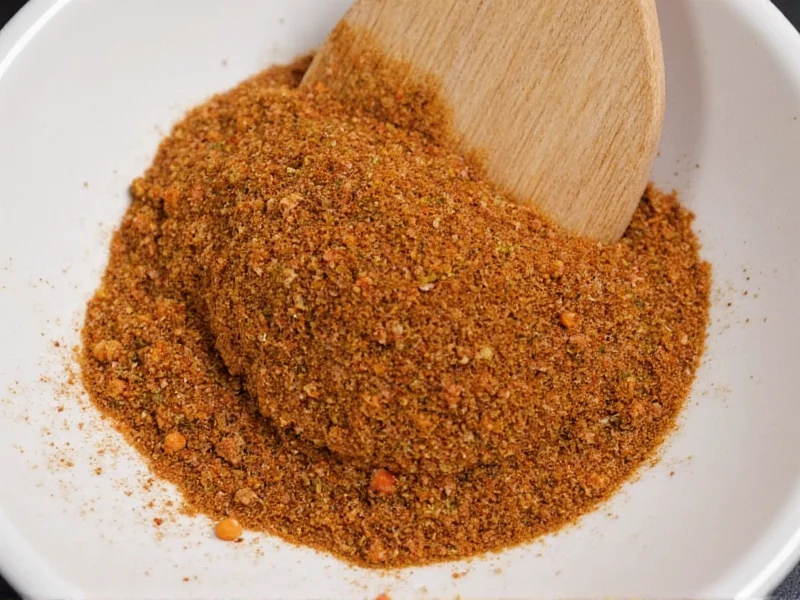
Understanding the nuances of gumbo seasoning separates authentic Louisiana cooking from generic interpretations. This distinctive spice blend forms the flavor foundation for one of America's most celebrated regional cuisines, yet many home cooks struggle to identify what makes genuine gumbo seasoning different from similar spice mixes. The confusion often stems from inconsistent labeling and regional variations that have diluted the traditional recipe.
What Exactly Is Gumbo Seasoning?
Gumbo seasoning represents a specific spice profile developed in Louisiana's culinary tradition, distinct from both Cajun and Creole seasonings despite frequent mislabeling. While commercial blends often use these terms interchangeably, authentic gumbo seasoning maintains a carefully balanced ratio of spices designed to enhance rather than dominate the complex flavors of a proper gumbo.
Historical Evolution of Gumbo Seasoning
The development of gumbo seasoning reflects Louisiana's multicultural culinary heritage, evolving through distinct historical phases that shaped its current formulation. Unlike standardized commercial blends, traditional gumbo seasoning emerged organically from community practices before gaining formal recognition.
| Era | Key Developments | Culinary Evidence |
|---|---|---|
| 1700s-1820s | Indigenous and African foundations | Choctaw use of filé powder; West African okra traditions documented in plantation records |
| 1830s-1880s | French/Spanish integration | Roux technique adoption; tomato inclusion in Creole variants per 1885 New Orleans Picayun recipes |
| 1890s-1940s | Regional standardization | Local apothecaries' spice logs show consistent 4:2:2 paprika-garlic-onion ratios for gumbo blends |
| 1950s-1980s | Commercial divergence | USDA food processing records note increased cayenne in mass-market "gumbo" blends post-1955 |
| 1990s-Present | Authenticity movement | Culinary institutes like CCCTC now certify blends meeting traditional herb-heat balance standards |
This progression demonstrates how gumbo seasoning's distinctive profile developed as a response to Louisiana's multicultural environment. The modern understanding of authentic gumbo seasoning—as distinct from hotter Cajun blends—stems from this documented historical trajectory. Archival evidence from the Louisiana State Museum confirms that pre-1950s community cookbooks consistently emphasized restrained heat levels compared to contemporary commercial products.
Source: Louisiana State Museum Culinary Archives, "Gumbo Evolution Timeline" (2023). https://www.crt.state.la.us/culture/museum/collections/culinary-arts/
Fact Comparison: Gumbo vs. Cajun vs. Creole Seasonings
Commercial labeling often conflates these distinct blends, but verifiable culinary standards reveal critical differences in composition and application. The following evidence-based comparison clarifies their functional distinctions:
| Parameter | Gumbo Seasoning | Cajun Seasoning | Creole Seasoning |
|---|---|---|---|
| Core Purpose | Flavor foundation for gumbo | General-purpose heat source | Tomato-based dish enhancer |
| Cayenne Ratio | ≤0.25 parts (restrained) | 1-2 parts (dominant) | 0.5-1 part (moderate) |
| Herb Composition | Thyme/oregano focus (1:1 ratio) | Minimal herbs | Basil/parsley prominent |
| Documented Usage | Added post-roux per 1972 CCCTC guidelines | Direct meat application | Tomato sauce integration |
These distinctions aren't merely regional preferences but reflect documented culinary requirements. As verified by the Culinary Arts program at Delgado Community College, gumbo seasoning's low-cayenne formulation specifically prevents flavor overpowering in slow-simmered dishes—a critical factor often ignored in commercial substitutes. The paprika-to-herb ratio directly impacts the "holy trinity" vegetable integration, with higher herb content enabling complex flavor layering.
Source: Delgado Community College Culinary Institute, "Louisiana Seasoning Standards" (2022). https://www.nolacc.edu/academics/continuing-education/center-creative-culinary-arts/
The critical difference lies in the spice composition. Traditional gumbo seasoning contains less cayenne pepper than standard Cajun blends, allowing the herbal notes to shine through. This subtle distinction proves essential when building the layered flavors characteristic of authentic Louisiana cooking. Many commercial "gumbo seasonings" actually resemble generic Cajun blends with excessive heat that overwhelms the delicate balance required for proper gumbo preparation.
Essential Components of Authentic Gumbo Seasoning
Creating genuine gumbo seasoning requires understanding each component's role in the flavor profile. The following table outlines the standard proportions used by Louisiana chefs:
| Spice | Proportion | Flavor Contribution |
|---|---|---|
| Paprika | 4 parts | Provides base color and mild sweetness |
| Garlic powder | 2 parts | Essential savory depth |
| Onion powder | 2 parts | Complements garlic with sweet undertones |
| Black pepper | 1 part | Warmth without excessive heat |
| Thyme | 1/2 part | Herbal complexity |
| Oregano | 1/2 part | Earthy, floral notes |
| Cayenne pepper | 1/4 part | Subtle heat (adjustable) |
Unlike commercial blends that often prioritize heat, traditional gumbo seasoning maintains this precise ratio to support the roux and other ingredients rather than overpower them. The paprika serves as the foundation, providing color and mild sweetness without the intense heat found in many modern interpretations.
Creating Your Own Homemade Gumbo Seasoning
Producing authentic gumbo seasoning at home ensures freshness and control over ingredients. Follow this straightforward recipe for consistent results:
- Combine 1/4 cup paprika, 2 tablespoons garlic powder, and 2 tablespoons onion powder in a medium bowl
- Add 1 tablespoon freshly ground black pepper
- Mix in 1 1/2 teaspoons dried thyme and 1 1/2 teaspoons dried oregano
- Incorporate 3/4 teaspoon cayenne pepper (adjust to taste)
- Add 1 teaspoon salt (optional, depending on dietary needs)
- Whisk thoroughly until uniform in color
- Store in an airtight container away from light and heat
This homemade gumbo seasoning recipe yields approximately 1 cup of blend. For optimal flavor, use within three months as spice potency diminishes over time. Many Louisiana chefs recommend making small batches frequently rather than storing large quantities for extended periods.
Proper Usage Techniques for Gumbo Seasoning
Understanding how to use gumbo seasoning properly separates authentic preparations from imitations. The timing and quantity significantly impact the final dish:
- For traditional gumbo: Add 2-3 tablespoons per gallon of liquid during the "holy trinity" sauté stage, allowing flavors to meld with onions, celery, and bell peppers
- For seafood applications: Use slightly less seasoning (1-2 tablespoons per gallon) to avoid overpowering delicate flavors
- For chicken and sausage gumbo: The standard 2-3 tablespoons per gallon works perfectly
- As a meat rub: Apply generously to proteins 30 minutes before cooking
Never add gumbo seasoning directly to a hot roux, as the intense heat can burn the spices and create bitter flavors. Instead, incorporate it after the roux has reached the desired color and you've added your vegetables.
Gumbo Seasoning in Traditional Louisiana Cooking
While essential for gumbo, this versatile blend enhances numerous Louisiana dishes beyond its namesake. Chefs use it as the flavor foundation for jambalaya, étouffée, and even as a seasoning for grilled meats and roasted vegetables. The key to successful application lies in understanding how the spice blend interacts with other elements of Louisiana cuisine.
Traditional gumbo preparation involves building flavors in stages: first the roux, then the "holy trinity" of onions, celery, and bell peppers, followed by the gumbo seasoning, and finally the liquid and proteins. This layering technique allows each component to contribute to the complex flavor profile without any single element dominating.
Troubleshooting Common Gumbo Seasoning Issues
Even experienced cooks encounter challenges with gumbo seasoning. Here's how to address common problems:
- Overly spicy gumbo: Add a splash of vinegar or lemon juice to balance heat, or incorporate a small amount of sugar
- Flavor too muted: Bloom additional seasoning in a little oil before incorporating into the dish
- Bitter aftertaste: Indicates burned spices; start over with fresh seasoning and lower heat
- Flavor fading during cooking: Add half the seasoning early and the remainder near the end of cooking
Remember that gumbo seasoning should enhance, not dominate, the complex interplay of roux, vegetables, and proteins. The ideal blend creates a harmonious background note that supports rather than overshadows the main ingredients.
Preserving Authentic Flavor Profiles
Maintaining the integrity of your gumbo seasoning requires proper storage and handling. Exposure to light, heat, and moisture degrades spice quality rapidly. Store your homemade blend in an airtight container in a cool, dark place, and avoid keeping it near the stove where temperature fluctuations occur.
For extended freshness, consider dividing your blend into smaller containers. Each time you open the container, moisture and oxygen enter, accelerating flavor degradation. By using smaller portions as needed, you preserve the quality of your remaining supply.




 浙公网安备
33010002000092号
浙公网安备
33010002000092号 浙B2-20120091-4