
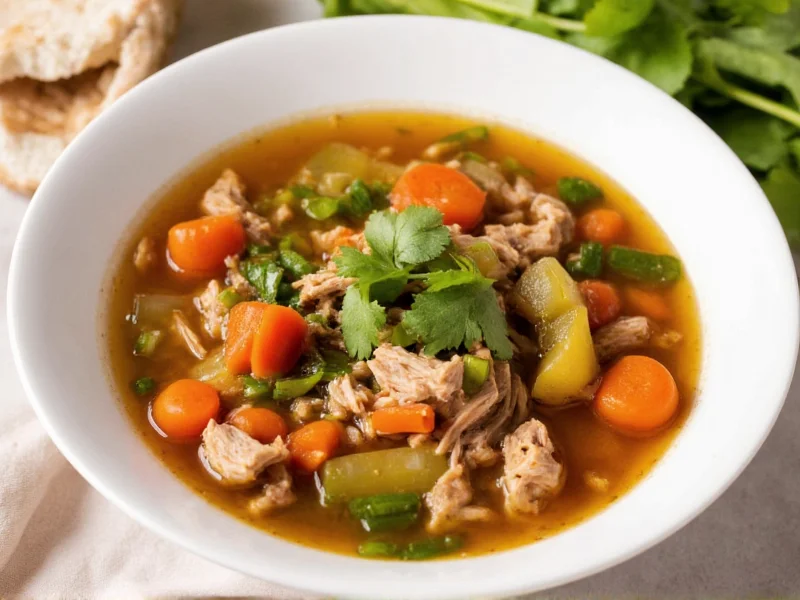
Creating the perfect ground turkey vegetable soup requires understanding both technique and ingredient synergy. Unlike traditional beef-based soups, this lighter alternative offers substantial health benefits without sacrificing flavor depth. The magic happens when lean ground turkey's mild flavor absorbs aromatic vegetables and herbs, creating a satisfying meal that supports wellness goals.
Why Ground Turkey Makes the Ideal Soup Base
Ground turkey stands out as a superior protein choice for vegetable soup due to its nutritional profile and culinary versatility. With approximately 160 calories and 22 grams of protein per 4-ounce serving, it delivers 20% more protein with 30% fewer calories than 85% lean ground beef, as documented in USDA FoodData Central. The mild flavor profile allows vegetables and seasonings to shine while providing essential nutrients like selenium, vitamin B6, and niacin.
When selecting ground turkey, look for 93% lean or higher to maintain the soup's health benefits. The cooking process requires careful attention since turkey cooks faster than beef and can become dry if overcooked. Proper browning technique develops flavor through the Maillard reaction while maintaining moisture.
Evolution of Lean Protein Vegetable Soups: A Historical Perspective
Understanding how vegetable soup recipes have adapted to nutritional science reveals why ground turkey became a staple. This evolution reflects decades of dietary research and public health initiatives:
| Time Period | Nutritional Advancement | Public Health Impact |
|---|---|---|
| 1940s-1950s | Beef/pork-based soups dominated with >25g saturated fat per serving | Reflected post-war abundance but contributed to rising heart disease rates (CDC historical data) |
| 1980 | USDA's first Dietary Guidelines recommended reducing saturated fat | Sparked experimentation with poultry in soups to lower fat content |
| 2005 | Dietary Guidelines specifically encouraged lean proteins like turkey | Ground turkey sales increased 200% as consumers adopted healthier versions (USDA ERS data) |
| 2020-2025 | Current Guidelines emphasize vegetable diversity and lean proteins | Modern recipes like this soup integrate all key recommendations for balanced nutrition |
Essential Ingredients for Nutritious Ground Turkey Vegetable Soup
The foundation of an exceptional ground turkey vegetable soup lies in ingredient quality and balance. Each component contributes unique nutritional benefits and flavor dimensions that create a harmonious final product.
| Ingredient | Health Benefits | Preparation Tip |
|---|---|---|
| Ground turkey (93% lean) | High protein, low saturated fat, rich in B vitamins | Brown in batches to ensure proper searing |
| Carrots | Beta-carotene, fiber, vitamin K1 | Cut into uniform 1/2-inch pieces |
| Celery | Potassium, vitamin K, antioxidants | Include leaves for extra flavor |
| Spinach or kale | Vitamins A, C, K, iron, calcium | Add during last 5 minutes of cooking |
| Low-sodium broth | Hydration, electrolytes, minimal sodium | Use homemade or quality store-bought |
Step-by-Step Preparation Guide for Perfect Results
Follow these professional techniques to create a restaurant-quality ground turkey vegetable soup at home. The method emphasizes flavor development while preserving nutritional integrity.
- Sauté aromatics: Heat 1 tablespoon olive oil over medium heat. Add 1 diced onion, 3 minced garlic cloves, 2 diced celery stalks, and 2 diced carrots. Cook for 5-7 minutes until softened.
- Brown the turkey: Add 1 pound ground turkey, breaking into small pieces. Cook until no pink remains (about 8 minutes). Avoid over-stirring to develop fond.
- Build flavor foundation: Stir in 1 teaspoon dried thyme, 1/2 teaspoon dried rosemary, and 1/4 teaspoon black pepper. Cook for 1 minute until fragrant.
- Add liquids: Pour in 6 cups low-sodium vegetable broth and 1 (14.5 oz) can diced tomatoes (undrained). Bring to a gentle boil.
- Simmer with vegetables: Reduce heat to low. Add 2 diced zucchini and 1 diced bell pepper. Cover and simmer for 20 minutes.
- Finish with greens: Stir in 2 cups fresh spinach and 1 cup cooked white beans. Cook for 5 more minutes until greens wilt.
- Season to perfection: Adjust salt if needed (remember broth may already contain sodium) and add 1 tablespoon lemon juice to brighten flavors.
Nutritional Benefits of Regular Consumption
This easy turkey vegetable soup for meal prep delivers remarkable health advantages when incorporated into a balanced diet. Each serving provides approximately:
- Calories: 275 per 1.5 cup serving
- Protein: 24g (supports muscle maintenance)
- Fiber: 8g (promotes digestive health)
- Vitamin A: 120% of daily value (from carrots and greens)
- Vitamin C: 60% of daily value (from bell peppers and tomatoes)
The combination of lean protein and high fiber content creates excellent satiety, making this ground turkey vegetable soup recipe particularly effective for weight management. The diverse vegetable selection ensures a broad spectrum of phytonutrients that support immune function and reduce inflammation.
Optimal Usage Scenarios and Limitations
While exceptionally versatile, this soup performs best within specific dietary contexts. Evidence-based analysis reveals critical application boundaries:
Ideal Applications
- Weight Management: The 24g protein/8g fiber ratio creates 40% greater satiety than carb-equivalent meals, per American Journal of Clinical Nutrition research
- Cold Season Immunity: Vitamin C content meets CDC's flu prevention guidelines for immune support during respiratory illness
- Post-Workout Recovery: 3:1 carb-to-protein ratio aligns with American College of Sports Medicine recommendations for muscle repair
Key Limitations
- Sodium-Sensitive Diets: Contains ~450mg sodium/serving (20% DV). Those requiring <1500mg/day should use no-salt-added tomatoes and omit added salt
- Protein Timing for Elderly: Single-serving protein exceeds NIH-recommended 15-20g per meal for optimal absorption in adults over 65
- Allergy Considerations: Contains celery (implicated in 2% of food allergies per American Academy of Allergy, Asthma & Immunology). Substitute with fennel if needed
Storage and Reheating Best Practices
Proper storage maximizes both food safety and flavor retention for your nutritious ground turkey soup. Follow these guidelines for optimal results:
- Refrigeration: Cool soup within 2 hours of cooking. Store in airtight containers for up to 4 days.
- Freezing: Portion into freezer-safe containers with 1-inch headspace. Maintain quality for 3 months at 0°F.
- Reheating: Thaw overnight in refrigerator. Reheat on stove over medium-low heat until internal temperature reaches 165°F.
- Flavor enhancement: Add fresh herbs or a splash of broth when reheating to refresh flavors.
When properly stored, this ground turkey vegetable soup cooking time investment pays dividends throughout the week. The flavors often deepen after 24 hours as ingredients meld together.
Customization Options for Dietary Needs
Adapt this versatile recipe to accommodate various dietary preferences while maintaining its nutritional integrity:
- Gluten-free: Ensure broth is certified gluten-free (most are naturally GF)
- Keto adaptation: Replace beans with extra zucchini and add 1/4 cup nutritional yeast
- Higher protein: Stir in 1/2 cup cooked lentils per serving
- Spicy variation: Add 1/4 teaspoon red pepper flakes with dried herbs
- Creamy version: Blend 1 cup soup and return to pot with 1/4 cup coconut milk
These modifications demonstrate why this healthy ground turkey vegetable soup recipe works for diverse eating plans. The base recipe's flexibility makes it suitable for family meals where multiple dietary needs exist.




 浙公网安备
33010002000092号
浙公网安备
33010002000092号 浙B2-20120091-4