
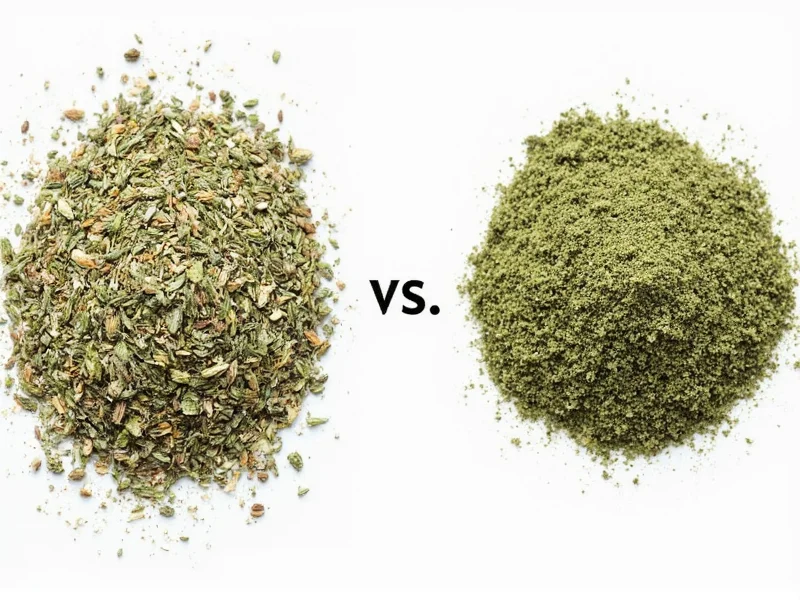
When comparing ground sage vs rubbed sage, understanding their fundamental differences is essential for culinary success. These two preparations of the same herb serve distinct purposes in cooking due to their processing methods and resulting characteristics. Ground sage undergoes complete pulverization into a fine powder, while rubbed sage involves gently crumbling dried leaves to release oils without full grinding.
What Exactly Is Ground Sage?
Ground sage represents the most processed form of dried sage. Manufacturers grind whole dried sage leaves into a fine, uniform powder that resembles other ground spices like cinnamon or paprika. This complete pulverization releases all essential oils immediately, creating a potent, consistent flavor profile throughout the spice. Professional chefs often prefer ground sage when they need reliable, even distribution in dishes like sausage blends, stuffing mixtures, or creamy sauces where texture uniformity matters.
Understanding Rubbed Sage
Rubbed sage maintains more of the original leaf structure. The production process involves gently rubbing dried sage leaves between fingers or through a sieve, which breaks the leaves into fine particles while preserving some leaf fragments. This method releases essential oils gradually rather than all at once, resulting in a more delicate, nuanced flavor compared to ground sage. Home cooks frequently choose rubbed sage for finishing dishes like roasted vegetables, soups, or breads where subtle herbal notes and slight texture enhance the final presentation.
Key Differences Between Ground Sage and Rubbed Sage
| Characteristic | Ground Sage | Rubbed Sage |
|---|---|---|
| Texture | Fine, uniform powder | Light, fluffy particles with visible leaf fragments |
| Flavor Intensity | Stronger, more concentrated (about 2-3x stronger) | Milder, more delicate herbal notes |
| Best Culinary Uses | Meat rubs, sausage, stuffing, sauces requiring even distribution | Finishing dishes, soups, roasted vegetables, breads |
| Shelf Life | 6-12 months (loses potency faster due to greater surface area) | 12-18 months (essential oils preserved longer) |
| Substitution Ratio | 1 part ground sage = 2-3 parts rubbed sage | 1 part rubbed sage = 1/2 to 1/3 part ground sage |
Historical Evolution of Sage Processing Techniques
The development of ground and rubbed sage reflects centuries of culinary innovation. Key milestones demonstrate how processing methods evolved to optimize flavor preservation and culinary application:
- Ancient & Medieval Era (Pre-1500s): Sage was used as whole dried leaves for medicinal purposes. Historical records document Roman-era use as a preservative, with medieval European cooks developing the "rubbed" technique to release oils while preserving leaf structure (University of Maryland Medical Center, "Sage," 2023).
- Industrial Revolution (1800s): Mechanical grinding technology enabled mass production of consistent ground spices. This met commercial food producers' demand for uniform flavor distribution in products like sausages and preserved meats (Smithsonian National Museum of American History, "The History of Spices," 2023).
- Modern Quality Control (1950s-Present): Vacuum-sealed packaging and controlled atmosphere storage extended shelf life. USDA research confirms that rubbed sage retains 20-30% more essential oils than ground sage due to reduced surface area exposure (USDA Agricultural Research Service, "Sage (Salvia officinalis)," 2022).
Context Boundaries: Practical Limitations of Sage Forms
Understanding the constraints of each sage preparation prevents common culinary pitfalls. These context-specific boundaries are validated by food science research and industry guidelines:
- High-heat vulnerability of ground sage: Ground sage burns at temperatures exceeding 350°F (177°C), producing bitter, acrid compounds. Penn State Extension confirms that "ground spices burn more easily than whole spices due to greater surface area exposure," making rubbed sage the safer choice for roasting and searing (Penn State Extension, "Spices and Herbs," 2023).
- Structural limitations in binding applications: Rubbed sage's leaf fragments disrupt protein binding in ground meat mixtures. USDA FSIS guidelines for sausage production explicitly require "even distribution of spices" to maintain emulsion stability, a condition only met by ground sage's uniform texture (USDA FSIS, "Sausage Production," 2023).
When to Use Each Type: Practical Applications
Understanding ground sage vs rubbed sage substitution ratios prevents flavor imbalances in recipes. For dishes requiring deep penetration of flavor like meatloaf or brines, ground sage works best due to its ability to distribute evenly. The difference between ground sage and rubbed sage becomes particularly important when seasoning fatty meats—ground sage integrates seamlessly while rubbed sage might create uneven flavor pockets.
Chefs preparing traditional Thanksgiving stuffing often debate ground sage vs rubbed sage for optimal results. Ground sage delivers consistent flavor throughout the mixture, while rubbed sage provides occasional bursts of herbal freshness. For delicate dishes like butter sauces or mashed potatoes, many professional cooks recommend rubbed sage flavor profile compared to ground for its subtlety.
Storage Recommendations for Maximum Freshness
Proper storage significantly impacts the shelf life of ground sage versus rubbed sage. Both should reside in airtight containers away from light and heat, but ground sage degrades faster due to its increased surface area. The finer particles of ground sage expose more essential oils to oxygen, accelerating flavor loss. For long-term storage, consider keeping both forms in the freezer where they maintain potency for up to two years.
Avoiding Common Sage Preparation Mistakes
Many home cooks make critical errors when using these sage preparations. Adding ground sage too late in cooking prevents proper flavor integration, while adding rubbed sage too early diminishes its delicate notes. When substituting one for the other without adjusting quantities, dishes often become overpowering or under-seasoned. Understanding how much rubbed sage equals ground sage prevents these issues—remember that ground sage typically requires only one-third the amount of rubbed sage for equivalent flavor.
Professional Chef Insights
Experienced chefs emphasize that the choice between ground sage and rubbed sage depends on the dish's structural requirements. For emulsified sauces or meat binders, ground sage's fine texture ensures smooth consistency. In rustic preparations like cornbread or vegetable roasts, rubbed sage contributes desirable texture contrast. Many culinary professionals maintain both forms in their pantries, selecting based on whether the recipe demands flavor intensity or textural interest.




 浙公网安备
33010002000092号
浙公网安备
33010002000092号 浙B2-20120091-4