
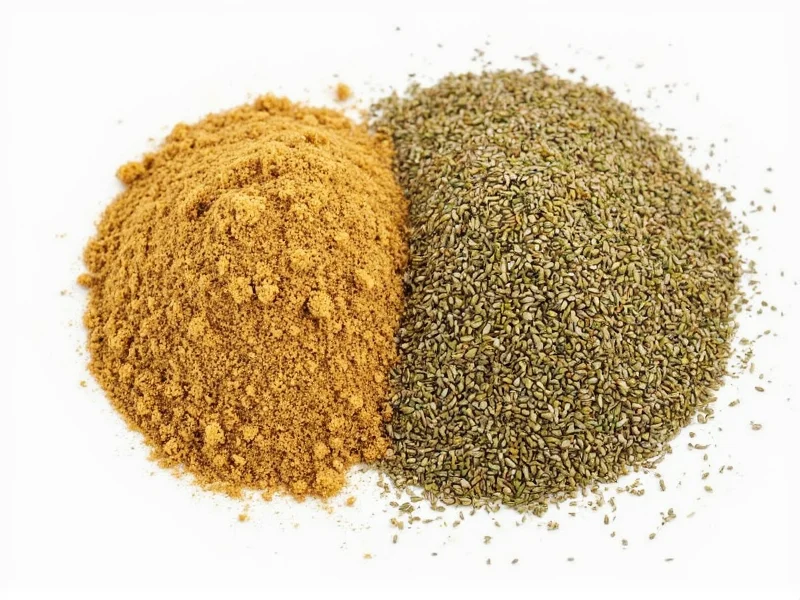
Understanding the distinction between ground coriander and coriander seeds is essential for achieving optimal flavor in your cooking. Both come from the same source—the dried fruit of the Coriandrum sativum plant, commonly known as cilantro in its leafy form—but their physical states create significant differences in how they behave in recipes.
What Exactly Are Coriander Seeds?
Coriander seeds are the round, beige-to-tan colored fruits harvested from the cilantro plant after it flowers and sets seed. When fresh off the plant, they have a light, citrusy aroma with subtle floral notes. As they dry, their flavor becomes more earthy and warm, developing lemony undertones with a hint of spice. Professional chefs often toast whole coriander seeds before grinding them to unlock their full aromatic potential, creating a deeper, more complex flavor profile than pre-ground versions.
Understanding Ground Coriander
Ground coriander is simply coriander seeds that have been milled into a fine powder. This process increases the spice's surface area, allowing its flavors to disperse more quickly in dishes. However, this also accelerates oxidation, causing ground coriander to lose its potency faster than whole seeds. Commercially prepared ground coriander often contains a blend of coriander seeds ground at different times, which can result in inconsistent flavor compared to freshly ground seeds.
Key Differences Between Ground Coriander and Coriander Seeds
| Characteristic | Coriander Seeds (Whole) | Ground Coriander |
|---|---|---|
| Flavor Profile | Bright, citrusy, with warm undertones; develops complex notes when toasted | Milder, more uniform flavor; lacks the bright top notes of fresh seeds |
| Shelf Life | 1-2 years when stored properly in airtight container | 6-12 months; loses potency twice as fast as whole seeds |
| Best Culinary Uses | Curries, pickling, breads, spice blends requiring toasting | Quick-cooking dishes, marinades, sauces where immediate flavor release is needed |
| Flavor Development | Requires toasting and grinding for optimal flavor release | Instant flavor dispersion; no additional preparation needed |
| Flavor Intensity | More potent when freshly ground; 1 teaspoon seeds = 1.5 teaspoons ground | Milder; requires slightly more quantity for equivalent flavor |
Historical Evolution of Coriander Processing
Coriander's culinary journey spans over 5,000 years, with processing methods evolving to balance convenience and flavor preservation. Archaeological evidence confirms coriander seeds were used in ancient Egyptian tombs dating to 1550 BC, where they were stored whole to maintain potency for medicinal and culinary applications (National Center for Biotechnology Information, https://www.ncbi.nlm.nih.gov/pmc/articles/PMC3219852/). During the Roman Empire, whole seeds were commonly toasted in clay ovens before grinding—a technique that preserved volatile compounds better than early mechanical grinding methods.
The Industrial Revolution introduced mass-scale grinding in the 1800s, making pre-ground coriander widely available but accelerating flavor degradation. Modern food science, as documented by the USDA Food Safety and Inspection Service (https://www.fsis.usda.gov/food-safety/safe-food-handling-and-preparation/spices-herbs-and-salts), confirms that mechanical grinding increases oxidation rates by 40-60% compared to whole seeds stored under identical conditions. Contemporary best practices now blend ancient wisdom with scientific validation: toasting whole seeds immediately before use optimizes linalool retention—the primary flavor compound—as verified by UC Davis Department of Plant Sciences research (https://spices.ucdavis.edu/crops/coriander).
When to Use Each Form: Practical Cooking Guidance
For dishes with longer cooking times like curries, stews, and braises, whole coriander seeds often provide superior flavor. Toast them in a dry pan for 1-2 minutes until fragrant, then grind them just before adding to your dish. This technique preserves volatile aromatic compounds that give coriander its distinctive character. Indian cuisine frequently uses this method in spice blends like garam masala.
Ground coriander shines in recipes where you need immediate flavor dispersion without additional preparation steps. It works well in quick sauces, salad dressings, and baked goods where the cooking time is short. When following recipes that call for ground coriander, remember that its flavor is more muted than freshly ground seeds, so you may need to adjust quantities slightly for optimal results.
Substitution Guidelines: Ground Coriander vs Coriander Seeds
When substituting between forms, use this ratio: 1 teaspoon whole coriander seeds equals approximately 1.5 teaspoons ground coriander. However, this isn't a perfect conversion due to flavor differences. If substituting ground for whole seeds in a recipe that calls for toasting, add the ground coriander later in the cooking process to prevent flavor loss from prolonged heat exposure.
For the best results when substituting, consider the dish's cooking time. In long-simmering dishes, whole seeds will maintain their flavor better. In quick-cooking applications, ground coriander provides more immediate flavor impact. Never substitute one for the other in equal measure without considering these factors, as it can significantly alter your dish's flavor profile.
Optimal Storage Practices for Maximum Flavor
To preserve flavor, store coriander seeds in an airtight container away from light, heat, and moisture. Whole seeds maintain their potency for 1-2 years when stored properly. For extended shelf life, keep them in the refrigerator or freezer, where they can remain flavorful for up to 3 years.
Ground coriander loses its volatile oils more quickly due to increased surface area. Store it in a dark glass container in a cool, dark place, and use within 6-12 months for best results. For serious home cooks, consider buying whole seeds and grinding them as needed using a dedicated spice grinder or mortar and pestle—this simple step dramatically improves flavor in your dishes.
Common Mistakes to Avoid with Coriander
Many home cooks make the error of using ground coriander interchangeably with whole seeds without adjusting quantities or timing. Remember that ground coriander's flavor dissipates faster during cooking, so adding it too early in the process can result in diminished flavor. Conversely, using whole seeds in applications that don't allow sufficient time for their flavors to release (like quick salad dressings) will yield underwhelming results.
Another common mistake is storing coriander near heat sources like stoves or in clear containers on spice racks. Light and heat rapidly degrade coriander's essential oils. For optimal flavor retention, keep both forms in opaque, airtight containers in a cool, dark cupboard.
Conclusion: Maximizing Coriander's Culinary Potential
Understanding the differences between ground coriander and coriander seeds empowers you to make informed choices in your cooking. Whole seeds offer superior shelf stability and more complex flavor when toasted and ground fresh, while ground coriander provides convenience and immediate flavor dispersion. By selecting the appropriate form for your specific recipe and storing it properly, you can significantly enhance the flavor profile of your dishes. For serious home cooks, maintaining both forms in your spice collection—whole seeds for long-cooking dishes and freshly ground coriander for quick applications—provides the most versatile approach to working with this essential spice.




 浙公网安备
33010002000092号
浙公网安备
33010002000092号 浙B2-20120091-4