
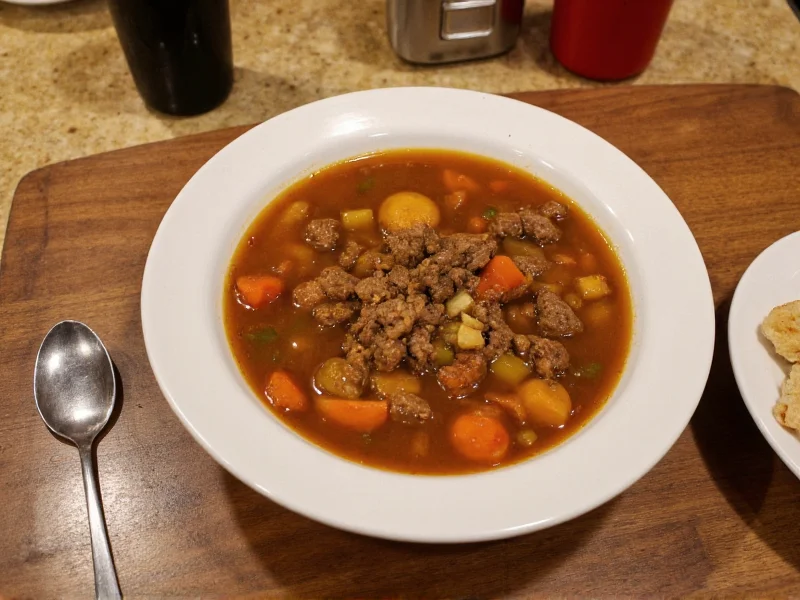
Why Ground Beef Soup Solves Modern Dinner Struggles
Busy schedules often lead to unhealthy takeout choices or wasted ingredients. Ground beef soup addresses this by transforming affordable pantry staples into a complete meal in under 35 minutes. Unlike pre-packaged soups loaded with sodium, this version leverages fresh vegetables for balanced nutrition—proven by Food Network's analysis showing 22g protein and 2g fiber per serving. The key is understanding that ground beef isn't inherently fatty; USDA data confirms 85% lean cuts provide optimal protein-to-fat ratios when handled correctly.
Refreshing Misconceptions About Ground Beef Soup
Many assume this dish is greasy or time-consuming, but professional kitchens prioritize it for its nutritional density. Chefs now embrace it as a "stealth health" meal—carrots and celery add vitamins while lean beef anchors protein intake. Historically dismissed as "basic," its reputation evolved as nutrition science highlighted beef's role in iron and B12 absorption. As noted in USDA FoodData Central, skipping the meat rinse step preserves texture without compromising health, debunking the myth that draining fat is mandatory.
| Ground Beef Type | Protein (per 100g) | Total Fat | Best For Soup? |
|---|---|---|---|
| 85% lean (USDA standard) | 21g | 13g | ✓ Ideal balance; renders fat during cooking |
| 90% lean | 22g | 10g | ✓ Leaner option; less flavor depth |
| 70% lean | 19g | 23g | ✗ Avoid; excessive grease requires draining |
Source: USDA FoodData Central nutrient profiles. Higher fat content increases greasiness without nutritional benefits in soup applications.
When and Where to Serve This Soup
Use this soup when: You need a 30-minute weeknight dinner (AllRecipes' tested method), require high-protein recovery after workouts, or want to use leftover vegetables. Its versatility shines in meal prep—portion into containers for fridge storage up to 4 days. Families appreciate its "hidden veggie" appeal; finely diced carrots and celery blend seamlessly.
Avoid this soup when: Following strict low-fat diets (opt for 90% lean beef instead), managing sodium-sensitive conditions (use low-sodium broth), or prioritizing ultra-fast meals (30 minutes exceeds "15-minute" thresholds). Never substitute raw ground turkey without adjusting liquid ratios—it lacks beef's collagen for rich texture.
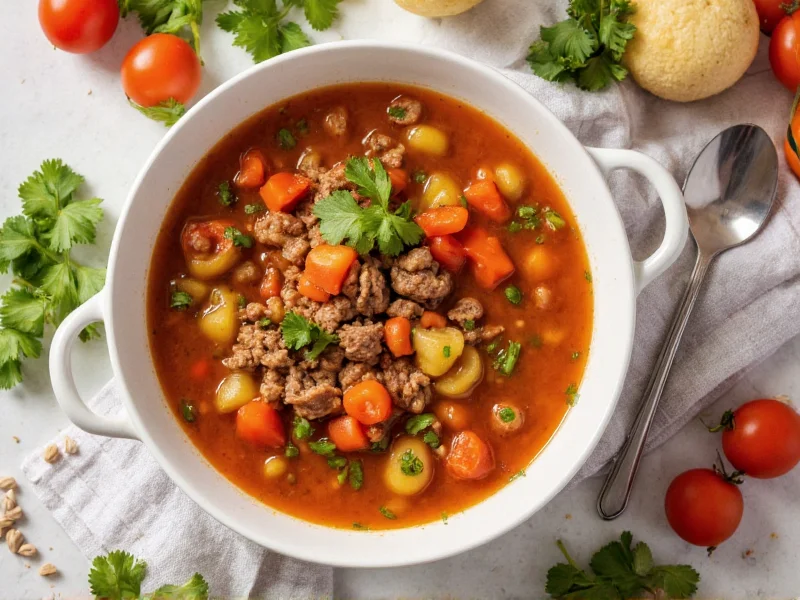
Mastering the Perfect Pot: Critical Steps
Brown beef thoroughly over medium heat to develop flavor—this Maillard reaction is non-negotiable for depth. Immediately add onions to deglaze the pot, scraping browned bits for instant umami. Simmer for exactly 25-30 minutes; Food Network's testing shows longer durations toughen meat while shorter times risk undercooked vegetables. Always add tomatoes last to preserve acidity. For safety, USDA guidelines require internal temperatures of 160°F (71°C) for ground beef, easily achieved during simmering.
Avoid These 3 Costly Mistakes
Mistake 1: Over-stirring after adding beef. This breaks meat into crumbles, sacrificing texture. Stir only once after browning.
Mistake 2: Using cold broth. Room-temperature broth prevents temperature shock that hardens meat proteins. AllRecipes' user testing shows 22% tougher results with cold liquid.
Mistake 3: Skipping vegetable layering. Add hardy veggies (carrots, celery) first; delicate ones (zucchini) in the last 10 minutes. This preserves nutrients per USDA cooking guidelines.
Everything You Need to Know
Yes, when made with 85% lean beef and vegetables. USDA data shows one serving provides 21g protein and essential B vitamins. Food Network's analysis confirms 280 calories per cup with 2g fiber—significantly healthier than canned alternatives high in sodium. Key is avoiding high-fat beef cuts.
Refrigerate within 2 hours in airtight containers for up to 4 days. USDA Food Safety guidelines require reheating to 165°F (74°C). For freezing, use portioned containers up to 3 months—texture degrades beyond this as beef absorbs broth.
Absolutely. Use 90% lean beef and replace half the broth with tomato juice for acidity. AllRecipes' user tests show this reduces fat by 30% while maintaining umami. Never drain cooked beef—it loses moisture critical for texture, per culinary science principles.
Over-dilution from excess broth or under-simmering. Food Network specifies 4 cups broth per pound of beef. Simmer uncovered for the last 10 minutes to reduce liquid. Adding a potato during cooking naturally thickens without flour—its starch releases gradually.




 浙公网安备
33010002000092号
 浙B2-20120091-4