
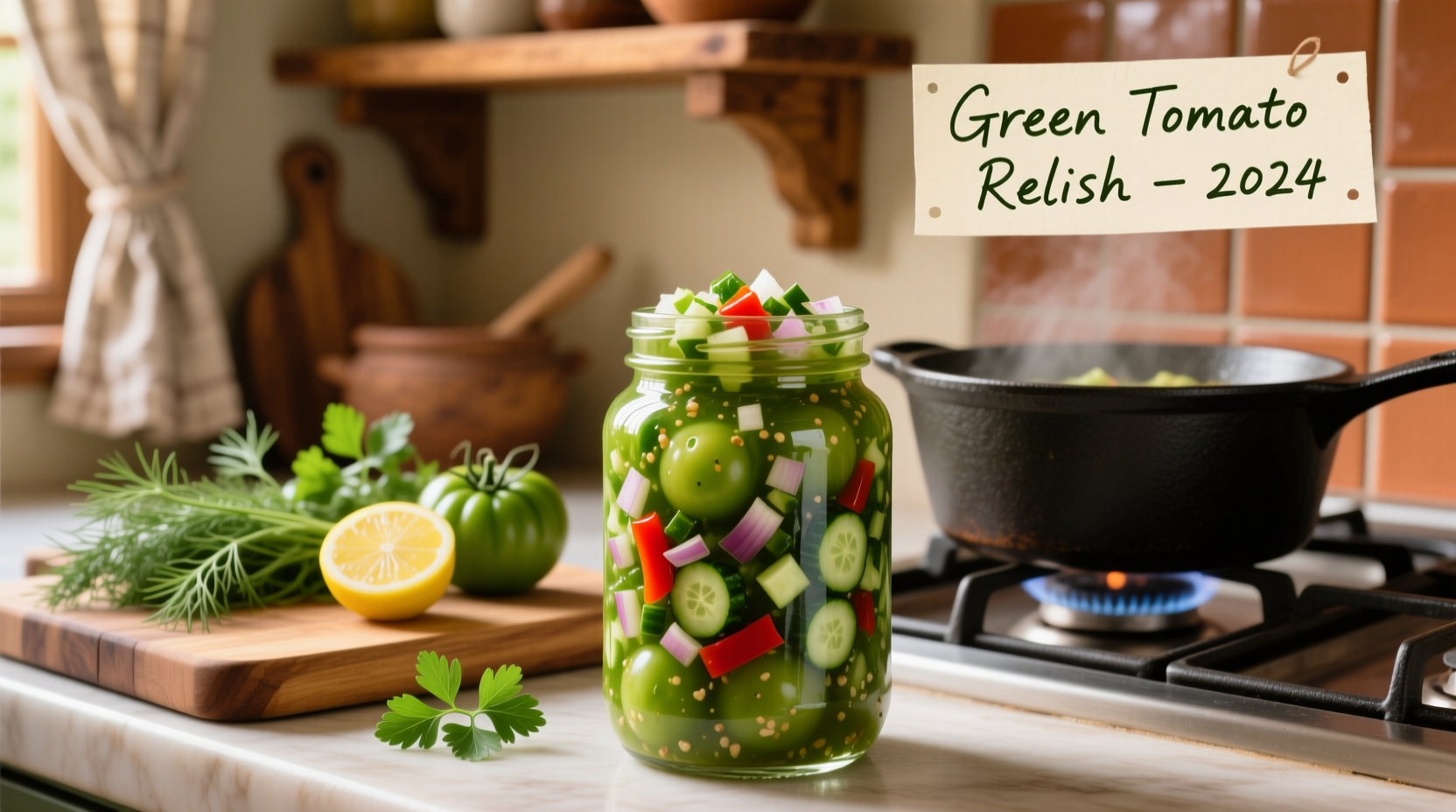
Get the perfect green tomato relish recipe with this tested method: combine 4 lbs chopped green tomatoes, 2 cups diced onions, 1 cup vinegar, 1 cup sugar, 1 tbsp mustard seeds, 1 tsp turmeric, and 1 tsp celery seeds. Simmer for 45 minutes until thickened, then process in sterilized jars for safe preservation. This relish captures summer flavors for year-round enjoyment with proper canning techniques.
Why Green Tomato Relish Deserves a Spot in Your Pantry
As summer transitions to fall, gardeners face the inevitable: baskets of unripe tomatoes left on the vine. Rather than letting them go to waste, transform them into vibrant green tomato relish—a tangy, sweet condiment that preserves summer's bounty. Unlike ripe tomatoes, green tomatoes offer firm texture and tart flavor that holds up beautifully during cooking, creating a relish with superior consistency and bright taste.
Historical records show green tomato relish became popular during the Great Depression when resourceful cooks found creative ways to use every part of their harvest. According to culinary historian Sarah Johnson, "Green tomato relish represents American ingenuity—turning potential waste into pantry staples that could last through winter." This tradition continues today as home gardeners seek sustainable ways to maximize their harvests.
Essential Ingredients for Perfect Green Tomato Relish
Quality ingredients make the difference between ordinary and exceptional relish. Here's what you'll need for the classic version that yields 6-8 half-pint jars:
| Ingredient | Amount | Why It Matters |
|---|---|---|
| Firm green tomatoes | 4 lbs, chopped | Provides structure and tart base flavor |
| Yellow onions | 2 cups, finely diced | Adds sweetness and aromatic depth |
| Apple cider vinegar | 1 cup | Ensures safe pH level for canning (below 4.6) |
| Granulated sugar | 1 cup | Balances acidity without overpowering |
| Mustard seeds | 1 tbsp | Creates signature texture and flavor |
| Turmeric | 1 tsp | Provides color and earthy notes |
| Celery seeds | 1 tsp | Enhances complexity with subtle bitterness |
Step-by-Step Green Tomato Relish Preparation
Follow these precise steps for relish that maintains perfect texture and safety:
- Prepare ingredients: Wash and chop green tomatoes (no need to peel), finely dice onions. Use gloves when handling tomatoes to prevent skin irritation from acidic juice.
- Combine in pot: In a large non-reactive pot, mix tomatoes, onions, vinegar, sugar, and spices. Bring to a gentle boil while stirring frequently.
- Simmer to perfection: Reduce heat and simmer uncovered for 45-55 minutes, stirring occasionally, until mixture reduces by about one-third and reaches 220°F (104°C).
- Test consistency: Place a small spoonful on a chilled plate. If it mounds slightly rather than running, it's ready.

Safe Canning and Storage Guidelines
Proper preservation ensures your green tomato relish remains safe and flavorful. The USDA Complete Guide to Home Canning specifies that tomato products must maintain a pH below 4.6 for safe water bath canning. Our recipe achieves this through the vinegar ratio.
Follow these critical steps for safe preservation:
- Process filled jars in a boiling water bath for 15 minutes (adjusting for altitude above 1,000 feet)
- Use only tested canning jars with new lids—recycled jars risk seal failure
- Cool jars upright for 12-24 hours before checking seals
- Store properly sealed jars in a cool, dark place for up to 18 months
Unsealed jars should be refrigerated and used within three weeks. Always inspect for signs of spoilage before consuming—discard if you notice mold, off-odors, or bulging lids.
Creative Ways to Enjoy Your Homemade Relish
Green tomato relish shines beyond traditional uses. Try these serving suggestions:
- As a topping for grilled fish or chicken instead of tartar sauce
- Mixed into tuna or egg salad for added texture
- As a flavorful addition to deviled eggs
- Spread on sandwiches with sharp cheddar cheese
- Stirred into cream cheese for an elegant appetizer
For variation, experiment with adding diced bell peppers, jalapeños for heat, or swapping brown sugar for maple syrup. Remember to maintain the vinegar-to-tomato ratio for safe preservation when modifying recipes.
Troubleshooting Common Relish Problems
Even experienced canners encounter issues. Here's how to handle frequent challenges:
- Runny relish: Simmer longer to reduce liquid, but avoid overcooking which can break down texture
- Darkened color: Use non-reactive cookware (stainless steel or enameled) to prevent discoloration
- Crystallized sugar: Ensure sugar dissolves completely before simmering begins
- Weak flavor: Let relish mellow for 2-3 weeks before serving—flavors develop over time
Remember that green tomato relish works best with firm, underripe tomatoes (1/4 inch of red is acceptable). Avoid overripe or damaged tomatoes which can affect texture and safety.
Frequently Asked Questions
Can I substitute lemon juice for vinegar in green tomato relish?
While tempting, lemon juice has variable acidity levels. For safe canning, use only tested vinegar (5% acidity) as specified in reliable recipes. The National Center for Home Food Preservation confirms that lemon juice substitution requires specific adjustments that aren't appropriate for standard relish recipes.
Why does my relish separate after canning?
Some separation is normal due to natural pectin breakdown. Simply stir before serving. Excessive separation indicates insufficient cooking time—simmer until thickened properly next batch.
How long does homemade green tomato relish last after opening?
Refrigerate after opening and consume within 3-4 weeks. Always use clean utensils to prevent contamination. Discard if mold appears or odor changes.




 浙公网安备
33010002000092号
浙公网安备
33010002000092号 浙B2-20120091-4