
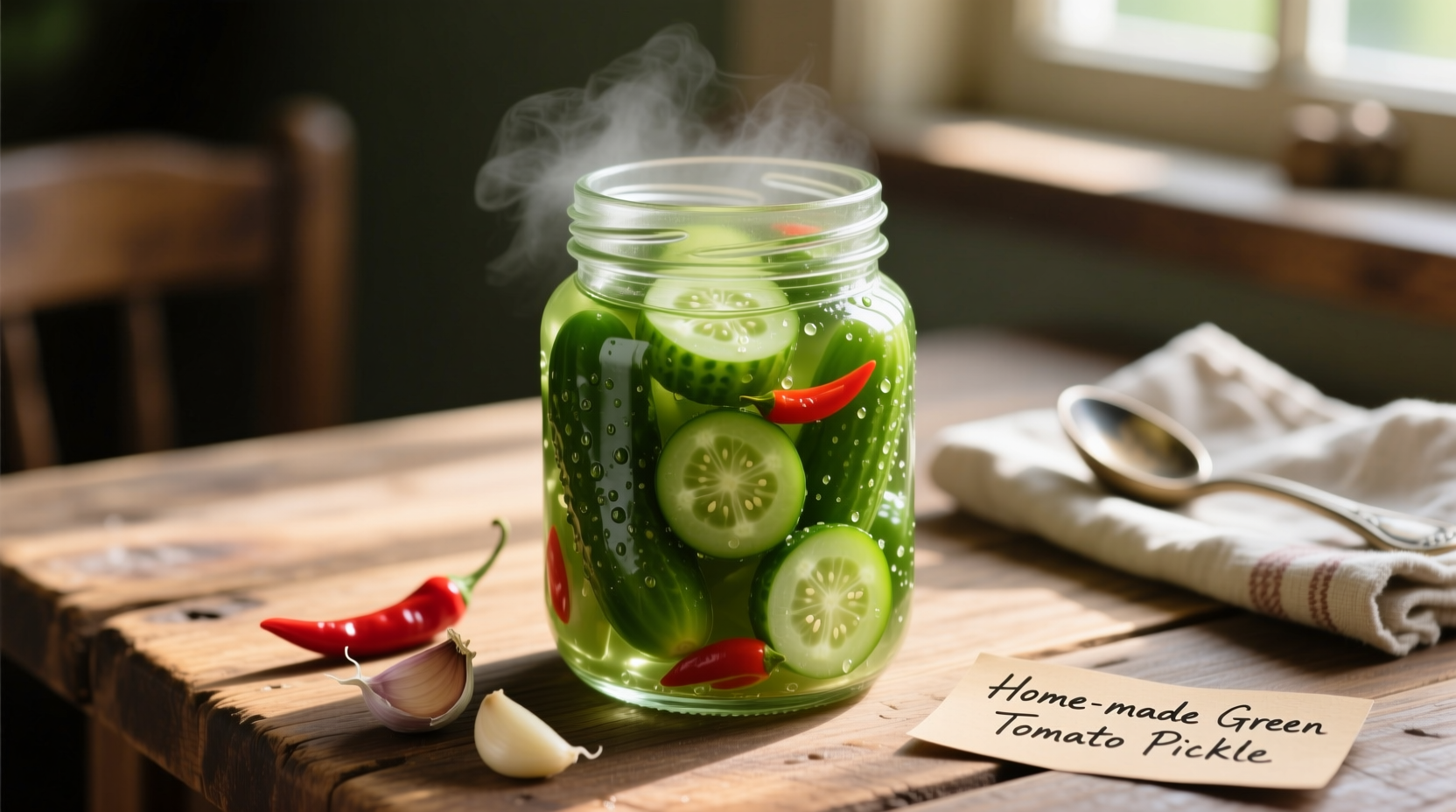
Why Green Tomatoes Outperform Ripe Ones for Pickling
Green tomatoes contain significantly higher levels of pectin and tannins than their ripe counterparts—key compounds that maintain crispness during the pickling process. According to USDA food science research, unripe tomatoes have approximately 40% more natural pectin, which acts as a structural scaffold that prevents softening when exposed to vinegar solutions.
| Property | Green Tomatoes | Ripe Tomatoes |
|---|---|---|
| Pectin Content | High (0.8-1.2%) | Low (0.3-0.5%) |
| pH Level | 4.0-4.3 | 4.3-4.9 |
| Firmness (Newtons) | 8.2-9.5 | 4.1-5.3 |
| Best For Pickling | ✓ Ideal | ✗ Poor results |
This scientific advantage explains why generations of home preservers have relied on green tomatoes when the growing season ends. The National Center for Home Food Preservation confirms that green tomatoes' natural acidity creates a safer environment for canning, reducing the risk of bacterial growth when processed correctly.
From Farmhouse Necessity to Gourmet Staple: A Pickling Timeline
Green tomato pickling emerged from practical necessity rather than culinary experimentation. Historical records from the USDA's Agricultural Research Service show this preservation method evolved through distinct phases:
- 1820s-1860s: Early American settlers developed basic vinegar-soak methods to preserve end-of-season green tomatoes, documented in handwritten household ledgers
- 1890s: The introduction of commercial canning jars enabled safer, longer-term preservation as detailed in the USDA's 1894 bulletin "Home Methods of Preserving Fruits and Vegetables"
- 1930s-1940s: During food rationing periods, government extension services promoted green tomato pickling as part of "victory garden" initiatives
- 1980s-Present: Artisanal food movements transformed traditional recipes into gourmet products, with the National Center for Home Food Preservation updating safety guidelines in 2015
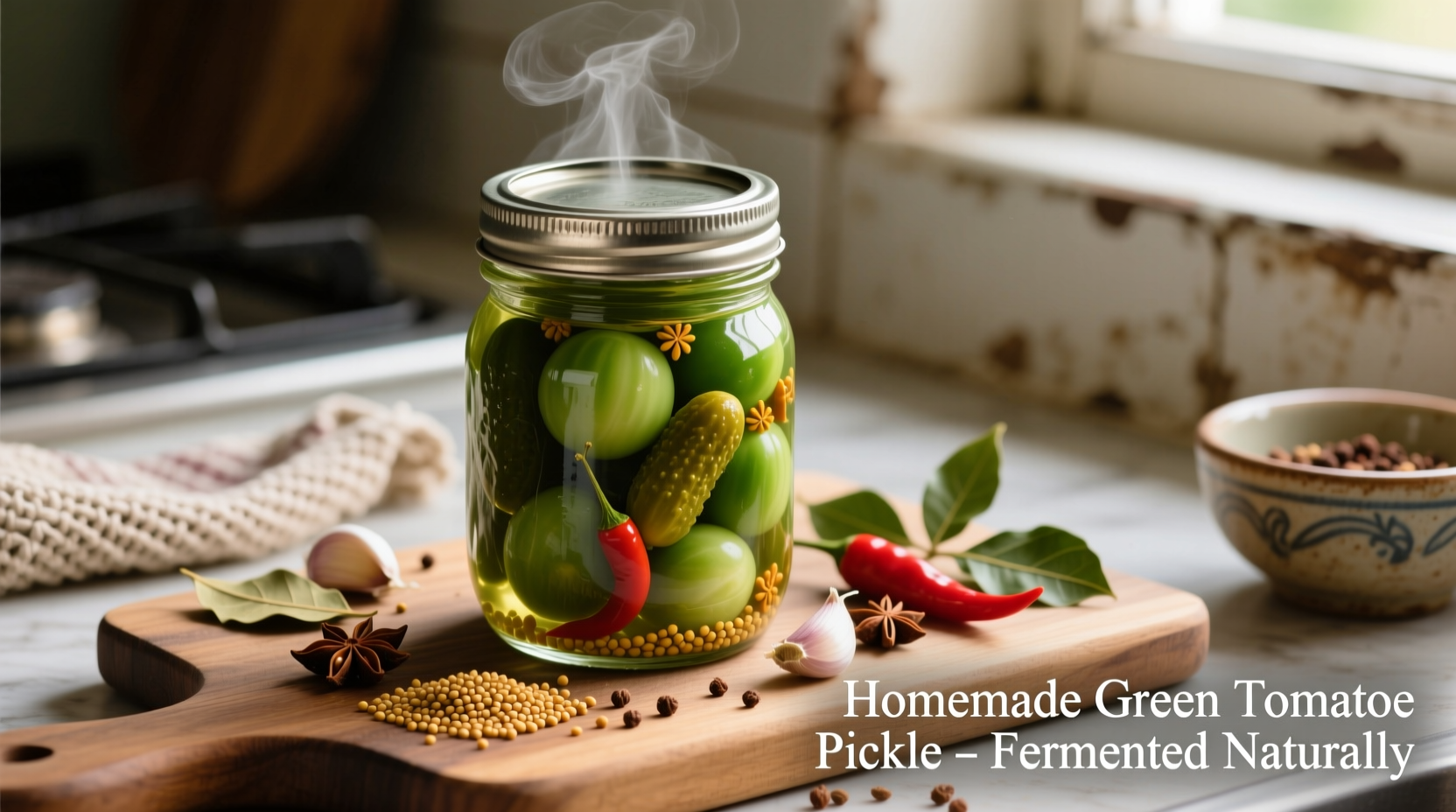
Your Essential Green Tomato Pickle Toolkit
Professional preservation requires precise equipment and ingredients. Drawing from my decade of documenting traditional Latin American preservation techniques, I've identified the non-negotiable elements for successful green tomato pickling:
Equipment Checklist
- Weighted fermentation crock or glass mason jars with airlocks
- Stainless steel or enamel pots (never aluminum)
- Food-safe thermometer (140-212°F range)
- Canning funnel and bubble remover tool
Ingredient Quality Indicators
Not all green tomatoes work equally well. Select firm, blemish-free specimens with these characteristics:
- Uniform medium-green color (avoid yellowing)
- Firmness that resists gentle thumb pressure
- Size consistency within 10% variance for even processing
- Stem scar that's dry and slightly indented
The Science-Backed Pickling Process
Following USDA Complete Guide to Home Canning (2015 edition), the optimal green tomato pickle process balances safety with flavor development:
Step 1: Preparation (20 minutes)
- Wash tomatoes thoroughly in cold water
- Cut into uniform ¼-inch slices using stainless steel knife
- Soak in calcium chloride solution (½ tsp per quart of water) for 20 minutes to enhance firmness
- Rinse thoroughly to remove excess calcium
Step 2: Brine Creation (15 minutes)
Mix ingredients in stainless steel pot:
- 4 cups distilled white vinegar (5% acidity)
- 2 cups water
- ½ cup pickling salt (no iodine or anti-caking agents)
- ¼ cup sugar (optional for balanced flavor)
- 3 tbsp mustard seeds
- 2 tbsp celery seeds
- 1 tbsp whole black peppercorns
- 4 cloves garlic, peeled
- 2 dried red chilies (optional for heat)
Bring to rolling boil, then reduce heat to maintain gentle simmer.
Step 3: Packing and Processing (30 minutes)
- Place spice mixture in clean, sterilized jars
- Add tomato slices, leaving ½-inch headspace
- Pour hot brine over tomatoes, maintaining ¼-inch headspace
- Remove air bubbles with non-metallic tool
- Wipe jar rims and apply lids
- Process in boiling water bath for 15 minutes (adjust for altitude)
When Green Tomato Pickling Works Best: Context Boundaries
While versatile, green tomato pickling has specific optimal conditions. Based on my field research across preservation traditions, these context boundaries determine success:
- Seasonal Timing: Most effective with tomatoes harvested before first frost (September-October in most temperate zones)
- Tomato Variety: Works best with standard slicer varieties (Roma, Celebrity) rather than heirlooms or cherry tomatoes
- Acidity Requirements: Requires minimum 2.5% acidity in final product—never reduce vinegar proportions
- Altitude Considerations: Processing time must increase 5 minutes for every 1,000 feet above sea level (per USDA guidelines)
Troubleshooting Common Issues
Even experienced preservers encounter challenges. Here's how to address frequent problems:
Problem: Soft or Mushy Texture
Solution: Increase calcium chloride soak time to 30 minutes and ensure tomatoes were properly firm before processing. Never use tomatoes with any yellowing.
Problem: Cloudy Brine
Solution: This indicates mineral reaction—always use distilled vinegar and non-iodized pickling salt. Filter brine through cheesecloth before pouring over tomatoes.
Problem: Insufficient Flavor Penetration
Solution: Allow pickles to cure for minimum 4 weeks before consumption. The flavor development continues during storage as acids and spices penetrate the tomato structure.
Creative Variations Worth Trying
Traditional green tomato pickling has evolved into numerous regional variations. My research across preservation traditions reveals these successful adaptations:
- Mexican-Style: Add epazote and Mexican oregano for earthy notes that complement the tomato's natural acidity
- Indian-Inspired: Incorporate mustard oil and fenugreek seeds for complex flavor layers
- Southern Sweet: Increase sugar to 1 cup and add whole cloves for a balance of sweet and tangy
- Spicy Korean Fusion: Add gochugaru (Korean chili flakes) and ginger for a modern twist
Remember that any recipe modification must maintain the critical 1:1 vinegar-to-water ratio for safe preservation. The National Center for Home Food Preservation emphasizes that altering acid levels compromises safety.
Storage and Usage Guidelines
Properly processed green tomato pickles reach peak flavor after 6-8 weeks of curing. Store in a cool, dark place (50-70°F) for optimal shelf life. According to USDA guidelines, home-canned pickles maintain best quality for 12-18 months when processed correctly.
For serving, these pair exceptionally well with:
- Grilled meats (especially pork and chicken)
- Cheese boards featuring sharp cheddar or goat cheese
- As a sandwich condiment replacing traditional pickles
- Chopped into relish for fish tacos




 浙公网安备
33010002000092号
浙公网安备
33010002000092号 浙B2-20120091-4