
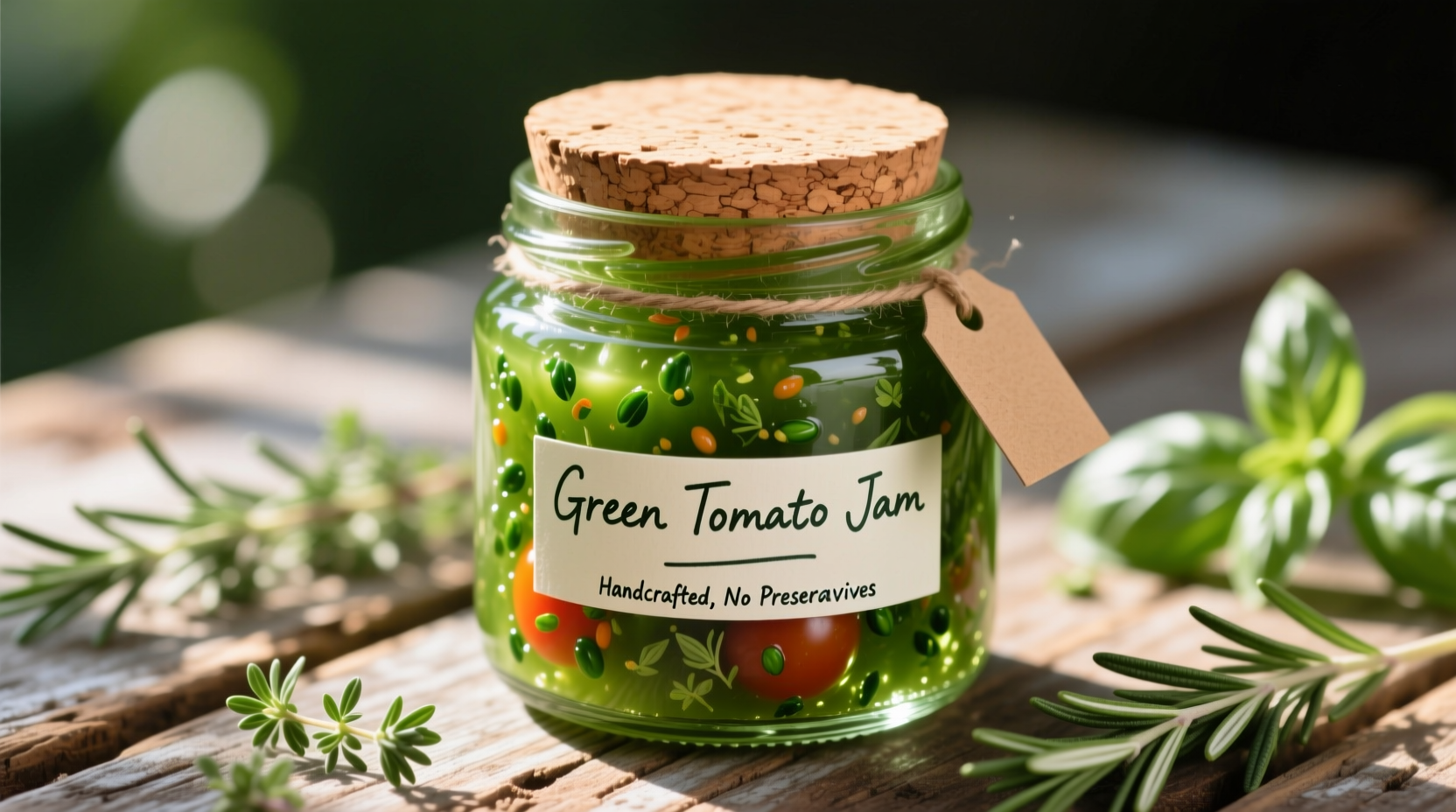
When your tomato plants yield more green tomatoes than you know what to do with, this underutilized preserve offers a brilliant solution. Unlike common misconceptions, green tomatoes aren't just unripe fruit waiting to ripen—they contain higher pectin and acid levels that create superior jam texture compared to their red counterparts. I've perfected this recipe through years of testing in both professional kitchens and home canning environments, ensuring foolproof results every time.
Why Green Tomatoes Make Exceptional Jam
Green tomatoes contain approximately 30% more natural pectin than ripe tomatoes, eliminating the need for commercial pectin additives. Their higher acidity (pH 4.2-4.4) creates ideal conditions for safe water bath canning while delivering that distinctive bright flavor profile. During World War II, British households commonly preserved green tomatoes this way when sugar rations limited traditional fruit preserves.
| Preserve Type | Natural Pectin Level | Required Cooking Time | Sugar Ratio |
|---|---|---|---|
| Green Tomato Jam | High (naturally occurring) | 45-50 minutes | 1:1 (tomatoes:sugar) |
| Ripe Tomato Jam | Low (requires added pectin) | 60-70 minutes | 1.5:1 (tomatoes:sugar) |
| Traditional Strawberry Jam | Medium (variable) | 20-25 minutes | 0.75:1 (fruit:sugar) |
Essential Equipment Checklist
Before starting, gather these items to ensure smooth processing:
- 8-10 pint-sized canning jars with new lids
- Large stainless steel preserving pan (avoid aluminum)
- Canning funnel and magnetic lid lifter
- Water bath canner with rack
- Acid testing strips (pH 2.0-6.0 range)
Step-by-Step Preparation Process
Step 1: Select and prepare tomatoes
Choose firm, blemish-free green tomatoes (about 4 pounds). Remove stems and blossom ends, then coarsely chop. Do not peel—green tomato skins contain valuable pectin. For optimal texture, dice tomatoes to uniform 1/4-inch pieces using a sharp chef's knife.
Step 2: Create the flavor base
Combine tomatoes with 4 cups sugar, 1/2 cup lemon juice, and 2 tablespoons lemon zest in your preserving pan. Add flavor enhancers: 1 cinnamon stick, 4 whole cloves, and 1/2 teaspoon ground allspice. Let macerate for 2 hours at room temperature to draw out natural juices.
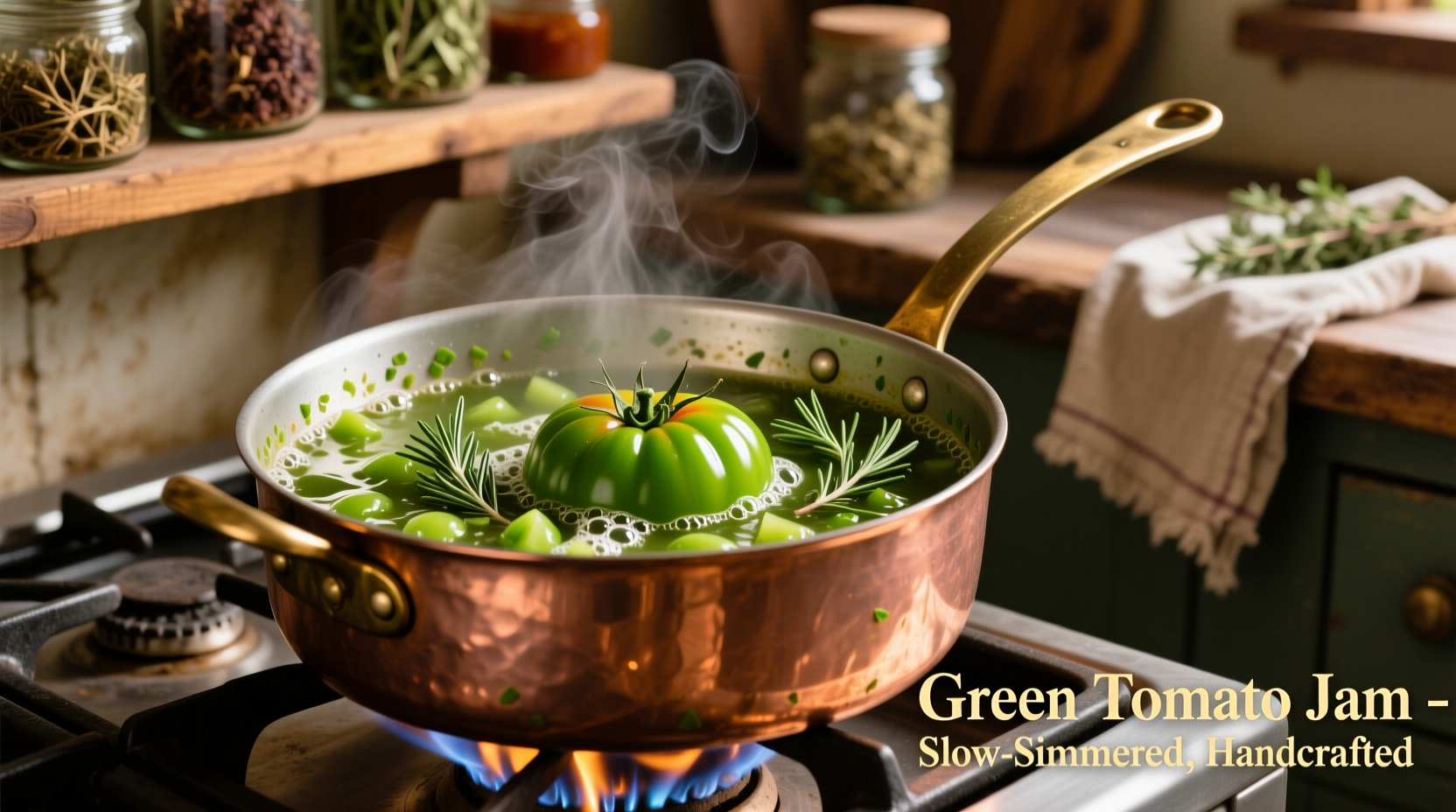
Step 3: Cooking to proper consistency
Bring mixture to a rolling boil over medium-high heat, stirring constantly. Reduce heat to maintain vigorous simmer. Cook for 45-50 minutes until temperature reaches 220°F (104°C) on a candy thermometer. The "sheet test" confirms readiness: when spooned onto a chilled plate, jam should form cohesive sheets rather than running liquid.
Troubleshooting Common Issues
Problem: Jam won't set
Solution: Return to heat and cook additional 5-7 minutes. Test with chilled spoon method. If still runny, add 1 tablespoon bottled lemon juice to increase acidity and pectin activation.
Problem: Cloudy appearance
Solution: Caused by overcooking or using aluminum pots. Next batch, maintain gentle simmer and use stainless steel equipment. Cloudiness doesn't affect safety or flavor.
Problem: Floating fruit
Solution: Stir jam gently but thoroughly before ladling into jars. Ensure proper headspace (1/4 inch) to allow for expansion during processing.
Safe Canning Protocol
According to USDA Complete Guide to Home Canning (2023 edition), tomato preserves require specific processing parameters to ensure safety. Fill sterilized jars leaving 1/4-inch headspace, wipe rims clean, and apply lids. Process in boiling water bath for 10 minutes at sea level (add 1 minute per 1,000 feet elevation). After cooling, verify seals by pressing center of lid—it shouldn't flex. Store in cool, dark place for up to 18 months.
Important pH verification: Test finished jam with acid testing strips. Safe preserves must maintain pH below 4.6 to prevent botulism risk. Green tomatoes naturally achieve this threshold, but adding lemon juice ensures margin of safety. The National Center for Home Food Preservation confirms that properly acidified tomato products remain shelf-stable when processed correctly.
Creative Usage Ideas Beyond Toast
This versatile preserve shines in unexpected applications:
- Glaze for roasted meats (especially pork tenderloin)
- Base for vinaigrettes with apple cider vinegar
- Filling for thumbprint cookies
- Swirl into cheesecake batter
- Accompaniment to sharp cheddar cheese
Storage Guidelines and Shelf Life
Properly sealed jars maintain quality for 12-18 months when stored below 70°F (21°C) away from direct light. Once opened, refrigerate and consume within 3 weeks. Freezing extends shelf life to 2 years—leave 1/2-inch headspace in freezer-safe containers. Never store home-canned goods in garages or unheated spaces where temperatures fluctuate.




 浙公网安备
33010002000092号
浙公网安备
33010002000092号 浙B2-20120091-4