
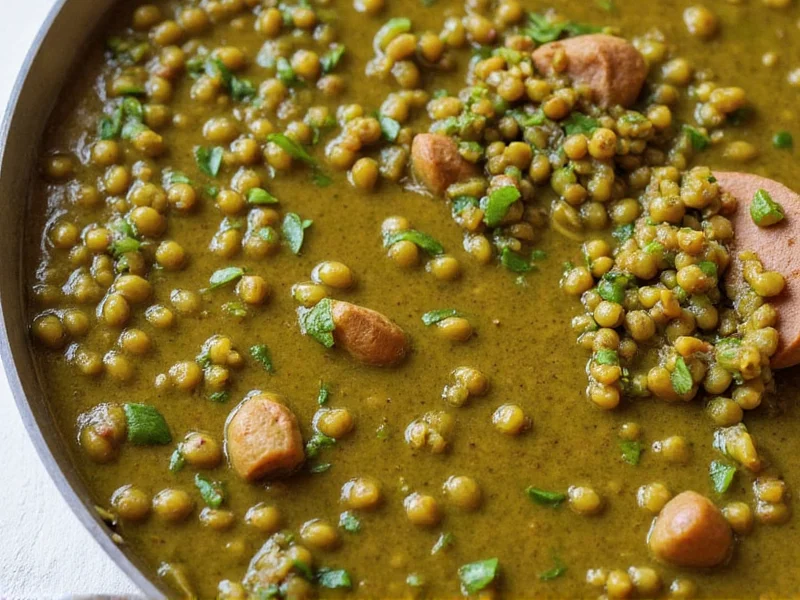
Green lentil curry stands out among legume-based dishes for its distinctive earthy flavor and firm texture that holds up well during cooking. Unlike red lentils which break down completely, green lentils maintain their shape, creating a more substantial curry ideal for weeknight dinners or meal prep. This traditional preparation method balances warming spices with creamy coconut milk for a dish that's both nourishing and deeply satisfying.
Why Green Lentils Work Perfectly in Curry
Green lentils (also called whole masoor dal) offer unique advantages for curry preparation. Their thicker skin and denser structure prevent them from disintegrating during the simmering process, maintaining a pleasant bite that complements the rich sauce. This makes them particularly suitable for curry dishes where you want distinct lentil pieces rather than a smooth puree.
From a nutritional perspective, green lentils provide 18 grams of protein and 15 grams of fiber per cooked cup, along with significant iron, folate, and magnesium. When combined with turmeric's anti-inflammatory properties and coconut milk's healthy fats, you create a nutritionally complete meal that supports sustained energy and digestive health.
Essential Ingredients for Authentic Flavor
The magic of a perfect green lentil curry comes from the careful balance of ingredients. Here's what you'll need for an authentic preparation that delivers restaurant-quality results:
| Ingredient Category | Specific Items | Key Purpose |
|---|---|---|
| Lentils & Liquid | 1½ cups dried green lentils, 3 cups water or vegetable broth, 1 can (14oz) coconut milk | Base of the curry with protein and creaminess |
| Aromatic Base | 1 large onion (finely diced), 4 garlic cloves (minced), 1-inch ginger (grated) | Flavor foundation |
| Core Spices | 2 tsp cumin seeds, 1½ tsp ground turmeric, 1 tsp ground coriander, ½ tsp cayenne (adjustable), 1 tsp garam masala | Authentic curry flavor profile |
| Vegetables | 1 large tomato (diced), 1 cup spinach or kale (optional) | Nutrition and texture |
| Finishing Touches | Fresh cilantro, lime wedges, 1 tbsp lemon juice | Brightness and balance |
Step-by-Step Cooking Instructions
Follow these detailed steps for a foolproof green lentil curry that develops maximum flavor while maintaining perfect lentil texture:
- Prepare lentils: Rinse 1½ cups green lentils thoroughly under cold water. Place in a bowl with enough water to cover by 2 inches and soak for 20 minutes (this reduces cooking time by nearly half).
- Bloom spices: Heat 2 tablespoons coconut oil in a heavy-bottomed pot over medium heat. Add cumin seeds and toast until they begin to pop (about 30 seconds), then immediately add onions and cook until golden (8-10 minutes).
- Build flavor base: Add garlic, ginger, turmeric, coriander, and cayenne. Cook for 2 minutes until fragrant, stirring constantly to prevent burning.
- Add tomatoes and lentils: Stir in diced tomatoes and soaked lentils with their water. Bring to a gentle boil, then reduce heat to low.
- Simmer to perfection: Cover and simmer for 25-30 minutes, or until lentils are tender but still hold their shape. Check occasionally and add water if needed.
- Finish with coconut milk: Stir in coconut milk, garam masala, and salt to taste. Simmer uncovered for 5-7 minutes to allow flavors to meld.
- Add finishing touches: Remove from heat and stir in lemon juice and fresh cilantro. Let rest for 5 minutes before serving.
Cooking Time Breakdown
Understanding the time investment helps with meal planning. This authentic green lentil curry requires minimal active preparation:
| Preparation Stage | Time Required | Notes |
|---|---|---|
| Soaking lentils | 20 minutes | Reduces cooking time significantly |
| Active preparation | 15 minutes | Chopping, spice blooming, assembly |
| Simmering time | 25-30 minutes | Mostly hands-off cooking |
| Total time | 45-50 minutes | From start to serving |
Serving Suggestions for Complete Meal
Green lentil curry shines when paired thoughtfully with complementary elements. For an authentic Indian-inspired meal:
- Rice pairing: Serve over basmati rice that's been cooked with a cinnamon stick and cardamom pods for aromatic depth
- Bread options: Warm naan bread or roti for scooping up the flavorful sauce
- Side dishes: Cucumber raita (yogurt sauce with cucumber and mint) to balance the spices
- Garnishes: Fresh cilantro, a squeeze of lime, and a sprinkle of red chili flakes
For a lighter option, serve over cauliflower rice or with a side of steamed greens. The curry also works beautifully as a filling for stuffed bell peppers or as a base for a nourishing grain bowl with quinoa and roasted vegetables.
Storage and Reheating Instructions
One of green lentil curry's advantages is how its flavor improves with time. Proper storage ensures maximum freshness and safety:
- Refrigeration: Store in an airtight container for up to 5 days. The curry often tastes even better on day two as flavors continue to meld.
- Freezing: Freeze in portion-sized containers for up to 3 months. Thaw overnight in the refrigerator before reheating.
- Reheating: Warm gently on the stovetop over medium-low heat, adding a splash of water or coconut milk if needed to restore consistency. Avoid boiling vigorously which can break down the lentils.
Popular Variations to Customize Your Curry
While the traditional preparation delivers exceptional flavor, these variations allow you to adapt green lentil curry to different preferences and occasions:
- Creamier version: Increase coconut milk to 2 cans and add 2 tablespoons of cashew butter for extra richness
- Extra protein: Stir in 1 cup of chickpeas during the last 10 minutes of cooking
- Spice adjustment: For milder curry, reduce cayenne to ¼ tsp and add ½ teaspoon of fenugreek leaves
- Vegetable boost: Add 1 cup of diced sweet potato or butternut squash with the tomatoes
- Weeknight shortcut: Use pre-cooked lentils (about 3 cups) and reduce simmering time to 15 minutes
Troubleshooting Common Issues
Even experienced cooks encounter challenges with lentil curries. Here's how to address frequent problems:
- Too watery: Simmer uncovered for 5-10 minutes to reduce the sauce, or create a slurry with 1 tablespoon cornstarch and 2 tablespoons water
- Too thick: Gradually add warm water or vegetable broth, ¼ cup at a time, until desired consistency is reached
- Lentils still hard: Add ½ cup hot water and continue simmering 5-10 minutes longer, checking every few minutes
- Not flavorful enough: Stir in additional ½ teaspoon garam masala and a squeeze of lemon juice, then let sit for 5 minutes
- Burnt bottom: Immediately transfer to a clean pot, leaving any stuck bits behind. Stir in 2 tablespoons coconut milk to restore creaminess.
Nutritional Benefits and Health Considerations
Green lentil curry delivers impressive nutritional value per serving (approximately 1½ cups):
- Protein powerhouse: 18 grams of complete plant-based protein that supports muscle maintenance
- Fiber rich: 15 grams of dietary fiber promoting digestive health and satiety
- Iron source: Provides 30% of daily iron needs, especially important for plant-based diets
- Anti-inflammatory: Turmeric's curcumin combined with black pepper (if added) offers significant anti-inflammatory benefits
- Balanced fats: Coconut milk provides medium-chain triglycerides that support metabolism
This dish qualifies as a complete meal that's naturally gluten-free, vegan, and free from common allergens. The combination of complex carbohydrates, plant protein, and healthy fats creates a balanced meal that stabilizes blood sugar and provides sustained energy.
Frequently Asked Questions
Can I use canned lentils instead of dried for green lentil curry?
Yes, you can substitute canned lentils for dried in green lentil curry, but with adjustments. Use three 15-ounce cans (drained and rinsed) instead of dried lentils, and reduce simmering time to 15 minutes. Add them after the spice base is prepared to prevent overcooking. Note that canned lentils may have a softer texture than dried, so add them later in the process to maintain some firmness.
How can I make green lentil curry without coconut milk?
You can create a creamy green lentil curry without coconut milk by using alternatives like cashew cream (blend ½ cup soaked cashews with 1 cup water), silken tofu blended with vegetable broth, or even a roux-based sauce. For traditional Indian preparation without dairy substitutes, increase the tomato content and use 1 tablespoon of sesame oil for richness. The curry will have a different flavor profile but remains delicious and authentic to certain regional variations.
Why are my green lentils still hard after cooking?
Green lentils remaining hard typically indicates one of three issues: insufficient soaking time, hard water affecting cooking, or old lentils. To fix this, ensure you soak lentils for at least 20 minutes before cooking, use filtered water if your tap water is very hard, and check your lentils' freshness (they should be used within 6-12 months of purchase). If lentils are still firm, add ½ cup hot water and continue simmering 5-10 minutes longer, checking every few minutes until tender but not mushy.
What's the difference between green lentil curry and dal?
While both are lentil-based dishes, green lentil curry typically features whole green lentils in a spiced coconut milk sauce with additional vegetables, creating a thicker, more complex dish. Traditional dal usually uses split red lentils that break down completely into a smooth consistency, with simpler spice profiles and without coconut milk. Green lentil curry often has a more substantial texture and richer flavor profile due to the whole lentils and additional ingredients, making it a complete meal rather than a side dish.
How can I make my green lentil curry more authentic?
For authentic green lentil curry, focus on proper spice blooming (tadka) by heating whole cumin seeds in oil until they pop before adding other spices. Use freshly ground spices when possible, and include a finishing touch of garam masala added at the end rather than during cooking. Traditional preparation also involves simmering the curry covered for most of the cooking time, then uncovered for the final 5-7 minutes to concentrate flavors. Using coconut milk from a can (not carton) and finishing with fresh lemon juice rather than vinegar creates the most authentic flavor profile.




 浙公网安备
33010002000092号
浙公网安备
33010002000092号 浙B2-20120091-4