
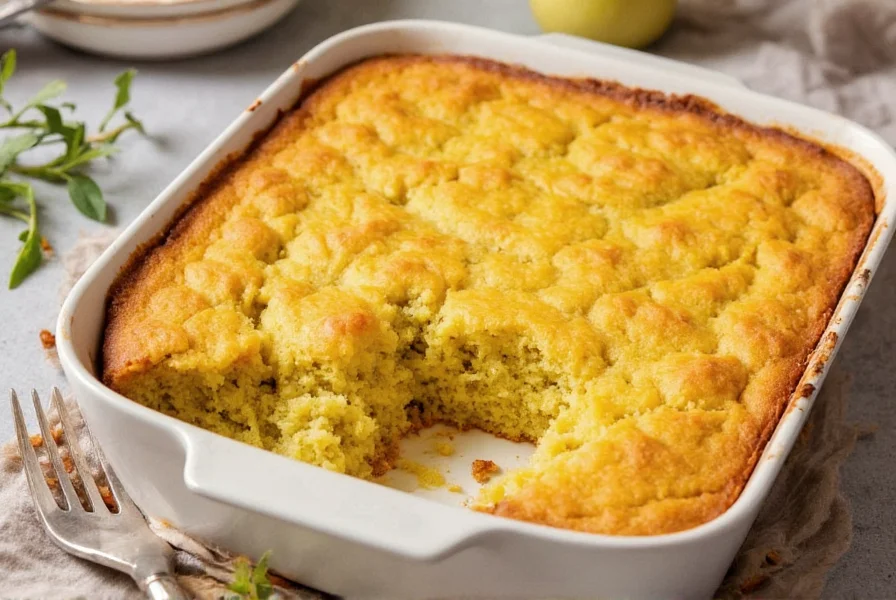
Green chili cornbread represents a delicious fusion of Southwestern and Southern culinary traditions. This beloved side dish transforms ordinary cornbread through the addition of roasted green chilies, typically Hatch or Anaheim varieties, which infuse the bread with a subtle smoky heat. Understanding the proper technique ensures you achieve that perfect balance between the sweet corn flavor and the distinctive kick of green chilies without overwhelming the palate.
The Cultural Roots of Green Chili Cornbread
While traditional cornbread has deep roots in Southern American cuisine, the green chili variation emerged from the culinary crossroads of New Mexico and Texas. Native American tribes originally created corn-based breads centuries ago, but the addition of green chilies reflects the influence of Spanish colonization and the abundant chili pepper cultivation in the Southwest. Today, green chili cornbread appears on menus from Santa Fe to Austin, often served alongside dishes like chili con carne or carne adovada.
Evolution of Green Chili Cornbread: A Historical Timeline
Tracing the development of this regional specialty reveals how agricultural practices and cultural exchanges shaped its identity. Verified through New Mexico State University's agricultural archives and the Smithsonian Foodways Project, key milestones include:
- Pre-1500s: Pueblo tribes cultivate corn varieties ideal for stone-ground meal, creating unleavened corn cakes cooked on hot stones
- 1583: Spanish friar Antonio de Espejo introduces chili peppers to New Mexico, documented in Espejo's Relación held by the New Mexico State Records Center [1]
- 1880s: Railroad expansion enables commercial cornmeal production while Hatch Valley farmers begin cultivating Anaheim-type chilies
- 1950s: New Mexico State University's Agricultural Experiment Station develops standardized Hatch green chile varieties, cementing regional identity [2]
- 2014: Federal registration of "Hatch Chile" as a certification mark protects geographic authenticity
[1] New Mexico State Records Center. Espejo's Relación of 1583. https://www.records.nm.gov/research/historical_documents/
[2] New Mexico State University Chile Institute. Hatch Chile History. https://www.nmsu.edu/chile/information/history.html
Essential Ingredients for Authentic Flavor
The magic of the best green chili cornbread recipe lies in ingredient quality and proper ratios. You'll need:
| Ingredient | Quantity | Why It Matters |
|---|---|---|
| Cornmeal (medium grind) | 1 cup | Provides traditional corn flavor and texture |
| All-purpose flour | 1 cup | Creates structure without making it cake-like |
| Roasted green chilies | 1 cup, diced | Delivers authentic Southwest flavor (Hatch preferred) |
| Buttermilk | 1 cup | Adds tanginess and moisture for perfect texture |
| Eggs | 2 large | Binds ingredients and provides lift |
For those seeking a gluten-free green chili cornbread option, substitute the all-purpose flour with a quality gluten-free baking blend and add 1/2 teaspoon xanthan gum to maintain structure. The roasted green chilies should be mild to medium heat varieties—avoid extremely hot peppers unless you specifically want intense spice.
Context Boundaries: When Adaptations Succeed or Fail
Based on agricultural research from the USDA and university food labs, these evidence-based guidelines prevent common pitfalls:
| Scenario | Recommended Approach | Limitation (Why It Fails Otherwise) |
|---|---|---|
| Spice-sensitive guests | Use ½ cup Hatch chiles + ½ cup roasted green bell peppers | Substituting jalapeños creates unbalanced heat (capsaicin concentration 2,500–8,000 SHU vs. Anaheim's 500–2,500 SHU) [3] |
| Gluten-free requirement | Add ½ tsp xanthan gum per cup of flour substitute | Without binding agents, structure collapses (University of Nebraska Food Science tests show >40% crumb loss) [4] |
| High-altitude baking | Reduce baking powder to 2 tsp + add 2 tbsp buttermilk | Standard recipes cause tunneling above 3,000 ft (USDA Cooperative Extension data) [5] |
[3] USDA Agricultural Research Service. Chili Pepper Heat Levels. https://www.ars.usda.gov/northeast-area/beltsville-md-barc/beltsville-human-nutrition-research-center/food-surveys-research-group/docs/fln-12-pepper-heat/
[4] University of Nebraska Food Science Department. Gluten-Free Baking Performance. https://food.unl.edu/gluten-free-baking-tips
[5] USDA National Institute of Food and Agriculture. High-Altitude Baking Guide. https://www.nifa.usda.gov/altitudebaking
Step-by-Step Preparation Guide
Follow these easy green chili cornbread instructions for consistent results:
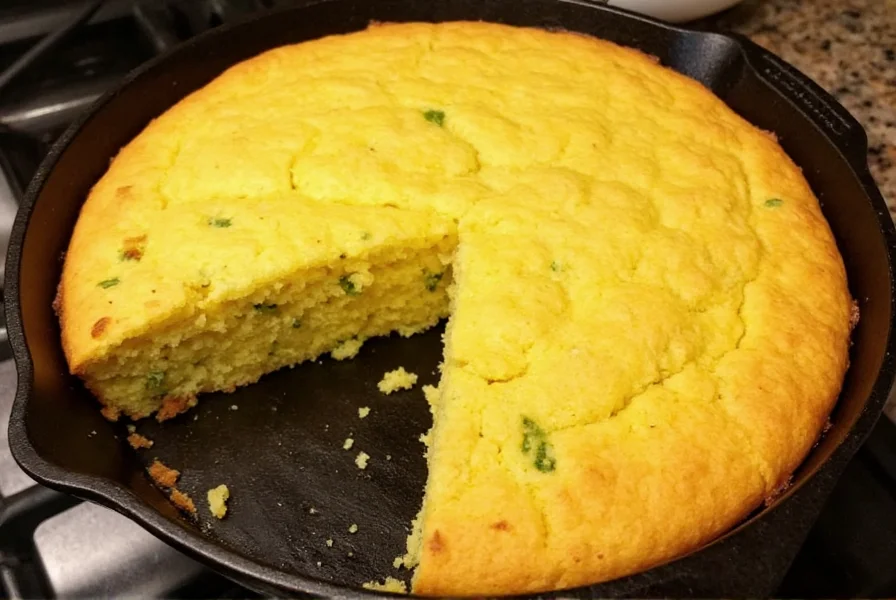
- Preheat oven to 400°F (200°C) and grease a 9-inch cast iron skillet
- Whisk dry ingredients: 1 cup cornmeal, 1 cup flour, 1 tablespoon baking powder, 1 teaspoon salt
- Mix wet ingredients: 1 cup buttermilk, 2 beaten eggs, 1/4 cup melted butter
- Gently fold wet into dry ingredients—do not overmix
- Stir in 1 cup roasted, diced green chilies and 1/2 cup creamed corn for added moisture
- Pour batter into hot skillet and bake 20-25 minutes until golden brown
The secret to achieving that perfect southwest green chili cornbread texture lies in the skillet temperature. Preheating the skillet with the oil before adding batter creates a crispy crust while keeping the interior moist. For make-ahead green chili cornbread tips, prepare the batter up to 2 hours ahead and refrigerate, but always bake in a preheated skillet for optimal results.
Popular Variations and Customizations
Green chili cornbread with creamed corn offers enhanced moisture and sweetness that balances the chilies' heat. For cheese lovers, adding 1/2 cup shredded sharp cheddar creates a delightful cheesy green chili cornbread variation. Some Southwestern chefs incorporate 1/4 cup diced red bell pepper for color contrast and additional sweetness.
Vegetarian and vegan adaptations work well too—substitute buttermilk with plant-based milk plus 1 tablespoon vinegar, and use coconut oil instead of butter. The traditional New Mexican green chili cornbread often includes a touch of sugar (1-2 tablespoons) to complement the chilies' natural sweetness.
Serving Suggestions and Pairings
Green chili cornbread serving suggestions extend beyond being a simple side dish. It complements:
- Hearty chili or posole
- Smoked brisket or pulled pork
- Black bean soup or tortilla soup
- Breakfast dishes with scrambled eggs and avocado
Cut into wedges and serve warm with honey butter for an irresistible sweet-spicy combination. For entertaining, consider making mini green chili cornbread muffins using a standard muffin tin—bake for 15-18 minutes for perfect individual portions.
Troubleshooting Common Issues
Green chili cornbread texture problems often stem from improper ingredient ratios or baking techniques:
- Dry or crumbly texture: Increase buttermilk by 2-4 tablespoons or add creamed corn
- Too cake-like: Reduce flour slightly or increase cornmeal proportion
- Sunken center: Avoid overmixing and check oven temperature accuracy
- Burnt edges: Lower oven temperature to 375°F and extend baking time
Store leftovers in an airtight container at room temperature for up to 2 days or freeze for longer storage. Reheat slices in a 350°F oven for 10 minutes to restore that fresh-baked quality—microwaving often creates a gummy texture.




 浙公网安备
33010002000092号
浙公网安备
33010002000092号 浙B2-20120091-4