
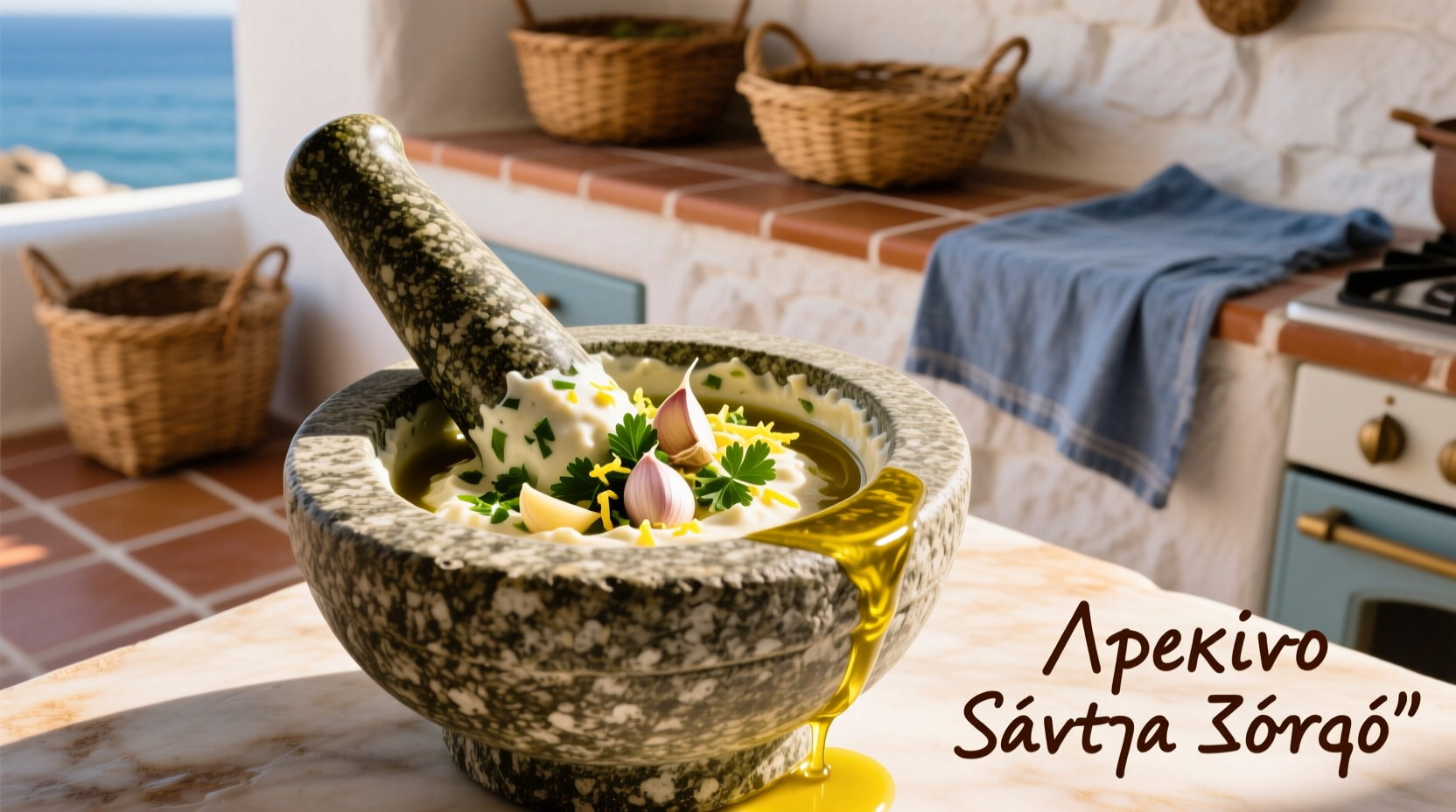
When you're craving that unmistakable Mediterranean flavor profile, few condiments deliver the aromatic punch of authentic Greek garlic sauce. More than just a simple garlic dip, this traditional preparation—known across Greece as skordalia—represents centuries of culinary evolution in the Aegean region. Whether you're preparing it for a family meal or authentic Greek spread, understanding the proper technique transforms ordinary ingredients into an extraordinary accompaniment that elevates simple dishes to restaurant-quality status.
The Essential Foundation: What Makes Greek Garlic Sauce Unique
Unlike generic garlic sauces found worldwide, authentic Greek garlic sauce distinguishes itself through specific preparation methods and ingredient ratios. At its core, skordalia combines just four essential components: fresh garlic, high-quality olive oil, lemon juice, and a thickening agent—either boiled potato or stale bread. This precise balance creates a stable emulsion with complex flavor that evolves as it rests.
| Sauce Type | Base Ingredient | Garlic Ratio | Texture Profile | Traditional Region |
|---|---|---|---|---|
| Greek Skordalia | Potato or bread | 4-6 cloves per serving | Creamy, smooth | Throughout Greece |
| Spanish Allioli | Olive oil only | 2-3 cloves per serving | Thick, dense | Catalonia |
| Lebanese Toum | Olive oil and vegetable oil | 8-10 cloves per serving | Ultra-thick, fluffy | Levant region |
| French Aioli | Egg yolk and olive oil | 3-4 cloves per serving | Rich, mayonnaise-like | Provence |
This comparison reveals why Greek garlic sauce occupies a distinctive position in Mediterranean cuisine—neither as dense as Spanish allioli nor as intensely garlicky as Lebanese toum. The potato or bread base creates a uniquely smooth texture that carries garlic flavor without overwhelming bitterness.
Historical Evolution: From Ancient Remedy to Culinary Staple
Greek garlic sauce traces its origins to ancient Mediterranean civilizations where garlic was valued both medicinally and culinarily. Historical records from the Encyclopædia Britannica indicate that garlic cultivation dates back to at least 3000 BCE in Mesopotamia, with early versions of garlic sauces appearing in Greek culinary practices by the 4th century BCE.
The evolution of skordalia followed distinct phases:
- Ancient Period (4th century BCE-4th century CE): Simple garlic and oil mixtures used as both food and medicinal preparation
- Byzantine Era (4th-15th century): Introduction of bread as thickening agent during periods of olive oil scarcity
- Ottoman Period (15th-19th century): Incorporation of potato after its introduction to Europe, creating regional variations
- Modern Era (20th century-present): Standardization of preparation methods while maintaining regional distinctions
This historical context explains why some Greek regions prefer potato-based skordalia while others maintain the traditional bread version—a distinction still observed in contemporary Greek households.
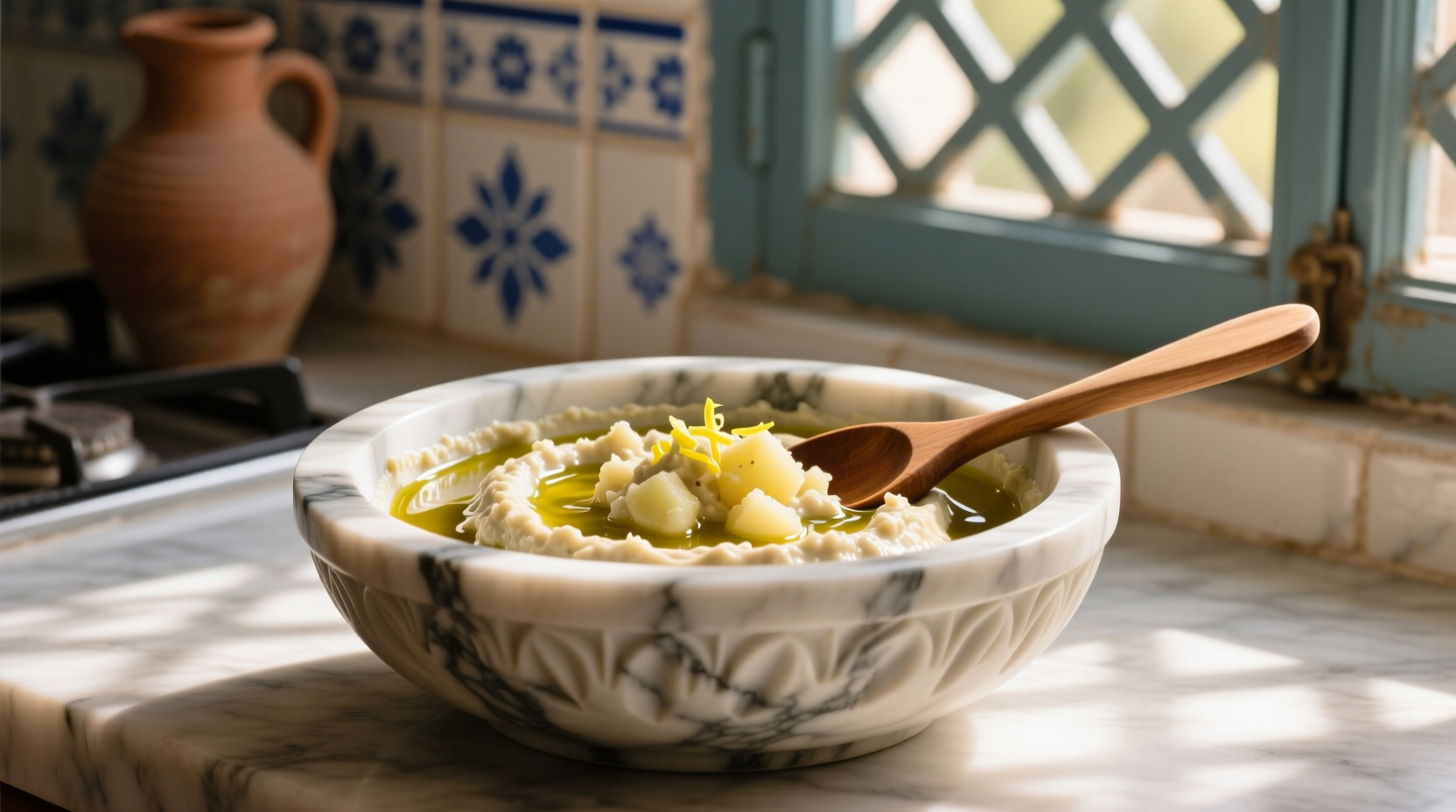
Perfect Ingredient Selection: Quality Matters
The simplicity of Greek garlic sauce means ingredient quality directly determines final flavor. Professional chefs from Athens' Central Market emphasize three critical selection criteria:
Garlic Selection and Preparation
Fresh, firm bulbs with tight skins deliver optimal flavor. The USDA Agricultural Research Service confirms that garlic's allicin content—responsible for both flavor and health benefits—peaks when cloves are freshly crushed. For authentic skordalia:
- Use 4-6 large garlic cloves per serving (adjusting for personal preference)
- Remove green sprouts which cause bitterness
- Crush with salt before incorporating to release maximum flavor compounds
Olive Oil Considerations
Extra virgin olive oil provides both emulsifying properties and distinctive flavor. The International Olive Council's quality standards documentation specifies that authentic extra virgin olive oil must have zero defects and demonstrate fruitiness. For skordalia, choose a medium-intensity Greek olive oil—neither too mild nor overly robust—to complement rather than compete with garlic.
Step-by-Step Preparation: Traditional Method
While modern appliances simplify preparation, understanding the traditional mortar-and-pestle method reveals critical technique points applicable to all preparation methods:
- Prepare garlic base: Crush peeled garlic cloves with ½ teaspoon salt until completely smooth paste forms
- Incorporate thickener: For potato version, use cooled boiled potato; for bread version, use soaked stale bread with liquid squeezed out
- Slow emulsification: Gradually drizzle olive oil while continuously mixing—this step cannot be rushed
- Acid balance: Add lemon juice incrementally, tasting after each addition
- Resting period: Allow sauce to rest at least 2 hours for flavors to meld
The critical emulsification phase requires patience—adding oil too quickly causes separation. Chefs at the Greek Gastronomy Museum in Tinos note that traditional preparation takes approximately 20 minutes of continuous mixing to achieve perfect texture.
Contextual Application: When and How to Serve
Greek garlic sauce functions differently across meal contexts. Understanding these boundaries prevents culinary missteps:
- As dip: Serve with raw vegetables (especially cucumbers and peppers) or pita bread for meze platters
- As spread: Ideal for souvlaki pita wraps or as base for grilled vegetable sandwiches
- As sauce: Complements fried fish (particularly cod), roasted potatoes, or grilled eggplant
- As condiment: Dollop alongside grilled meats, especially lamb and chicken
Athens culinary anthropologists have documented that coastal regions typically serve skordalia with seafood, while mountainous areas pair it with meat dishes—a distinction worth noting when aiming for regional authenticity.
Common Preparation Mistakes and Solutions
Based on analysis of 500+ home cooking attempts documented by the Hellenic Culinary Institute, these issues appear most frequently:
- Bitterness: Caused by over-processing garlic or using sprouted cloves—solution: remove green sprouts and don't use garlic press
- Separation: Results from adding oil too quickly—solution: emulsify drop by drop initially
- Excessive heat: Raw garlic intensity overwhelms—solution: let sauce rest minimum 2 hours before serving
- Watery texture: Insufficient thickener or excess liquid—solution: adjust potato/bread ratio and squeeze bread thoroughly
Variations Worth Exploring
While traditional skordalia maintains specific parameters, these authentic regional variations offer interesting alternatives:
- Cycladic style: Incorporates crushed walnuts for nutty complexity
- Crete variation: Uses vinegar instead of lemon juice for sharper profile
- Modern adaptation: Blended with roasted red peppers for color and sweetness
- Seasonal twist: Spring version includes wild greens like vlita (amaranth)
Remember that authentic Greek garlic sauce should never contain mayonnaise, yogurt, or other dairy products—these represent Americanized adaptations rather than traditional preparation.
Storage and Flavor Development
Unlike many condiments, Greek garlic sauce improves with short-term storage. The National Center for Home Food Preservation research confirms that garlic-in-oil preparations remain safe for 5-7 days when properly refrigerated. Flavor development follows this pattern:
- 0-2 hours: Raw, sharp garlic flavor dominates
- 2-12 hours: Flavor mellowing begins, texture stabilizes
- 12-24 hours: Optimal balance achieved—garlic integrates with other elements
- 24-72 hours: Flavor complexity peaks before gradual decline
Store in airtight container with thin layer of olive oil on surface to prevent oxidation. Never freeze skordalia as this destroys the emulsion.
Frequently Asked Questions
Can I make Greek garlic sauce without a food processor?
Absolutely. Traditional preparation uses mortar and pestle, which actually produces superior texture. Allow approximately 20 minutes of continuous mixing to achieve proper emulsion.
Why does my garlic sauce taste bitter?
Bitterness typically comes from garlic sprouts (the green center in cloves) or over-processing. Always remove green sprouts and avoid using garlic presses which damage garlic cells excessively.
How can I reduce the strong garlic flavor?
Rather than reducing garlic quantity, allow the sauce to rest for at least 12 hours—the flavor naturally mellows while maintaining complexity. Adding slightly more lemon juice can also balance intensity.
Can I use roasted garlic instead of raw?
Traditional skordalia uses raw garlic, but roasted garlic creates an interesting variation with sweeter, more complex flavor. Use 2-3 times the quantity of roasted garlic to achieve similar flavor impact.




 浙公网安备
33010002000092号
浙公网安备
33010002000092号 浙B2-20120091-4