
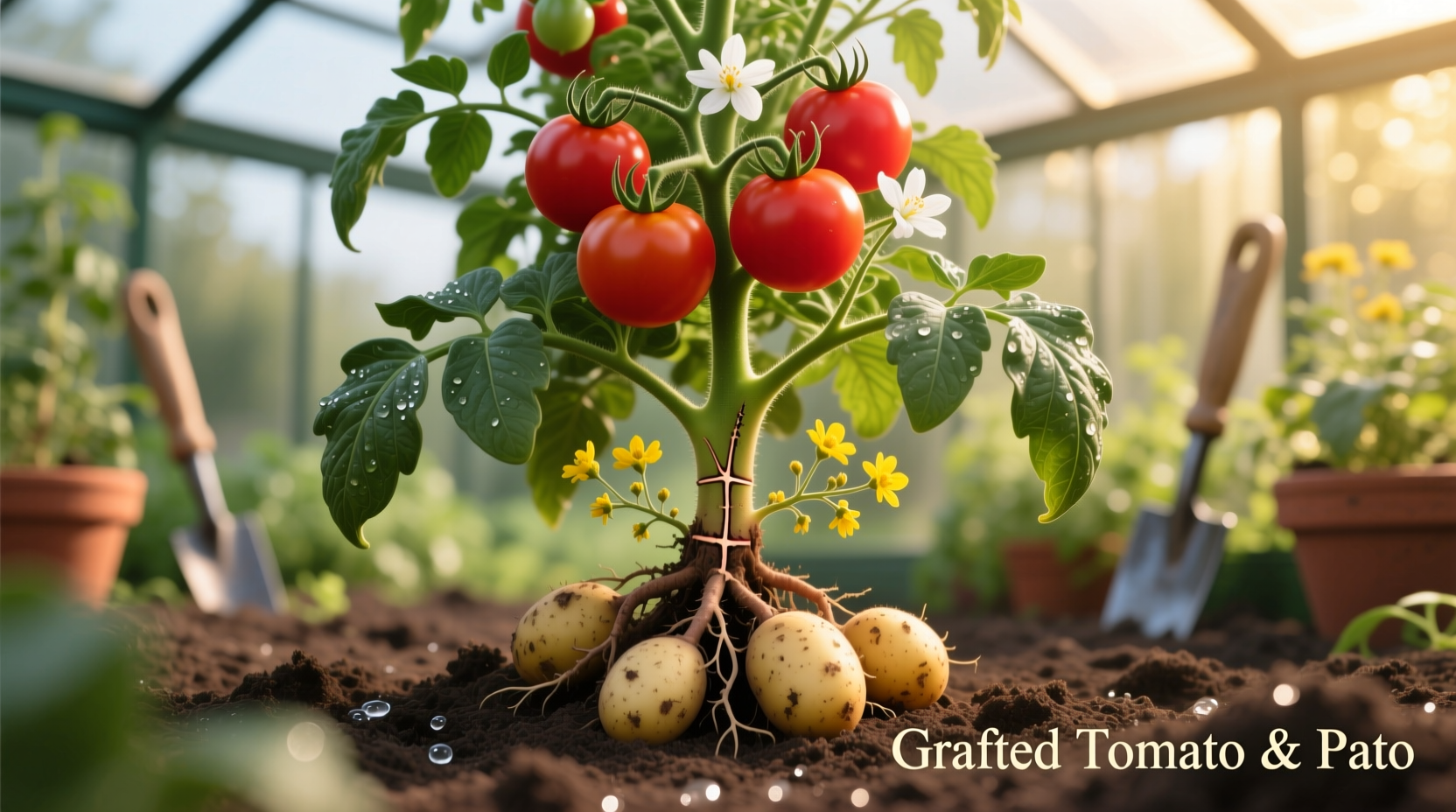
Imagine harvesting juicy tomatoes from the vines while simultaneously digging up fresh potatoes from the same plant. Grafted tomato and potato plants—marketed as TomTato or Pomato—represent one of gardening's most fascinating space-saving innovations. These biologically compatible grafts allow home growers to produce two essential crops in the footprint of one, making them ideal for urban gardens, container gardening, and small-space agriculture.
What Exactly Is a Grafted Tomato and Potato Plant?
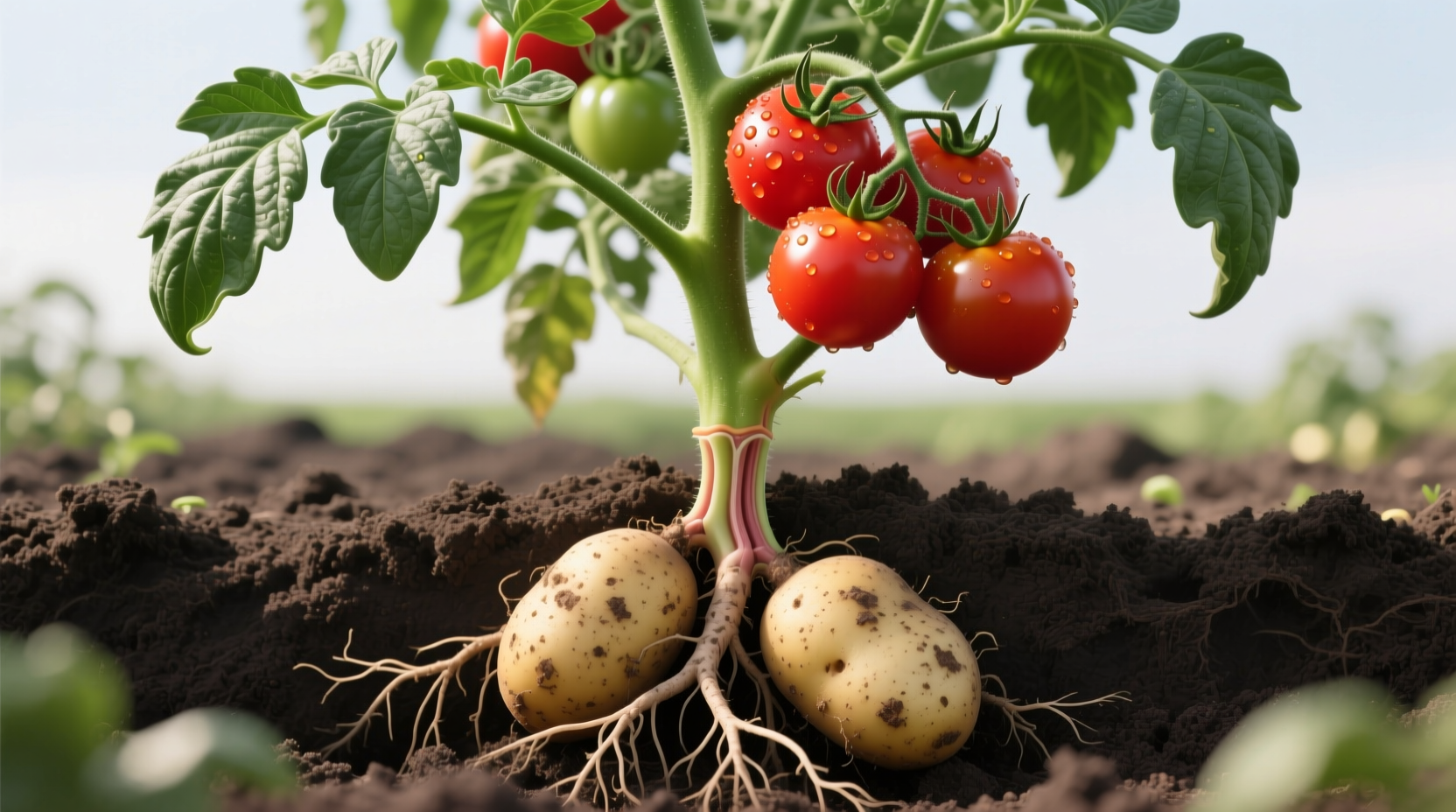
A grafted tomato and potato plant isn't a hybrid but rather two distinct plants joined through horticultural grafting. The technique involves attaching a tomato plant cutting (the scion) onto a potato plant rootstock. Despite belonging to different species within the Solanaceae family, these nightshades share sufficient biological compatibility for successful grafting.
Unlike genetic modification, grafting preserves each plant's genetic integrity—tomatoes grow exclusively from the scion while potatoes develop from the rootstock. This means you'll harvest standard tomatoes and regular potatoes, not some botanical hybrid fruit.
| Component | Botanical Name | Function in Graft | Harvest Result |
|---|---|---|---|
| Scion | Solanum lycopersicum | Upper portion producing foliage and fruit | Standard tomatoes |
| Rootstock | Solanum tuberosum | Lower portion developing tubers | Standard potatoes |
The Science Behind Successful Grafting
Grafting success between tomatoes and potatoes relies on their shared membership in the Solanaceae family. According to research from the University of Minnesota Extension, compatible graft unions form when vascular tissues from both plants fuse during the healing process.
The critical window for grafting occurs when both plants are young seedlings with stems approximately 4-6mm in diameter. Horticultural experts at the Royal Horticultural Society note that successful grafts require precise alignment of vascular cambium layers and proper environmental conditions during the healing phase.
Practical Benefits for Home Gardeners
Grafted tomato and potato plants offer several compelling advantages for space-conscious gardeners:
- Space efficiency—Produce two crops in one planting location, ideal for container gardening or small urban plots
- Soil optimization—Maximize nutrient uptake from a single soil area for multiple harvests
- Season extension—Tomatoes mature earlier than potatoes, providing staggered harvests
- Educational value—Demonstrates plant biology principles for gardening enthusiasts
According to a USDA Agricultural Research Service study, properly grafted plants can yield up to 5 pounds of tomatoes and 10 pounds of potatoes per plant under optimal conditions.
Realistic Limitations to Consider
While exciting, grafted tomato and potato plants come with important limitations that affect their practicality:
- Shorter lifespan—Grafted plants typically produce for one season only, unlike perennial grafts in fruit trees
- Water balance challenges—Tomatoes prefer consistent moisture while potatoes need drier conditions during tuber formation
- Yield trade-offs—Total combined yield is often less than growing each plant separately
- Regional suitability—Best results occur in temperate climates with 60-90 frost-free days
A Cornell University vegetable grafting research project found that grafted tomato-potato combinations showed 25% lower total yield compared to separately grown plants due to competing resource demands.
Step-by-Step Growing Guide
Whether you're purchasing pre-grafted plants or attempting grafting yourself, follow these evidence-based practices for success:
Planting Requirements
- Use well-draining soil with pH 6.0-6.8
- Provide full sun (6-8 hours daily)
- Maintain consistent moisture without waterlogging
- Apply balanced fertilizer every 3-4 weeks
Care Timeline
- Weeks 1-2: Keep grafted plants in partial shade with high humidity (80-90%) to encourage graft union healing
- Weeks 3-4: Gradually introduce to full sun while maintaining consistent soil moisture
- Weeks 5-8: Begin regular fertilization; pinch off early tomato flowers to strengthen plant
- Weeks 9-12: Monitor potato development; reduce watering slightly as harvest approaches
Troubleshooting Common Issues
Even with proper care, grafted plants may encounter challenges. Here's how to address them:
- Graft failure—If the scion wilts within 7 days, the vascular connection failed. Prevention: Ensure precise cambium alignment during grafting.
- Uneven growth—If one plant dominates, prune the stronger portion to balance energy distribution.
- Disease transmission—Potato viruses can affect tomatoes. Prevention: Use disease-resistant varieties for both components.
- Water stress—Yellowing leaves indicate moisture imbalance. Solution: Maintain consistent soil moisture without saturation.
Research from the Oregon State University Extension Service shows that proper staking reduces graft stress by 40% compared to unsupported plants, as movement can damage the delicate union.
Is a Grafted Plant Right for Your Garden?
These plants work best for:
- Urban gardeners with limited space
- Educational gardening projects
- Container gardening enthusiasts
- Gardeners seeking novelty in their plots
They're less suitable for:
- Commercial production (due to lower yields)
- Gardeners seeking maximum harvest quantity
- Regions with extremely short growing seasons
- Those unwilling to manage competing water needs
For most home gardeners, grafted tomato and potato plants offer an intriguing gardening experiment with practical benefits for space-constrained environments. While they won't replace traditional planting methods for maximum yield, they provide a fascinating demonstration of plant biology while delivering two harvests from a single garden footprint.




 浙公网安备
33010002000092号
浙公网安备
33010002000092号 浙B2-20120091-4