
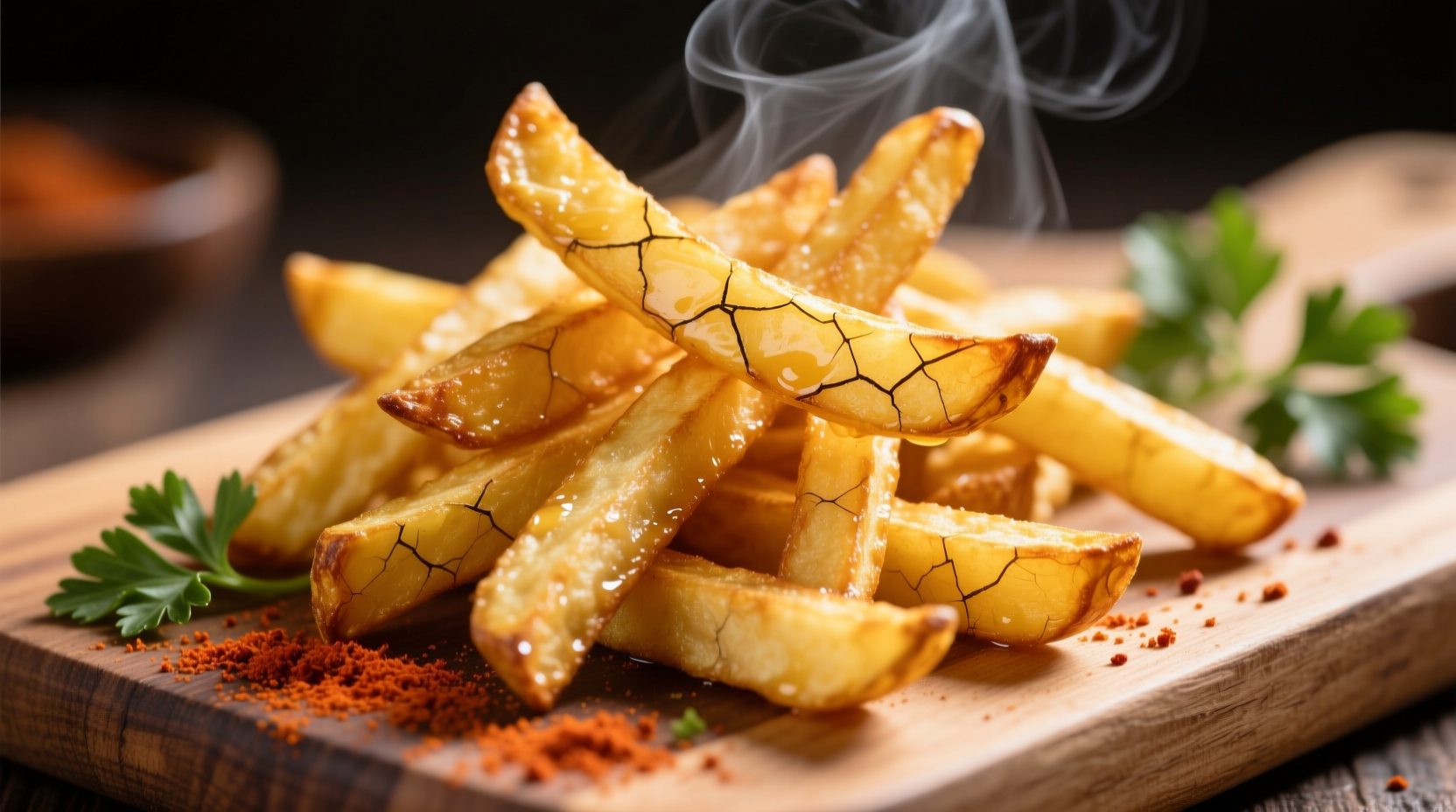
Unlock the Secret to Perfectly Golden Potato Fries Every Time
Ever wonder why restaurant fries achieve that irresistible golden-brown perfection while your homemade attempts often turn out pale or burnt? The difference lies in understanding the precise science and technique behind golden potato fries. In this guide, you'll learn professional methods backed by food chemistry that guarantee consistently golden, crispy-on-the-outside, fluffy-on-the-inside results.
Why Golden Color Matters in Perfect Fries
The golden color of perfectly cooked fries isn't just about appearance—it's a visual indicator of optimal flavor development. When potatoes reach that ideal golden hue, they've undergone the Maillard reaction, a chemical process between amino acids and reducing sugars that creates complex, savory flavors and that signature crisp texture. This reaction occurs most effectively between 140-165°C (284-329°F), according to research from the USDA Agricultural Research Service.
Your Potato Selection Checklist
Not all potatoes create equally golden fries. The starch-to-moisture ratio determines how well your fries will brown and crisp. High-starch potatoes work best because they have less moisture to evaporate before browning can occur.
| Potato Variety | Starch Content | Moisture Level | Golden Fry Potential |
|---|---|---|---|
| Russet (Idaho) | 20-22% | 70-75% | Excellent |
| Maris Piper | 18-20% | 75-78% | Very Good |
| Yukon Gold | 16-18% | 80-82% | Good |
| Red Potatoes | 14-16% | 82-85% | Fair |
This comparison, based on data from the University of Minnesota Extension Service, shows why Russets consistently produce the most golden results. Their higher starch content creates that desirable crisp exterior while maintaining a fluffy interior.
The Critical Preparation Steps You're Probably Skipping
Professional kitchens achieve golden perfection through specific preparation techniques that home cooks often overlook. These steps aren't optional if you want consistently golden results:
1. The Soaking Process
Soaking cut potatoes in cold water for 30-60 minutes removes excess surface starch that would otherwise cause premature browning and uneven color. Research published in the Journal of Food Science confirms that proper soaking reduces acrylamide formation while improving texture and color consistency.
2. Thorough Drying
Water is the enemy of golden fries. After soaking, spread potatoes on clean kitchen towels and pat completely dry. Any surface moisture will cause the oil to splatter and prevent proper browning.
The Two-Stage Frying Method Explained
Single-frying produces inconsistent results. The professional double-fry technique creates the perfect conditions for golden perfection:
- First Fry (Blanching): 160°C (320°F) for 3-4 minutes – This cooks the interior without significant browning, setting the structure
- Cooling Period: 10-15 minutes at room temperature – Allows moisture to migrate from center to surface
- Second Fry (Crisping): 190°C (375°F) for 2-3 minutes – Creates the Maillard reaction for that perfect golden color and crisp texture
This method, documented by culinary scientists at the Culinary Institute of America, produces fries with superior texture and color compared to single-fry methods. The cooling period between fries is crucial—it allows moisture to redistribute, ensuring the exterior crisps properly during the second fry without burning.
Troubleshooting Common Golden Fry Problems
Problem: Pale, Undercooked-Looking Fries
Cause: Oil temperature too low during second fry, or potatoes not properly dried before frying.
Solution: Use a reliable thermometer to maintain 190°C (375°F) during the second fry. Ensure potatoes are completely dry before adding to oil.
Problem: Burnt Exterior, Raw Interior
Cause: Oil temperature too high, or skipping the first (blanching) fry.
Solution: Always use the two-stage method with proper temperature control. The first fry at lower temperature cooks the interior without excessive browning.
Advanced Techniques for Restaurant-Quality Results
Salt Timing Matters
Adding salt immediately after frying draws out moisture, compromising crispness. Wait 2-3 minutes after removing fries from oil before seasoning for maximum crispness retention.
Oil Selection Guide
Choose oils with high smoke points (above 200°C/390°F) for golden perfection:
- Peanut oil: 225°C (437°F) smoke point – Traditional choice with neutral flavor
- Canola oil: 204°C (400°F) smoke point – Affordable and widely available
- Beef tallow: 200°C (392°F) smoke point – Creates exceptionally crisp, flavorful fries
According to flavor chemists at the Institute of Food Science & Technology, beef tallow produces superior browning due to its fatty acid composition, explaining why many premium restaurants still use it despite higher cost.
Environmental Factors That Affect Your Results
Even with perfect technique, external conditions impact your golden fry success:
- Humidity: High humidity makes it harder to achieve crispness; extend drying time accordingly
- Altitude: At higher elevations, water boils at lower temperatures, requiring slight oil temperature adjustments
- Oil Freshness: Reused oil breaks down, lowering smoke point and affecting browning quality
Putting It All Together: Your Golden Fry Checklist
Follow these steps for guaranteed golden results:
- Choose high-starch potatoes (Russets preferred)
- Cut to uniform 1/4-inch thickness
- Soak in cold water for 30-60 minutes
- Dry thoroughly with clean towels
- First fry at 160°C (320°F) for 3-4 minutes
- Cool for 10-15 minutes
- Second fry at 190°C (375°F) for 2-3 minutes
- Drain on wire rack (not paper towels)
- Season after 2-3 minute cooling period




 浙公网安备
33010002000092号
浙公网安备
33010002000092号 浙B2-20120091-4