
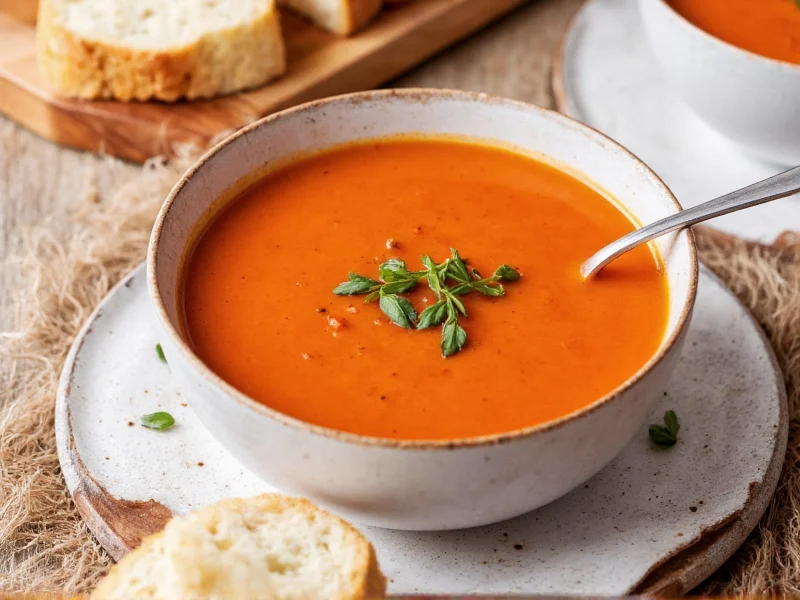
Many people assume tomato soup is naturally gluten free since tomatoes themselves don't contain gluten. However, most commercial varieties include wheat-based thickeners, modified food starch, or barley-derived malt flavoring that introduces gluten. Understanding what makes tomato soup gluten free versus gluten contaminated is essential for anyone managing celiac disease or non-celiac gluten sensitivity.
Is Tomato Soup Naturally Gluten Free?
Plain tomatoes, olive oil, onions, garlic, and herbs are naturally gluten free ingredients. The problem arises when manufacturers add thickeners, flavor enhancers, or broth that may contain gluten. Many canned tomato soups use wheat flour as a thickener or include soy sauce (which contains wheat) for depth of flavor.
When examining store-bought options, look for products with a certified gluten free label from organizations like GFCO (Gluten Free Certification Organization). These products undergo rigorous testing to ensure they contain less than 10-20 parts per million of gluten, the safe threshold for most people with gluten-related disorders.
Essential Components of a Safe Gluten Free Tomato Soup
Creating a truly gluten free tomato soup requires attention to three critical elements: ingredients, preparation environment, and cross-contamination prevention.
| Component | Gluten-Free Consideration | Recommended Alternative |
|---|---|---|
| Thickener | Wheat flour creates roux in many recipes | Arrowroot powder or cornstarch (certified GF) |
| Broth | Many broths contain barley or wheat | Certified GF vegetable or chicken broth |
| Flavor Enhancers | Soy sauce, malt vinegar often contain wheat | Coconut aminos or certified GF tamari |
| Canned Tomatoes | Some brands process in facilities with wheat | Certified GF brands or fresh tomatoes |
The Evolution of Gluten-Free Standards: Critical Timeline
Understanding how gluten-free verification has evolved explains why certification matters more today than ever. These regulatory milestones directly impact tomato soup safety:
- 2007: Gluten-Free Certification Organization (GFCO) establishes first independent certification with 10 ppm threshold—stricter than later FDA standards. This addressed critical gaps in cross-contamination control for processed foods like soup. GFCO Historical Timeline
- August 2013: FDA finalizes gluten-free labeling rule requiring <20 ppm gluten in all packaged foods. While foundational, this standard doesn't mandate facility audits—leaving soup vulnerable to cross-contact during manufacturing. FDA Final Rule Documentation
- 2017-Present: Third-party certifications expand testing protocols. GFCO now requires 5 ppm thresholds and facility inspections specifically for high-risk categories like soups, where shared equipment commonly causes contamination. GFCO Current Standards
This progression reveals why certified gluten free tomato soup remains essential: FDA labeling alone doesn't prevent cross-contamination in soup production facilities, where shared lines process wheat-containing products.
Perfect Homemade Gluten Free Tomato Soup Recipe
Creating a flavorful gluten free tomato soup from scratch ensures complete control over ingredients while delivering superior taste compared to many commercial options. This easy gluten free tomato soup recipe serves four and takes just 45 minutes from start to finish.
Ingredients
- 2 tablespoons olive oil (or avocado oil)
- 1 large yellow onion, diced
- 3 cloves garlic, minced
- 2 (28-ounce) cans certified gluten free crushed tomatoes
- 1 cup certified gluten free vegetable broth
- 1 teaspoon dried basil
- 1 teaspoon dried oregano
- 1/2 teaspoon red pepper flakes (optional)
- 2 tablespoons arrowroot powder mixed with 3 tablespoons cold water
- Salt and freshly ground black pepper to taste
- Fresh basil for garnish
Step-by-Step Preparation
- Heat olive oil in a large pot over medium heat. Add onions and sauté until translucent (about 5 minutes).
- Add garlic and cook for 1 minute until fragrant, being careful not to burn.
- Pour in crushed tomatoes and vegetable broth, stirring to combine.
- Add dried basil, oregano, and red pepper flakes. Bring to a gentle simmer.
- Cover and cook for 25 minutes, stirring occasionally.
- Using an immersion blender, carefully puree the soup until smooth (or transfer to a countertop blender in batches).
- Return to low heat and gradually whisk in the arrowroot slurry.
- Cook for 3-5 minutes until the soup reaches your desired thickness.
- Season with salt and pepper to taste.
- Serve hot with fresh basil garnish.
Variations for Different Dietary Needs
This basic gluten free tomato soup recipe serves as an excellent foundation for numerous adaptations to accommodate various dietary requirements while maintaining gluten free integrity.
Dairy-Free Creamy Version
For those seeking a creamy texture without dairy (and maintaining a dairy free gluten free tomato soup), blend in 1/2 cup of soaked cashews or coconut milk after pureeing. The natural fats create a rich mouthfeel without compromising the gluten free status.
Low-Sodium Option
Reduce sodium by using no-salt-added tomatoes and homemade gluten free vegetable broth. Boost flavor with additional herbs, a splash of balsamic vinegar, or roasted garlic instead of salt.
Roasted Tomato Variation
For deeper flavor in your easy gluten free tomato soup, roast 3 pounds of fresh tomatoes at 400°F for 30 minutes before adding to the recipe. The caramelization enhances natural sweetness without needing additional thickeners.
Contextual Boundaries: When Store-Bought Soup Is Truly Safe
Not all gluten-free consumers face identical risks. Your specific health context determines whether commercial soup meets safety requirements:
- Celiac Disease: Requires certified products (≤20 ppm) with verified cross-contamination controls. The Celiac Disease Foundation states: "For celiac patients, even trace gluten exposure causes intestinal damage—certification is non-negotiable." Homemade preparation remains safest when dining out. Celiac Foundation Guidelines
- Non-Celiac Gluten Sensitivity: May tolerate non-certified products if labels show no gluten ingredients, but a NIH study found 30% react to levels below 20 ppm. When symptoms persist, switch to certified GF or homemade versions. NIH Threshold Research
- Wheat Allergy Only: Can often use non-certified soups avoiding wheat ingredients, but must check for "may contain wheat" warnings due to cross-contact risks during manufacturing.
For tomato soup specifically, store-bought options become risky when facilities process wheat-based soups on shared lines—a common industry practice not addressed by basic "gluten-free" claims without certification.
Avoiding Cross-Contamination
Even with perfect ingredients, cross-contamination can ruin your gluten free tomato soup. Follow these critical steps:
- Use dedicated gluten free cooking utensils and pots
- Clean all surfaces thoroughly before preparation
- Store gluten free ingredients separately from wheat-containing products
- Avoid using wooden spoons or cutting boards that may harbor gluten particles
- Wash hands thoroughly before handling ingredients
Storage and Reheating Guidelines
Proper storage maintains both safety and quality of your homemade gluten free tomato soup:
- Refrigerate in airtight containers for up to 5 days
- Freeze in portion-sized containers for up to 3 months
- When reheating, bring to 165°F (74°C) to ensure food safety
- Stir occasionally while reheating to prevent separation
- Do not refreeze previously frozen soup
Reading Labels for Store-Bought Options
When purchasing commercial gluten free tomato soup, scrutinize labels for these potential pitfalls:
- "Modified food starch" - may be wheat-based unless specified as corn or potato
- "Natural flavors" - could contain gluten derivatives
- "Malt" - always indicates barley presence
- "Seasoning" - often contains hidden gluten
- "May contain traces of wheat" - indicates cross-contamination risk
The most reliable products display a certified gluten free logo from recognized organizations like GFCO, which requires testing to under 10ppm gluten - crucial for those with celiac disease.
Nutritional Benefits of Homemade Gluten Free Tomato Soup
Beyond being safe for gluten-sensitive individuals, a well-prepared gluten free tomato soup offers significant nutritional advantages:
- Rich in lycopene, a powerful antioxidant enhanced when tomatoes are cooked
- High vitamin C content supports immune function
- Low calorie density makes it ideal for weight management
- Naturally fat-free (without dairy additions)
- Excellent source of potassium and vitamin K
Unlike many commercial varieties loaded with sodium and preservatives, homemade versions let you control nutritional content while ensuring true gluten free status.




 浙公网安备
33010002000092号
浙公网安备
33010002000092号 浙B2-20120091-4