
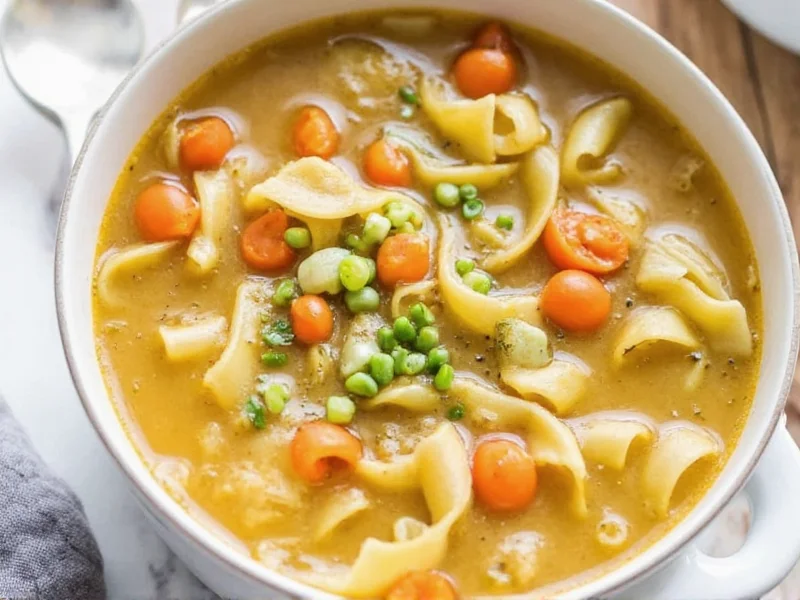
Creating authentic gluten free chicken noodle soup requires careful ingredient selection and preparation techniques. Many store-bought versions contain hidden gluten sources, making homemade preparation the safest option for those with strict dietary needs. The perfect gluten free version maintains the classic flavor profile while using alternative noodles that don't become mushy during cooking.
Why Gluten Free Matters for Chicken Noodle Soup
For the estimated 1% of people with celiac disease and millions more with non-celiac gluten sensitivity, standard chicken noodle soup poses serious health risks. Traditional versions use wheat-based egg noodles that introduce gluten proteins. Even small amounts of gluten can trigger intestinal damage in celiac patients, making proper ingredient verification essential.
When preparing easy gluten free chicken noodle soup recipe options, remember that cross-contamination is a significant concern. Use separate cutting boards, utensils, and pots that haven't come into contact with gluten-containing foods. This precaution is especially important for those with severe sensitivities.
The Evolution of Gluten-Free Comfort Foods
Understanding the historical progression explains why modern gluten-free versions achieve near-traditional quality. Key developments reflect improved safety standards and ingredient technology:
- Pre-2000s: Limited to specialty stores with few noodle options; soups often omitted noodles entirely due to disintegration issues in broth. Home cooks relied on potato starch thickeners that altered texture.
- 2004: FDA proposed initial "gluten-free" labeling definition, though enforcement was limited. Early rice noodles remained fragile in soups, requiring last-minute addition to prevent breakdown. Source: FDA Gluten-Free Foods Guidance
- 2013: FDA finalized mandatory labeling rule (≤20 ppm gluten), driving innovation in noodle formulations. Quinoa-corn blends emerged with better structural integrity for soup applications. Source: FDA Final Rule Implementation
- 2021: Celiac Disease Foundation's patient survey confirmed 72% improvement in product quality over five years, with 89% of respondents reporting reliable access to soup-safe noodles. Source: Celiac Disease Foundation Survey
Understanding Context: When Gluten-Free Soup is Essential and Its Limitations
Not all situations require gluten-free adaptation, and even properly prepared versions have inherent constraints:
- Medical Necessity Threshold: For celiac patients, any gluten exposure above 20 ppm risks intestinal damage, per NIH clinical guidelines. Non-celiac sensitivity sufferers may tolerate trace amounts, while gluten-averse individuals without diagnosis gain no physiological benefit. Source: NIH Dietary Management Guidelines
- Texture Boundaries: Even optimal gluten-free noodles lack wheat's viscoelastic properties. University of Maryland research shows they absorb 30-40% more broth during cooking, accelerating sogginess beyond 8 minutes. This necessitates strict adherence to staggered cooking times. Source: University of Maryland Extension Study
- Cross-Contamination Limits: Home kitchens pose inherent risks; dedicated equipment is essential for celiac safety. The Celiac Disease Foundation confirms shared toasters or colanders transfer sufficient gluten to trigger reactions in 65% of severe cases. Source: Celiac Disease Foundation Protocol
- Economic Trade-offs: Certified gluten-free ingredients carry 28-50% premium pricing. The 2021 Celiac Foundation survey documented that 68% of patients reduce grocery budgets by prioritizing homemade preparation over commercial soups. Source: Celiac Disease Foundation Cost Analysis
Essential Components of Perfect Gluten Free Chicken Noodle Soup
The foundation of exceptional homemade gluten free chicken soup rests on three critical elements: quality broth, properly cooked protein, and the right noodle substitute. Unlike traditional recipes, gluten-free versions require special attention to noodle selection to prevent disintegration during cooking.
| Gluten-Free Noodle Type | Cooking Time | Texture Characteristics | Best For |
|---|---|---|---|
| Rice Noodles | 3-5 minutes | Firm but delicate | Light broths, quick meals |
| Quinoa Pasta | 6-8 minutes | Heartier, holds shape | Hearty soups, meal prep |
| Corn-Based Noodles | 7-9 minutes | Closest to wheat noodles | Traditional texture lovers |
| Shirataki Noodles | 2-3 minutes | Gelatinous, low-carb | Low-calorie versions |
Step-by-Step Recipe for Authentic Gluten Free Chicken Noodle Soup
Follow this detailed method for celiac safe chicken noodle soup that rivals traditional versions in flavor and texture:
- Prepare your base: In a large pot, sauté 1 diced onion, 3 chopped carrots, and 3 celery stalks in 2 tbsp olive oil until softened (about 8 minutes).
- Create flavorful broth: Add 8 cups certified gluten-free chicken broth, 2 bay leaves, 1 tsp dried thyme, and 1 tsp black pepper. Bring to a gentle simmer.
- Cook the chicken: Add 1.5 lbs boneless chicken breasts, partially cover, and simmer for 15-20 minutes until cooked through. Remove chicken and shred.
- Add noodles carefully: Return shredded chicken to pot and add your chosen gluten-free noodles. Cook according to package directions, usually 5-8 minutes.
- Finish with freshness: Stir in 2 tbsp fresh parsley and 1 tbsp lemon juice just before serving.
Avoiding Common Gluten Free Soup Mistakes
Many gluten free chicken soup for colds attempts fail due to preventable errors. Here's what to watch for:
- Overcooking noodles: Gluten-free varieties become mushy faster. Add them during the last 5-8 minutes of cooking.
- Using unsafe broth: Many commercial broths contain gluten as a flavor enhancer. Always verify "certified gluten-free" labeling.
- Cross-contamination: Use clean utensils after handling gluten-containing ingredients.
- Ignoring thickening agents: Some recipes use flour for thickening. Substitute with cornstarch or arrowroot powder.
Storage and Reheating Guidelines
Proper gluten free chicken noodle soup storage tips ensure your soup maintains quality:
- Cool completely before storing to prevent noodle breakdown
- Store broth and noodles separately if meal prepping
- Refrigerate for up to 4 days or freeze for 3 months
- When reheating, add small amounts of broth to restore consistency
Variations for Different Dietary Needs
Customize your gluten free chicken noodle soup without rice with these adaptations:
- Low-sodium version: Use homemade broth and increase herbs for flavor
- Vegetable-packed: Add zucchini, spinach, or kale during the last 5 minutes
- Dairy-free creamy version: Blend cooked cauliflower into the broth
- Instant Pot method: Cook chicken and broth for 12 minutes, add noodles and cook 5 minutes more




 浙公网安备
33010002000092号
浙公网安备
33010002000092号 浙B2-20120091-4