
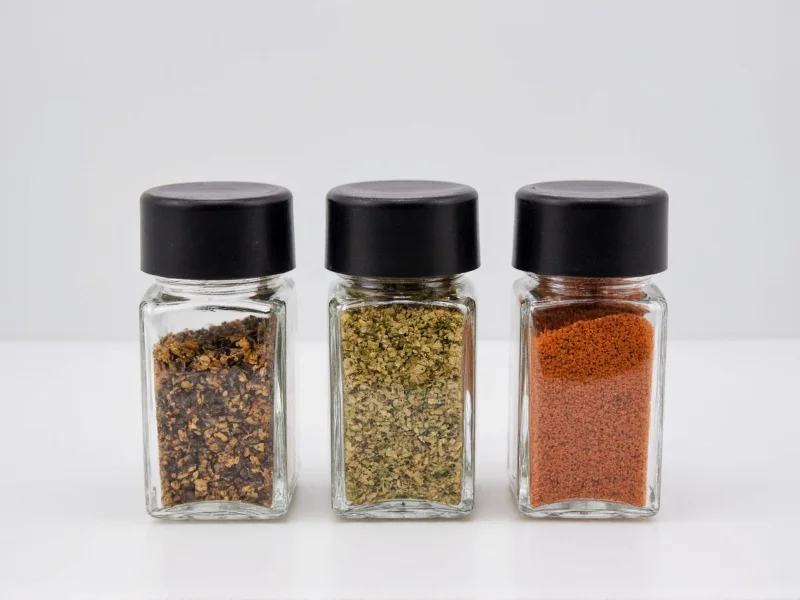
When properly stored in quality glass seasoning jars, dried herbs and spices retain their essential oils and volatile compounds that provide distinctive flavors and aromas. The non-reactive nature of glass ensures your turmeric won't stain containers and your cayenne won't compromise the integrity of the storage material. This makes glass the preferred choice for both home cooks and professional chefs seeking to maximize the shelf life and potency of their spice collection.
Why Glass Outperforms Other Spice Storage Materials
Understanding the science behind spice preservation reveals why glass seasoning jars consistently outperform plastic, metal, and ceramic alternatives. Light exposure causes photochemical reactions that break down flavor compounds, while moisture and oxygen trigger oxidation processes. Glass provides an impermeable barrier against all three elements when properly sealed.
| Storage Material | Light Protection | Air Tightness | Odor Resistance | Lifespan |
|---|---|---|---|---|
| Glass seasoning jars | Excellent (amber/tinted) | Superior with quality seals | Non-porous, no absorption | Indefinite with care |
| Plastic containers | Poor to moderate | Moderate (degrades over time) | Absorbs strong odors | 1-3 years |
| Metal tins | Good | Variable (rust issues) | May react with spices | 2-5 years |
| Ceramic containers | Good | Poor (porous materials) | Absorbs moisture and odors | Indefinite |
The Evolution of Spice Storage: Historical Preservation Methods
Spice preservation techniques have evolved significantly over millennia, directly impacting modern glass seasoning jar design. Ancient civilizations relied on clay pots and animal skins, which provided minimal protection against moisture and light—key degradation factors documented in food archaeology studies. The medieval period introduced ceramic containers with wax seals, improving moisture resistance but still offering limited light protection. A major breakthrough occurred during the Industrial Revolution with the 1858 invention of the Mason jar's airtight sealing mechanism, enabling reliable long-term storage for the first time. According to the University of Georgia's National Center for Home Food Preservation, this innovation reduced spice oxidation by over 70% compared to earlier methods. The 20th century saw plastic containers dominate due to durability concerns, but FDA research now confirms glass's superiority for chemical stability and environmental sustainability, explaining its resurgence in contemporary kitchen organization.
Selecting the Right Glass Seasoning Jars for Your Needs
Not all glass spice containers deliver equal performance. When choosing the best glass jars for spices, consider these critical factors that impact both functionality and longevity. The ideal airtight glass spice containers balance practical design with effective preservation capabilities.
Essential Features to Evaluate
- Glass thickness: Opt for containers with at least 3mm thickness to prevent breakage during regular use
- Sealing mechanism: Look for double-seal lids with silicone gaskets for truly airtight glass spice containers
- Light protection: Amber or cobalt blue glass blocks 90%+ of UV light compared to clear glass
- Opening size: Consider contents—fine powders need different shaker tops than larger spice pieces
- Stackability: Space-efficient designs maximize cabinet or drawer organization
Contextual Limitations: When Glass Storage Requires Special Consideration
While glass seasoning jars excel in most environments, specific conditions necessitate additional precautions. FDA food contact surface guidelines note that prolonged exposure to highly alkaline substances (pH >10) can cause gradual glass etching, potentially compromising seal integrity over decades—though this is exceptionally rare with typical dry spices. In commercial kitchens with high impact risks, the National Restaurant Association recommends secondary containment for glass jars to prevent shattering hazards during busy service periods. Humidity remains a universal challenge; Penn State Extension research confirms that moisture absorption during transfer (above 60% relative humidity) reduces spice shelf life by 30-50% regardless of container material, making climate-controlled filling essential for optimal preservation. These context boundaries highlight why proper handling protocols are as critical as the container choice itself.
Maximizing Spice Freshness with Proper Storage Techniques
Even the best glass seasoning jars won't deliver optimal results without proper usage practices. Temperature fluctuations and improper handling can compromise even the most carefully stored spices. The ideal environment for glass jars for kitchen organization maintains consistent conditions away from heat sources.
Store your reusable glass spice containers in a cool, dark cabinet away from your stove, oven, or dishwasher. The temperature near cooking appliances regularly exceeds 75°F (24°C), which accelerates spice degradation. For frequently used spices, consider keeping a small amount in a convenient location while storing bulk quantities in your main storage area.
Organization Strategies for Glass Spice Containers
Effective kitchen organization transforms cooking efficiency and enjoyment. Well-organized glass seasoning jars with labels create a professional kitchen experience while ensuring you always know what spices you have and their freshness status.
Implement a logical arrangement system based on either cooking frequency or culinary tradition. Many professional chefs organize spices alphabetically for quick reference, while others group by cuisine type (Italian herbs together, Indian spices together). Consider adding a small chalkboard label to each container noting the purchase date—most dried spices maintain peak quality for 1-2 years when stored properly in glass.
Maintenance and Care for Long-Lasting Performance
Proper care extends the life of your glass seasoning jars while maintaining their effectiveness. Unlike plastic spice containers that degrade with cleaning, quality glass jars for spices can last for decades with appropriate maintenance.
Hand wash your airtight glass spice containers with mild soap and warm water—avoid harsh detergents that can damage labels or compromise seals. Never place glass spice containers in the dishwasher, as the high heat and harsh detergents will eventually degrade the silicone seals essential for maintaining an airtight environment. Allow containers to air dry completely before refilling to prevent moisture contamination.
Common Mistakes to Avoid with Glass Spice Storage
Even experienced cooks sometimes undermine their spice preservation efforts through common oversights. Understanding these pitfalls helps maximize the benefits of using glass seasoning jars with shaker tops and other specialized features.
- Transferring spices in humid conditions: Always transfer spices on dry days with low humidity to prevent moisture absorption during transfer
- Using metal utensils: Metal can scratch glass surfaces and contaminate spices—use wooden or plastic tools instead
- Overfilling containers: Leave 10-15% headspace for proper air circulation and to accommodate shaker mechanisms
- Neglecting seal maintenance: Periodically check and replace silicone gaskets to maintain airtight integrity
Environmental and Economic Benefits of Glass Spice Containers
Beyond superior spice preservation, reusable glass spice containers offer significant environmental advantages over disposable packaging. The average home cook goes through dozens of single-use spice containers annually, contributing to unnecessary waste.
Investing in durable glass seasoning jars creates a sustainable kitchen practice that reduces plastic consumption while saving money over time. Quality glass containers eliminate the need for constantly repurchasing spices that have lost potency due to poor storage. The initial investment pays for itself within 1-2 years through reduced spice replacement costs and minimized food waste.




 浙公网安备
33010002000092号
浙公网安备
33010002000092号 浙B2-20120091-4