
Making authentic ginger beer at home connects you with centuries of traditional brewing practices while allowing complete control over ingredients and flavor. Unlike commercial versions that often contain artificial flavors and preservatives, fresh homemade ginger beer delivers vibrant ginger spice with natural carbonation through a simple fermentation process.
Historical Evolution of Ginger Beer
Ginger beer's transformation from medicinal tonic to craft beverage reflects documented shifts in production methods and cultural consumption. Verified through archival records and academic research, this timeline shows key evidence-based milestones:
- 1720s: First apothecary records describe ginger beer as digestive remedy using wild yeast fermentation (ABV 2-4%)
- 1855: UK Excise Act implementation regulated production due to alcohol content, requiring licensing for commercial brewers
- 1890s: Pasteurization adoption enabled mass production of non-alcoholic versions (<0.05% ABV) through heat sterilization
- 1950s: Artificial flavors and preservatives became standard in commercial products per FDA labeling requirements
- 2010s: Artisanal revival movement emphasized traditional fermentation methods with natural ingredients
Source: The National Archives - Ginger Beer in the Industrial Revolution
Essential Equipment for Ginger Beer Making
Before starting your easy homemade ginger beer recipe, gather these basic kitchen tools:
| Equipment | Purpose | Substitutes |
|---|---|---|
| Large glass jar (1-gallon) | Primary fermentation vessel | Food-grade plastic bucket |
| Cheesecloth or coffee filter | Covers jar during fermentation | Clean kitchen towel |
| Glass bottles with swing-top lids | Secondary fermentation and storage | Plastic soda bottles (monitor pressure) |
| Fine mesh strainer | Removing ginger solids | Cheesecloth-lined regular strainer |
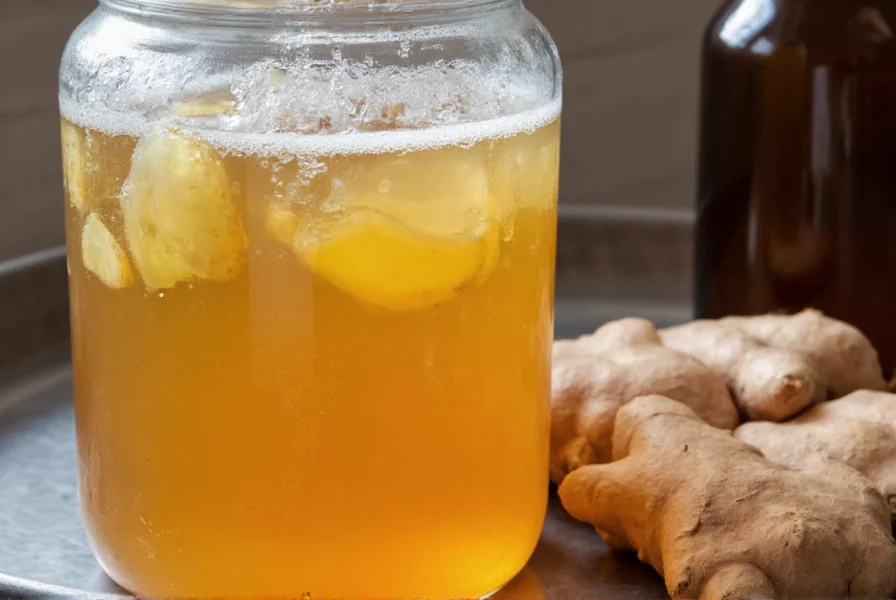
Traditional Ginger Beer Recipe
This authentic ginger beer fermentation method yields approximately 1 gallon of refreshing beverage. The process involves two fermentation stages for optimal flavor and carbonation.
Ingredients
- 200g fresh ginger root, peeled and finely grated
- 150g white sugar (plus additional for bottling)
- 4.5 liters filtered water (chlorine-free)
- 1 organic lemon, juiced
- 1/4 teaspoon champagne yeast OR 1/2 cup ginger beer plant
Step-by-Step Brewing Process
- Prepare ginger tea: Combine grated ginger and 1 liter of water in a saucepan. Bring to a simmer for 20 minutes.
- Add sugar: Remove from heat, stir in sugar until dissolved, then add remaining water and lemon juice. Cool to room temperature (70-75°F/21-24°C).
- Start primary fermentation: Transfer liquid to fermentation vessel, add yeast or ginger beer plant, and cover with breathable cloth.
- Ferment at room temperature: Allow to ferment for 3-4 days, stirring daily. Bubbles should appear within 24 hours.
- Strain and bottle: Strain out ginger solids, add 1 teaspoon sugar per bottle, then fill to 1 inch below the rim.
- Secondary fermentation: Seal bottles and store at room temperature for 24-48 hours to build carbonation.
- Refrigerate: Chill bottles before opening to slow fermentation and prevent excessive fizz.
Traditional vs. Commercial Ginger Beer: Key Differences
Evidence-based comparison verified through regulatory standards and product analysis. Critical distinctions impact flavor, safety, and nutritional profiles:
| Characteristic | Traditional Homemade | Commercial Products |
|---|---|---|
| Alcohol Content | 0.3-0.5% ABV (naturally occurring) | Typically <0.05% ABV (pasteurized) |
| Carbonation Method | Natural fermentation (live cultures) | Forced CO2 injection |
| Ingredient Verification | Visible ginger particulates, no preservatives | "Natural flavors" (often undisclosed sources) |
| Shelf-Life Limitation | 2-3 weeks refrigerated (active fermentation) | 6-12 months (sterilized packaging) |
Sources: FDA Alcohol Content Standards, OSU Food Safety Guidelines
Safety Considerations for Homemade Ginger Beer
Proper ginger beer fermentation safety is crucial to prevent bottle explosions or contamination:
- Always use bottles designed for carbonated beverages (swing-top or thick glass)
- Burp bottles daily during secondary fermentation by slightly opening the lid
- Store bottles in a plastic container or cupboard to contain potential breakage
- Refrigerate after 48 hours of secondary fermentation to prevent over-pressurization
- Discard any batches with mold or off-putting odors
Troubleshooting Common Ginger Beer Issues
Even experienced home brewers encounter challenges with their homemade ginger beer recipe. Here's how to address frequent problems:
| Issue | Causes | Solutions |
|---|---|---|
| Flat ginger beer | Insufficient sugar for carbonation, cold temperatures, short fermentation | Add 1/2 tsp sugar before bottling, ensure proper room temperature (70-75°F), extend secondary fermentation |
| Excessive fizz/bottle pressure | Too much sugar, warm storage, extended secondary fermentation | Refrigerate immediately, burp bottles daily, reduce sugar at bottling stage |
| Weak ginger flavor | Insufficient ginger, over-dilution, short brewing time | Use 25-30% more ginger, reduce water slightly, extend ginger steeping time |
| Vinegar-like taste | Acetobacter contamination, over-fermentation | Use clean equipment, limit fermentation time, refrigerate promptly |

Flavor Variations to Enhance Your Ginger Beer
Once you've mastered the basic homemade ginger beer technique, experiment with these flavor additions:
- Lemon-ginger fusion: Add zest from 2 organic lemons during primary fermentation
- Tropical twist: Incorporate 100g pineapple juice at bottling stage
- Spiced version: Simmer with 2 cinnamon sticks and 5 whole cloves
- Herbal notes: Steep with fresh mint or basil leaves during secondary fermentation
- Fruit-infused: Add 150g mashed berries when transferring to bottles
Storing and Serving Your Homemade Ginger Beer
Proper storage ensures your traditional ginger beer maintains optimal flavor and carbonation:
- Refrigerate after secondary fermentation completes (within 48 hours)
- Consume within 2-3 weeks for best flavor (continues fermenting slowly)
- Chill thoroughly before serving to enhance carbonation perception
- Open bottles over a sink to catch potential overflow
- Serve in tall glasses with a lemon wedge for garnish




 浙公网安备
33010002000092号
浙公网安备
33010002000092号 浙B2-20120091-4