
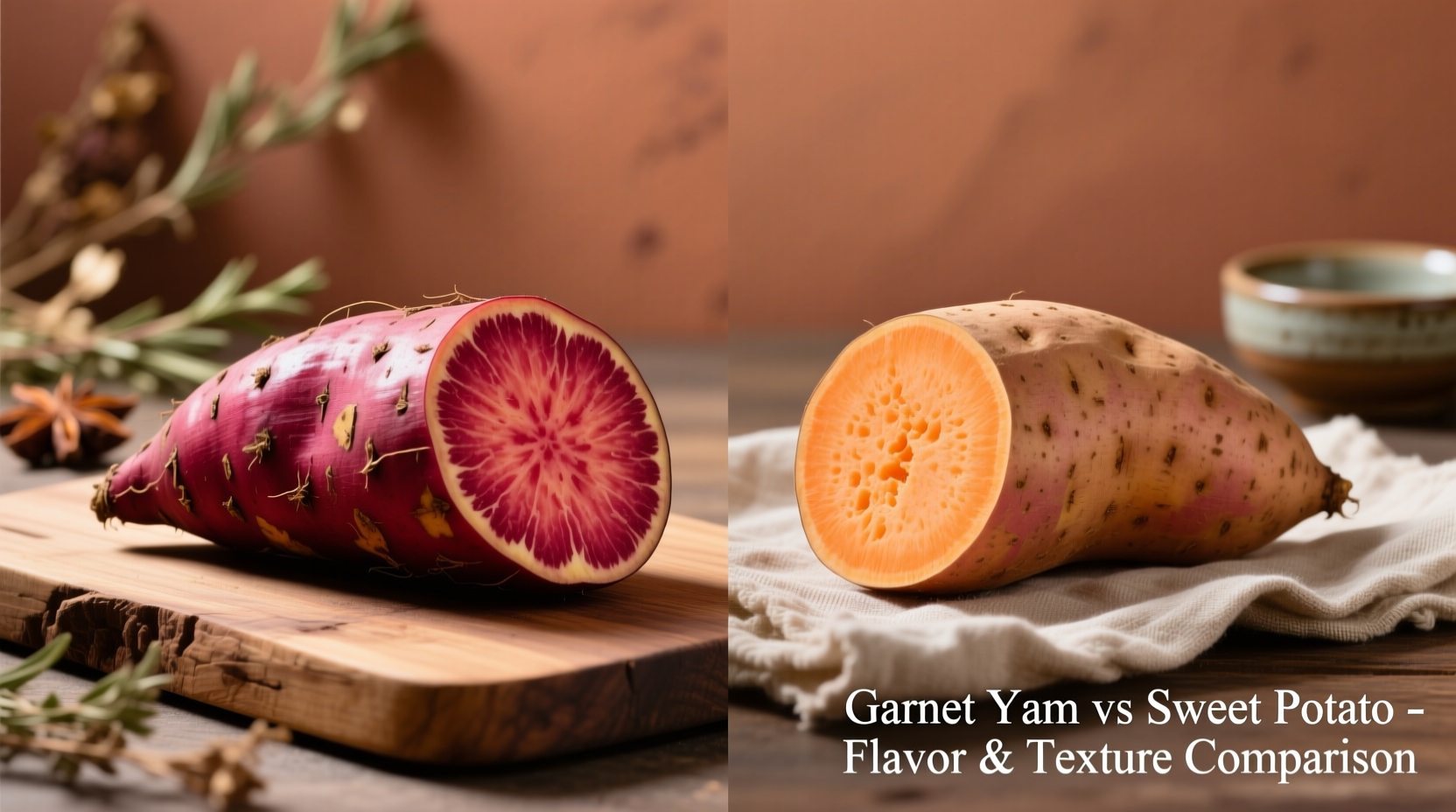
Despite common labeling confusion in US grocery stores, garnet yams are actually a variety of sweet potato—not true yams. True yams (Dioscorea genus) originate from Africa and Asia, while all—including garnet varieties—belong to the Ipomoea batatas species. Garnet sweet potatoes feature deep orange flesh and reddish skin, while true yams have rough, bark-like skin and white or yellow flesh.
Ever stood confused in the produce aisle wondering whether to grab those "yams" or sweet potatoes? You're not alone. This confusion affects millions of shoppers annually, largely because US grocery stores mislabel orange-fleshed sweet potatoes as “yams.” Let's clarify the garnet yam vs sweet potato reality once and for all—with science-backed facts that transform how you shop, cook, and nourish your family.
The Great Yam Mislabeling Mystery
When African slaves encountered North American sweet potatoes in the 1700s, they noted similarities to African yams and began calling them “yams.” To distinguish darker-fleshed varieties from paler ones, shippers in the early 1900s adopted “yam” as a marketing term. The USDA now requires that any product labeled “yam” must also include “sweet potato” in small print—a regulation rarely enforced in practice.
| Characteristic | Garnet Sweet Potato | True Yam |
|---|---|---|
| Botanical Family | Convolvulaceae (morning glory) | Dioscoreaceae |
| Scientific Name | Ipomoea batatas | Dioscorea spp. |
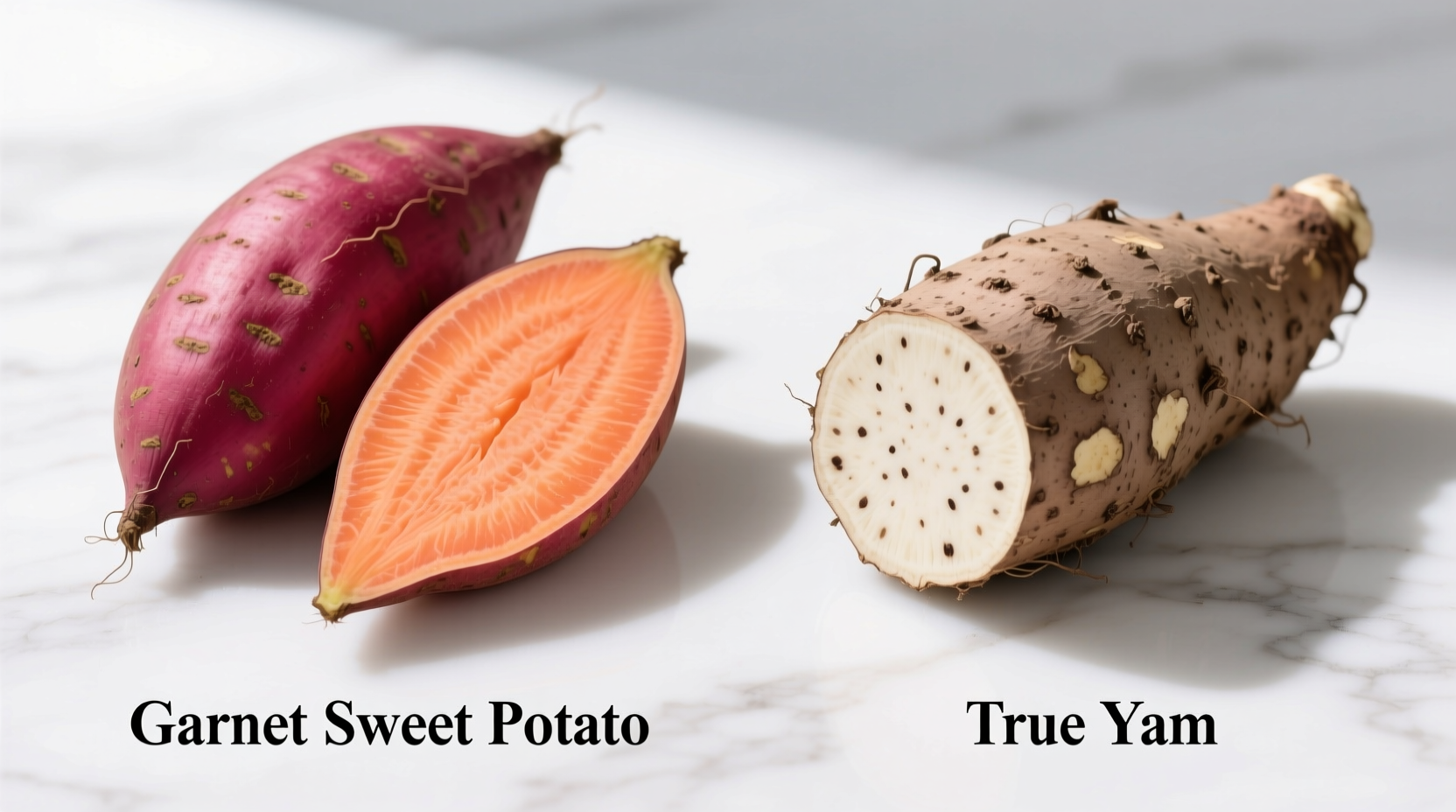
| Skin Texture | Thin, reddish-brown, smooth | Rough, scaly, bark-like |
| Flesh Color | Deep orange | White, yellow, or purple |
| Sugar Content | High (20-30% more than true yams) | Lower, starchier |
| Primary Growing Regions | North Carolina, Louisiana | Africa, Asia, Caribbean |
How to Identify Them in Stores
Follow this practical identification system the next time you're comparing garnet yam vs sweet potato options:
- Skin examination: Garnet varieties have smooth, thin skin with reddish undertones. True yams (rare in mainstream US stores) feature rough, almost bark-like skin that requires a knife to peel.
- Flesh inspection: Cut open a small section (with permission). Garnet sweet potatoes reveal deep orange flesh, while true yams show white, yellow, or purple flesh.
- Shape analysis: Garnet types are tapered with rounded ends. True yams often grow cylindrical and can reach several feet in length.
Nutritional Differences That Matter
According to USDA FoodData Central, a 100g serving of garnet sweet potato contains 103 calories, 25g carbohydrates, and 438% of your daily vitamin A needs. True yams contain approximately 118 calories, 28g carbohydrates, and only 2% of daily vitamin A. The dramatic difference comes from beta-carotene—abundant in orange-fleshed sweet potatoes but minimal in true yams.
The glycemic index tells another story: garnet sweet potatoes score 70 (moderate-high), while true yams range from 35-55 (low-moderate). This makes true yams a better option for blood sugar management, though both provide excellent fiber content (3-4g per serving).
Culinary Performance Comparison
Understanding how these ingredients behave in cooking prevents recipe disasters. Garnet sweet potatoes' high sugar content creates caramelization ideal for roasting—try them at 400°F for 25 minutes for perfect edges. Their moist texture also makes them excellent for mashing and baking. True yams, with their starchier composition, hold shape better in stews and require longer cooking times.
Professional chefs note that garnet varieties break down more easily when boiled, making them ideal for soups and purees. True yams maintain structural integrity, perfect for dishes requiring distinct vegetable pieces. When substituting one for the other, adjust liquid content—true yams absorb more moisture during cooking.
Where to Find Authentic Varieties
True yams remain challenging to find in standard US supermarkets. Your best options:
- Caribbean or West African markets: Look for names like “nyami,” “igname,” or “ñami”
- Specialty produce distributors: Companies like Melissa's offer true yams seasonally
- Farmers markets: Ask growers specifically about Dioscorea varieties
Meanwhile, garnet sweet potatoes—marketed as “yams”—dominate conventional grocery produce sections year-round, with peak season from October through December. The North Carolina Sweet Potato Commission reports that over 60% of US sweet potato production consists of garnet varieties.
Smart Cooking Applications
Leverage each ingredient's strengths with these chef-recommended approaches:
- Garnet sweet potatoes: Roast with smoked paprika for natural sweetness enhancement. Their high moisture content makes them ideal for no-sugar-added desserts—try replacing 50% of flour with pureed garnet sweet potato in brownies.
- True yams: Boil until tender, then mash with coconut milk for authentic West African fufu. Their neutral flavor absorbs spices beautifully in curries and stews.
Food scientists at UC Davis note that garnet varieties develop maximum sweetness when cooked between 135°-170°F—the temperature range where starch-converting enzymes work most efficiently. This explains why roasted garnet sweet potatoes taste sweeter than boiled ones.
Storage and Shelf Life
Proper storage dramatically affects quality. Garnet sweet potatoes last 3-5 weeks in a cool, dark pantry (55°-60°F). Refrigeration causes hard spots and diminishes flavor. True yams require similar conditions but have a shorter shelf life of 2-3 weeks. Never store either root vegetable near apples or bananas, as ethylene gas accelerates spoilage.
For long-term storage, UC Davis Postharvest Technology Center recommends curing garnet sweet potatoes at 85°F with 85-90% humidity for 5-7 days before moving to regular storage conditions. This process heals surface wounds and converts starches to sugars, enhancing both flavor and shelf life.




 浙公网安备
33010002000092号
浙公网安备
33010002000092号 浙B2-20120091-4