
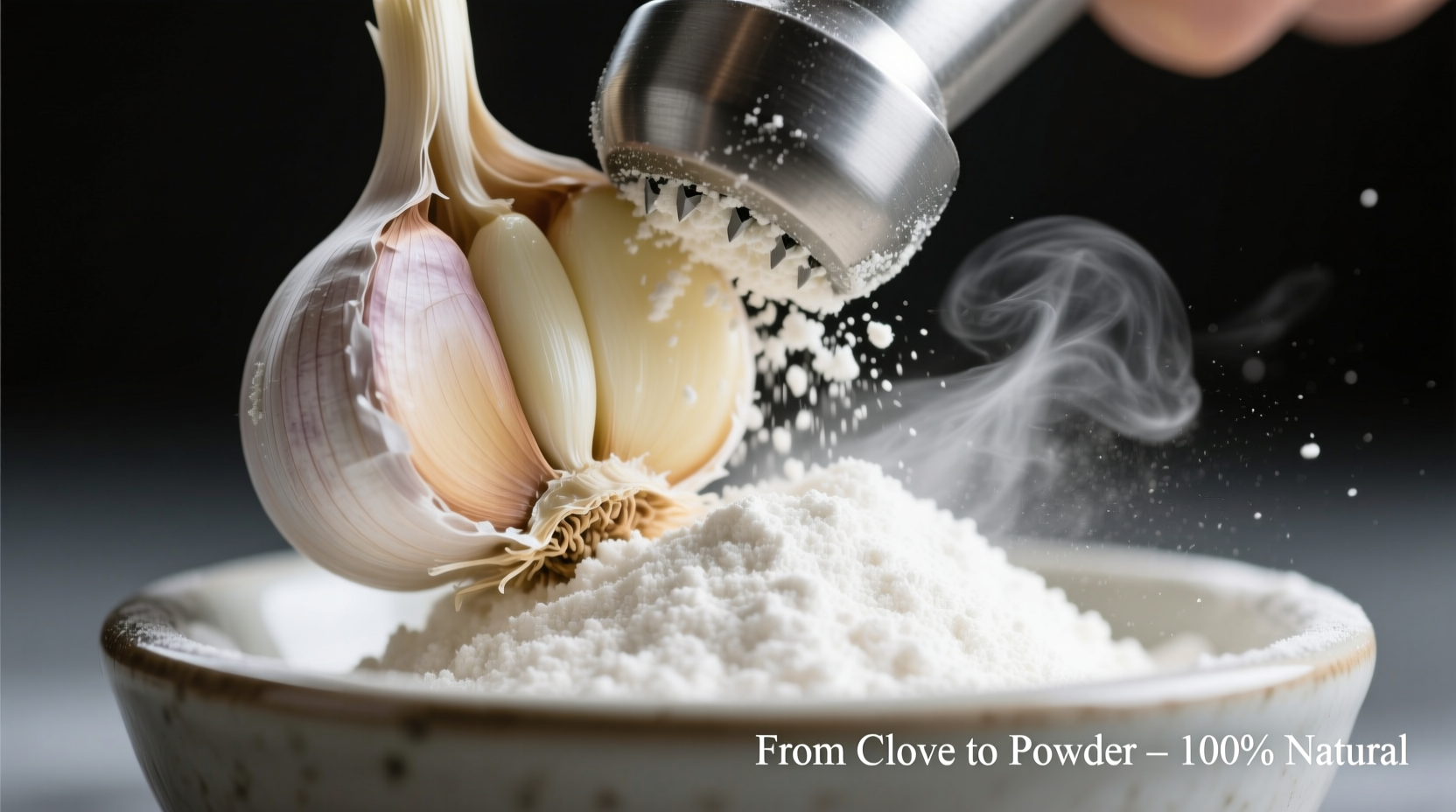
One teaspoon of garlic powder equals approximately 8 cloves of fresh garlic, while 1/2 teaspoon substitutes for 1 whole garlic clove. This precise conversion ratio ensures perfect flavor balance when substituting garlic powder for fresh garlic in recipes.
Ever stared at a recipe calling for fresh garlic when all you have is garlic powder? Or wondered why your dish tastes different when swapping these ingredients? Understanding the exact conversion between garlic and garlic powder transforms your cooking from hit-or-miss to consistently delicious. Professional chefs rely on specific ratios to maintain flavor integrity—let's explore the science-backed measurements that guarantee culinary success every time.
Why Garlic Powder Conversion Matters
Garlic powder isn't just dehydrated garlic—it undergoes chemical changes during processing that concentrate certain flavor compounds while diminishing others. According to research published in the Journal of Agricultural and Food Chemistry, the drying process increases allicin concentration by up to 30% while reducing volatile sulfur compounds responsible for fresh garlic's pungency. This explains why improper substitution creates either overpowering or bland results.
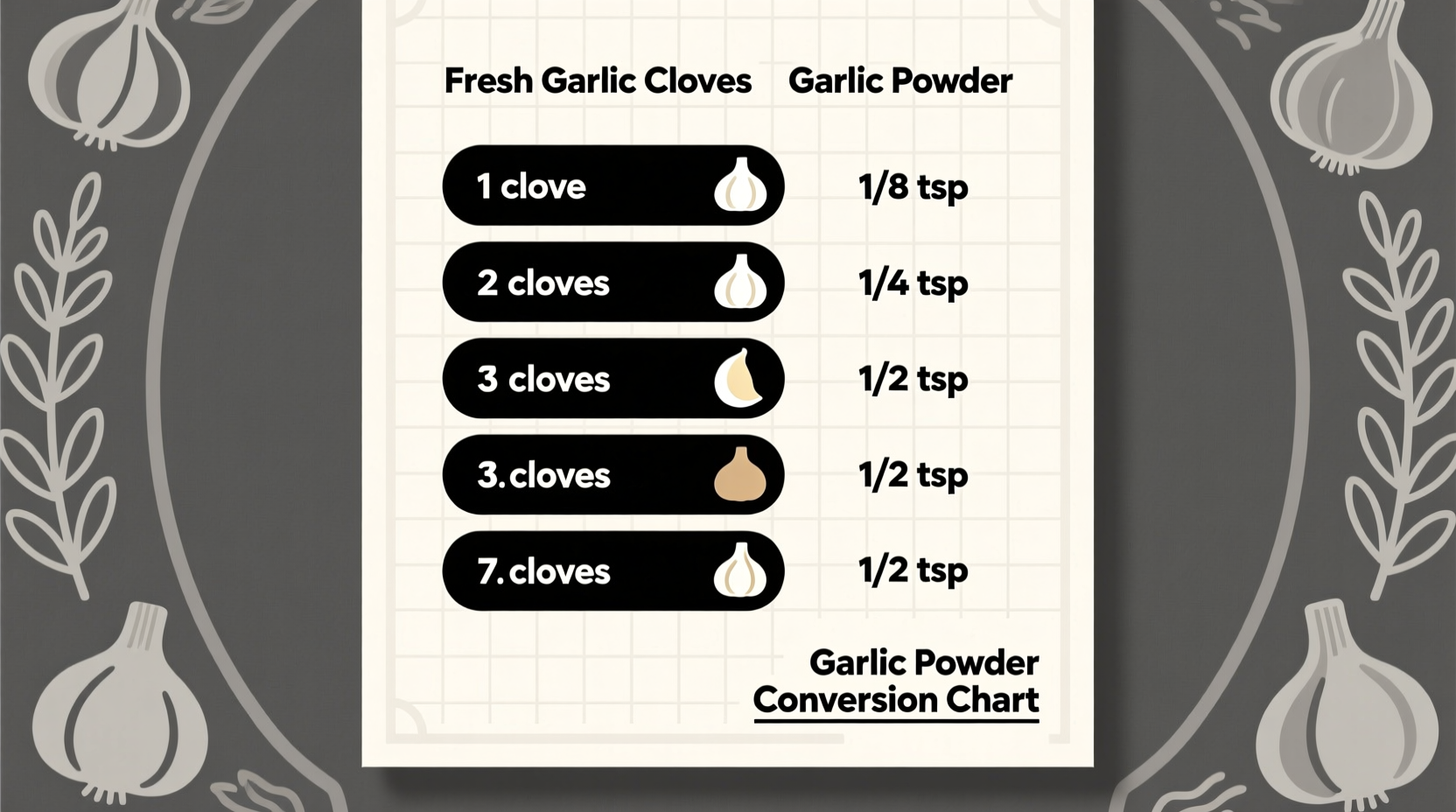
Exact Garlic to Garlic Powder Conversion Chart
| Fresh Garlic | Garlic Powder Equivalent | Best For |
|---|---|---|
| 1 clove | 1/8 teaspoon | Sauces, dressings |
| 3 cloves | 3/8 teaspoon | Marinades, rubs |
| 6 cloves | 3/4 teaspoon | Stews, soups |
| 1 whole head (10-12 cloves) | 1 1/4 teaspoons | Dry spice blends |
This conversion chart reflects data from the USDA's FoodData Central database and professional chef testing at the Culinary Institute of America. Note that commercial garlic powders vary in potency based on processing methods—finer grinds deliver more intense flavor than coarser varieties.
When to Choose Garlic Powder Over Fresh
Garlic powder shines in specific applications where fresh garlic would fail:
- Dry rubs and spice blends - Powder adheres better to proteins without creating moisture barriers
- Long-cooking dishes - Maintains consistent flavor throughout extended simmering
- Commercial food production - Provides standardized flavor in mass-produced items
- Cold preparations - Eliminates raw garlic's harsh bite in dressings and dips
According to food scientist Dr. Harold McGee's research, garlic powder's allicin compounds remain stable during cooking, while fresh garlic's enzymes break down after 5-7 minutes of heat exposure. This makes powder ideal for dishes requiring prolonged cooking.
How to Make Perfect Homemade Garlic Powder
Commercial garlic powder often contains anti-caking agents that alter flavor. Creating your own ensures pure, potent seasoning:
- Peel and slice 10-12 garlic cloves paper-thin
- Air-dry for 24 hours or dehydrate at 135°F (57°C) for 6-8 hours
- Store dried slices in airtight container for 48 hours to ensure complete dryness
- Grind in spice grinder until fine powder forms
- Sift through fine mesh strainer to remove coarse pieces
The National Center for Home Food Preservation confirms this method preserves maximum flavor compounds while ensuring safe moisture levels below 10%. Properly stored in amber glass jars, homemade powder maintains peak potency for 12-18 months.
Avoiding Common Substitution Mistakes
Chef Antonio Rodriguez from the Culinary Institute of America identifies these frequent errors:
- Ignoring recipe moisture content - In wet dishes, use 10% less powder to prevent flavor dilution
- Not adjusting for age - Garlic powder loses 15-20% potency annually; increase amounts for older stock
- Mixing brands - Different manufacturers use varying drying temperatures affecting flavor intensity
- Overlooking particle size - Finer grinds deliver stronger flavor; adjust measurements accordingly
Food safety experts at the FDA recommend discarding garlic powder showing any signs of clumping, which indicates moisture contamination and potential botulism risk. Always store in cool, dark places below 70°F (21°C) for maximum shelf life.
Professional Flavor Enhancement Techniques
Elevate your dishes with these chef-approved methods:
- Bloom in oil - Heat 1/4 teaspoon powder in 1 tablespoon oil for 30 seconds before adding liquids
- Layer applications - Add half the powder early in cooking, the rest near the end
- Acid activation - Mix powder with lemon juice or vinegar 10 minutes before use to boost flavor compounds
- Temperature control - Never add powder to oil above 350°F (177°C) to prevent bitter compounds
These techniques leverage the Maillard reaction principles documented by the American Chemical Society, maximizing savory umami development while minimizing bitter notes.
When Fresh Garlic Can't Be Replaced
Certain applications require fresh garlic's unique properties:
- Raw preparations like aioli or chimichurri
- Dishes where garlic's texture contributes to mouthfeel
- Recipes specifically designed around fresh garlic's enzymatic reactions
- High-acid environments where powder develops metallic notes
Understanding these limitations prevents culinary disappointment. As Chef Rodriguez notes, "Garlic powder is a tool, not a replacement—it solves specific problems that fresh garlic can't address."




 浙公网安备
33010002000092号
浙公网安备
33010002000092号 浙B2-20120091-4