
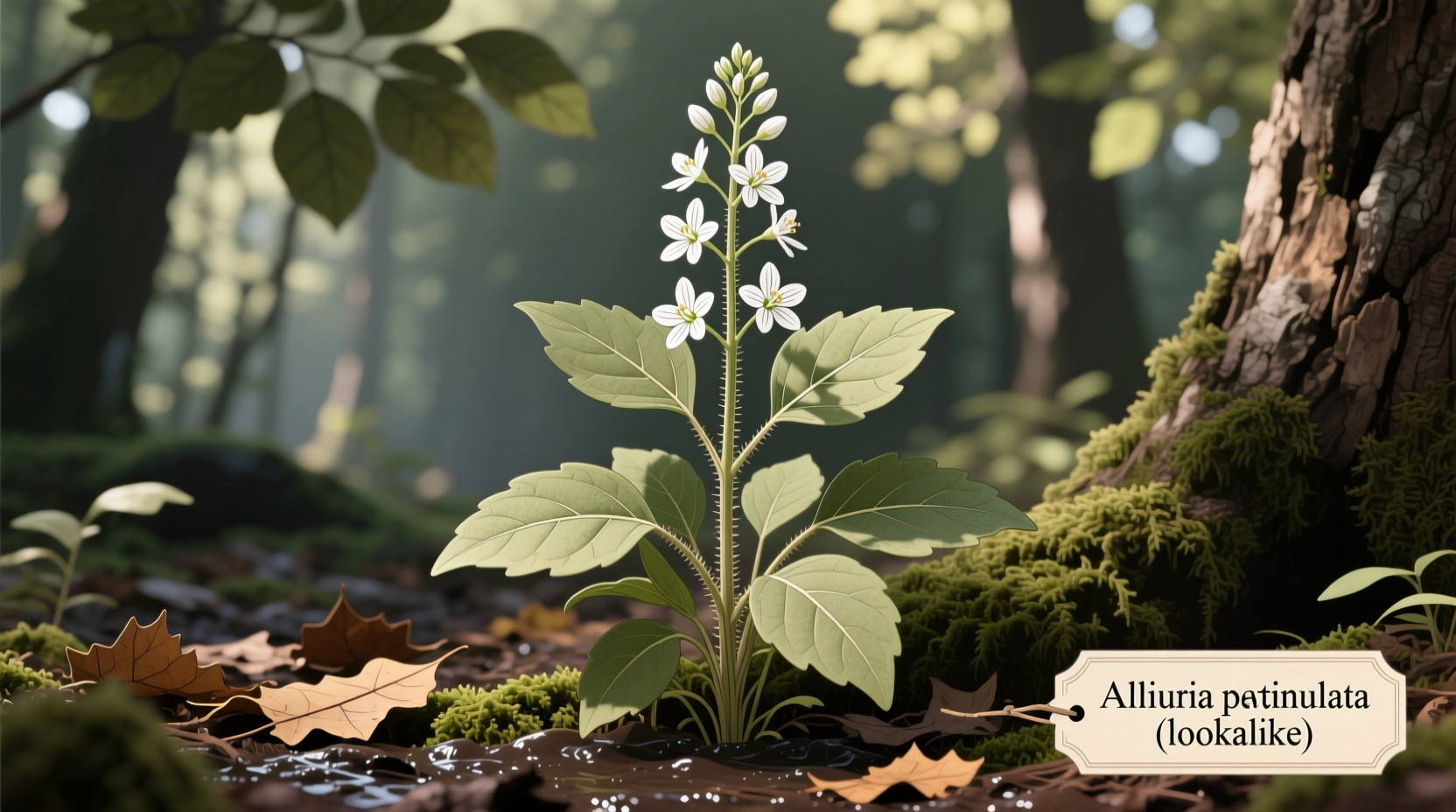
Garlic mustard (Alliaria petiolata) has become a popular foraged green with its distinctive garlic-mustard flavor, but misidentification can lead to serious health risks. Each spring, emergency rooms treat cases of plant poisoning from well-intentioned foragers who confused toxic lookalikes with edible garlic mustard. This guide provides the essential botanical knowledge you need to forage safely while contributing to ecological conservation efforts.
Why Proper Garlic Mustard Identification Matters
Garlic mustard serves dual roles in our ecosystem: as a valuable edible plant for foragers and as an aggressive invasive species threatening native biodiversity. The USDA Forest Service reports that garlic mustard has infested over 30 U.S. states and 4 Canadian provinces, displacing native flora in woodlands. Proper identification allows you to safely enjoy this edible green while participating in ecological management efforts.
However, several toxic plants share visual similarities with garlic mustard, particularly in their early growth stages. The North American Plant Protection Organization notes that misidentification accounts for approximately 18% of reported foraging-related poisonings annually. Understanding the precise botanical characteristics separates safe foraging from potentially dangerous mistakes.
Definitive Identification: The Garlic Mustard Profile
True garlic mustard possesses specific characteristics that remain consistent across its life cycle. Learning these features creates a reliable identification framework that prevents dangerous confusion with lookalikes.
Seasonal Growth Stages and Key Markers
Garlic mustard follows a predictable biennial growth pattern with distinctive markers at each stage:
| Growth Stage | Timeframe | Definitive Identification Markers |
|---|---|---|
| First-year rosette | Autumn to early spring | Rounded to kidney-shaped leaves with scalloped edges; emits strong garlic odor when crushed; grows in shaded woodland areas |
| Second-year flowering | April-May | 6-36 inch tall flowering stalk; triangular to heart-shaped alternate leaves; small white flowers with four petals in十字 pattern; distinctive garlic-mustard scent throughout plant |
| Seed production | June-July | Erect seed pods (siliques) 1-2.5 inches long; seeds arranged in distinctive beads; plant retains garlic odor even when drying |
The Critical Scent Test: Your Most Reliable Identifier
While visual characteristics provide initial clues, the scent test remains the single most reliable identification method for garlic mustard. When any part of the plant is crushed between fingers:
- True garlic mustard emits an immediate, strong garlic-mustard aroma
- This scent persists through all growth stages, from seedling to mature plant
- The odor becomes more pronounced when leaves are crushed
The University of Wisconsin-Madison Arboretum emphasizes that this scent characteristic separates garlic mustard from its most dangerous lookalikes, which lack this distinctive aroma.
Common Garlic Mustard Lookalikes: Safety-Critical Comparisons
Several plants share visual similarities with garlic mustard, particularly in early spring when foraging typically begins. Understanding the precise differences prevents dangerous mistakes.
Dangerous Lookalikes: Plants That Demand Immediate Recognition
These three plants represent the most critical lookalikes due to their toxicity and visual similarity to garlic mustard, especially in early growth stages:
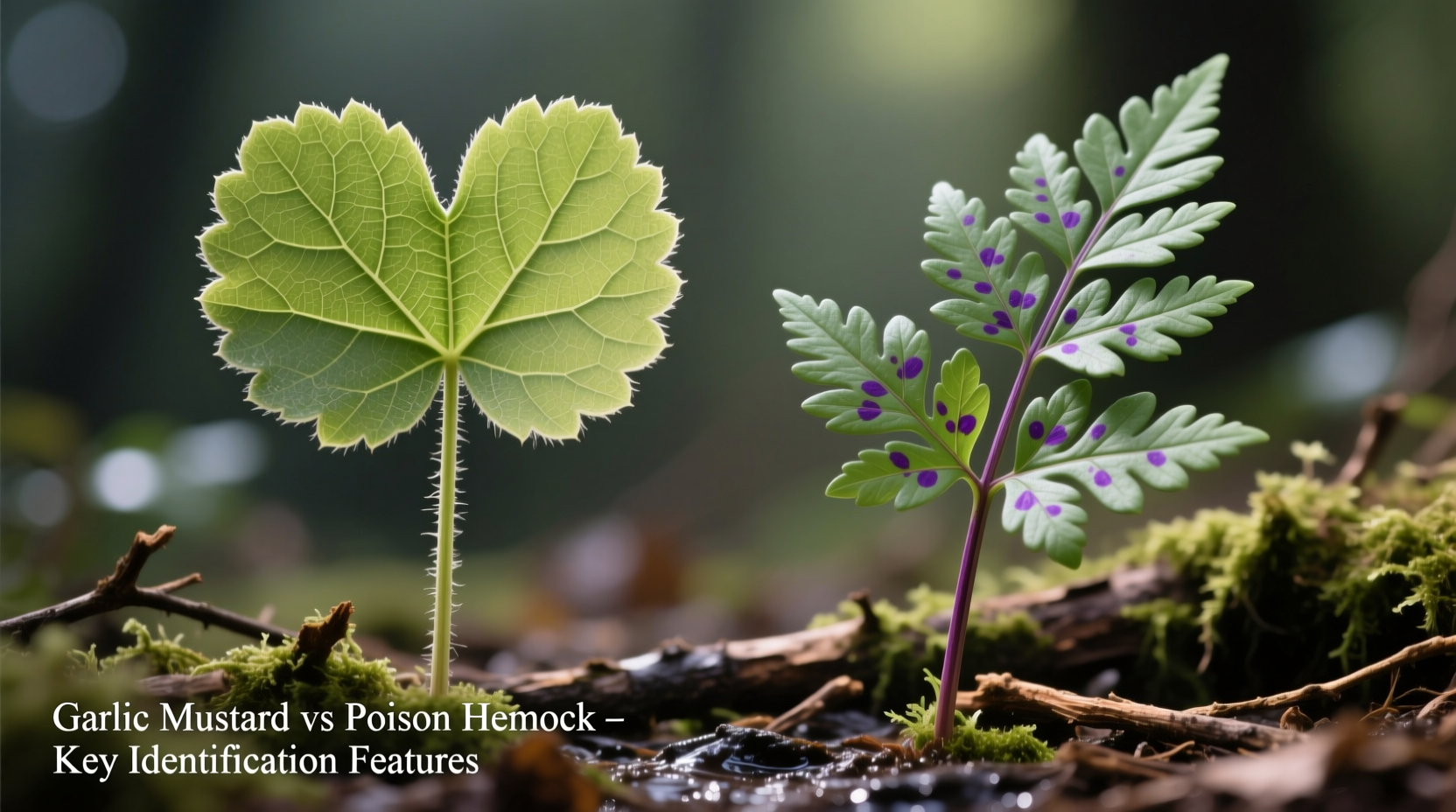
Poison Hemlock (Conium maculatum)
Often confused with second-year garlic mustard, poison hemlock contains deadly alkaloids that can cause respiratory failure. The Centers for Disease Control and Prevention reports multiple annual fatalities from poison hemlock ingestion.
Key differentiators:
- No garlic odor when crushed (smells musty or unpleasant)
- Purple斑点 on hollow stems (absent in garlic mustard)
- Fern-like, finely divided leaves (garlic mustard has coarser leaves)
- Flowers form umbrella-shaped clusters (vs. garlic mustard's elongated clusters)
Wild Parsnip (Pastinaca sativa)
While not immediately fatal, wild parsnip causes severe phytophotodermatitis—skin blistering when exposed to sunlight after contact. The National Park Service documents hundreds of annual cases among hikers and foragers.
Key differentiators:
- No garlic odor (smells like parsnip or celery)
- Yellow flowers (garlic mustard has white flowers)
- Leaves have sharper, more jagged edges
- Stems are solid (garlic mustard stems are slightly ridged but not hollow)
Jack-in-the-Pulpit (Arisaema triphyllum)
Common in similar woodland habitats, Jack-in-the-pulpit contains calcium oxalate crystals that cause severe mouth irritation and swelling. The American Association of Poison Control Centers reports frequent cases of children and pets affected by this plant.
Key differentiators:
- No garlic odor (virtually scentless)
- Distinctive three-part leaf structure (vs. garlic mustard's alternate leaves)
- Unique flower structure with hooded spathe (never present in garlic mustard)
- Grows from corms rather than taproots
Safe Identification Protocol: A Step-by-Step Verification System
Professional foragers and botanists use a multi-step verification process to ensure positive identification. Adopt this same protocol to eliminate identification errors:
- Habitat assessment: Confirm the plant grows in appropriate woodland or disturbed area habitat (garlic mustard rarely grows in full sun)
- Leaf pattern verification: Check for alternate leaf arrangement (not opposite or whorled)
- Scent confirmation: Crush a small leaf fragment and verify strong garlic-mustard aroma
- Stem examination: Look for slightly ridged but solid stems (not hollow with purple spots)
- Secondary characteristic check: Verify additional features like flower structure or seed pod formation
- Expert consultation: When in doubt, consult a local extension service or use plant identification apps with caution
The Cornell University Cooperative Extension recommends never consuming any plant unless you can positively identify it through multiple characteristics. "When foraging, 100% certainty is the only acceptable threshold," states Dr. Linda White, extension specialist in plant sciences.
When Identification Becomes Challenging: Special Circumstances
Certain conditions complicate garlic mustard identification, requiring additional verification steps:
- Early spring growth: Seedlings may lack distinctive scent initially—wait until plants have 4-6 true leaves
- Hybrid varieties: Some regions report hybrid plants with intermediate characteristics
- Environmental stress: Drought or poor soil can alter growth patterns
- Regional variations: Western populations may show slightly different characteristics than eastern varieties
In these cases, the USDA Plant Identification Handbook recommends collecting multiple specimens at different growth stages and consulting regional botanical keys specific to your location.
Resources for Positive Identification
When uncertainty exists, leverage these authoritative resources:
- Local cooperative extension services (find yours at nifa.usda.gov)
- University botany departments with plant identification services
- USDA PLANTS Database (plants.usda.gov) for verified botanical information
- State-specific invasive species councils
- PlantSnap or iNaturalist apps (use as preliminary tools only—never sole identification source)
Remember that no app replaces hands-on verification with multiple identification markers. The Missouri Botanical Garden advises that digital identification tools have approximately 78% accuracy for common plants but significantly lower accuracy for lookalike species.




 浙公网安备
33010002000092号
浙公网安备
33010002000092号 浙B2-20120091-4