
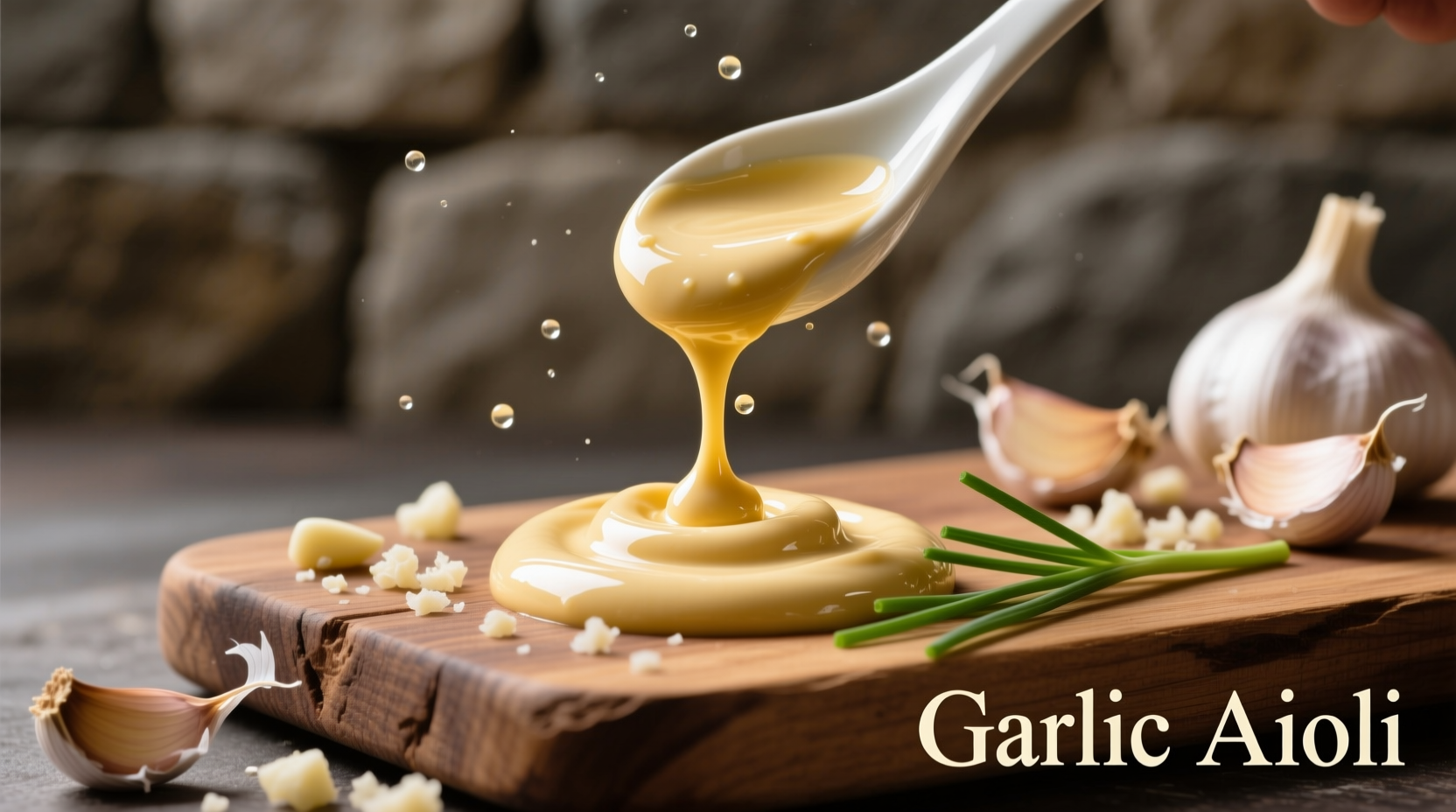
Clearing the Confusion: What's Really in Your Sauce
When you order "aioli" at most restaurants today, you're likely getting garlic-flavored mayonnaise rather than the traditional Provençal sauce. This culinary misunderstanding has spread globally, but knowing the difference transforms your cooking. Authentic aioli predates mayonnaise by centuries and contains only garlic, olive oil, and salt—no eggs. Garlic mayonnaise, by contrast, starts with commercial mayo as its base, then adds garlic.
Historical Roots: How Two Sauces Became Confused
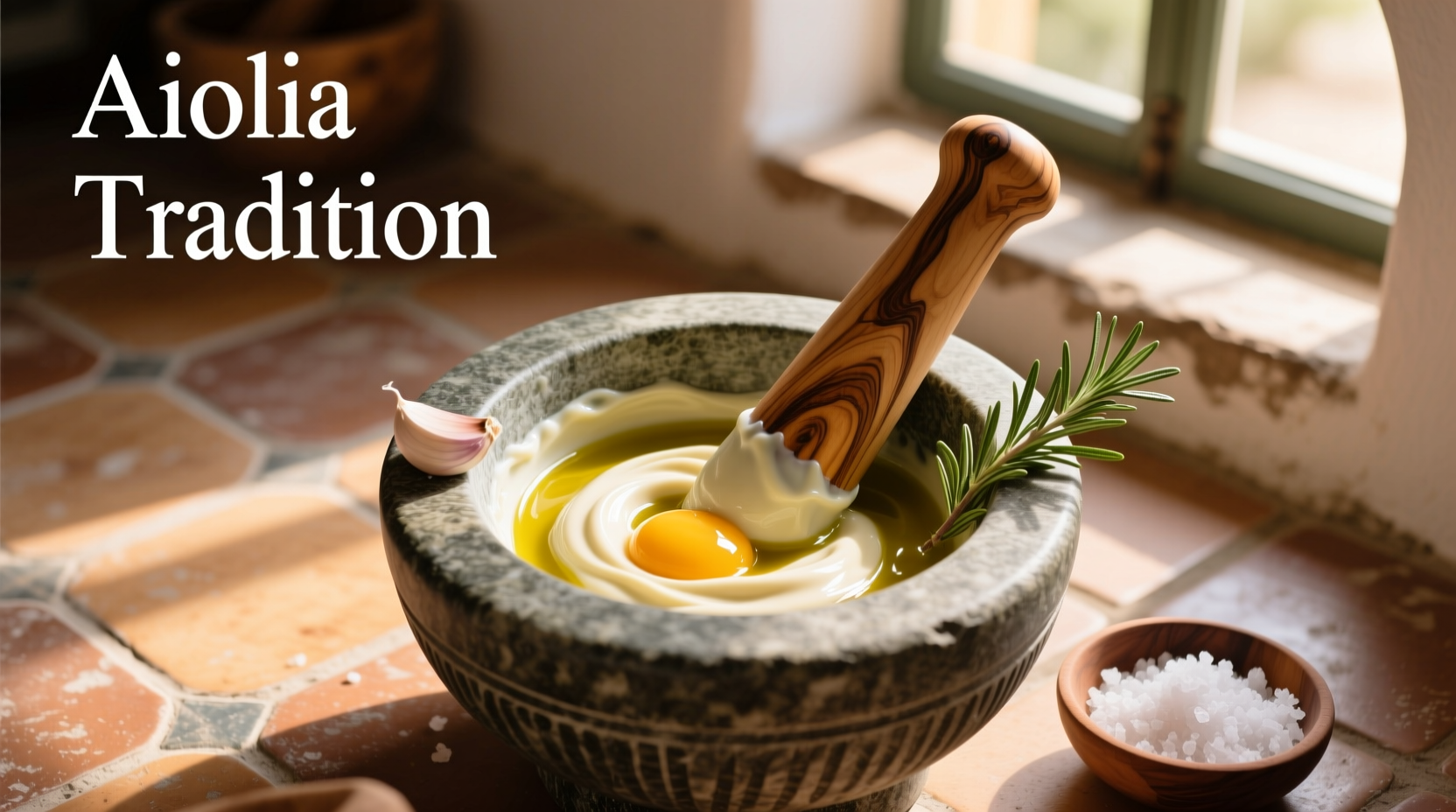
Aioli's origins trace back to ancient Mediterranean civilizations where garlic and olive oil formed the foundation of rural cuisine. The name itself comes from Catalan all (garlic) and i oli (and oil). Traditional preparation required pounding garlic in a mortar before slowly incorporating olive oil through vigorous whisking—a technique demanding skill and patience.
Mayonnaise emerged much later in 18th century France, with eggs as its essential emulsifier. When garlic became popular in this new sauce during the 20th century, many began calling it "aioli," despite the fundamental ingredient differences. This misnomer spread rapidly through restaurant menus and commercial products.
| Characteristic | Traditional Aioli | Garlic Mayonnaise |
|---|---|---|
| Primary Ingredients | Garlic, olive oil, salt | Eggs, oil, vinegar, garlic |
| Emulsifier | Mechanical (whisking) | Egg yolks |
| Flavor Profile | Sharp garlic, grassy olive oil | Milder garlic, tangy, creamy |
| Texture | Thicker, more rustic | Smoother, uniform |
| Traditional Region | Provence, Catalonia, Valencia | Global commercial product |
When Authenticity Matters: Culinary Applications
Choosing the right sauce depends on your dish's cultural context and flavor requirements. Traditional aioli's intense garlic flavor and olive oil base complement Mediterranean dishes like salade niçoise, grilled fish, or vegetable stews. Its robust character stands up to bold ingredients without overwhelming them.
Garlic mayonnaise works better for sandwiches, burgers, or as a dipping sauce where a milder garlic presence and creamy texture are preferred. Fast-casual restaurants often use it for seafood baskets and fries because it maintains stability at room temperature better than traditional aioli.
Professional chefs note key context boundaries: When preparing authentic Provençal or Catalan cuisine, traditional aioli is essential. For everyday American-style sandwiches or as a base for other sauces (like remoulade), garlic mayonnaise suffices. The exception? High-end Mediterranean restaurants where authenticity commands premium pricing.
Creating Authentic Versions at Home
Making traditional aioli requires technique but only three ingredients. Start with 2-3 garlic cloves pounded with a pinch of salt in a mortar until paste-like. Gradually whisk in 1 cup of extra-virgin olive oil, drop by drop at first, until emulsified. The process takes 10-15 minutes of steady whisking—no blenders or food processors for authentic results.
For garlic mayonnaise, simply mix 1 cup quality mayonnaise with 1-2 minced garlic cloves (adjust to taste) and let rest 30 minutes for flavors to meld. Adding a squeeze of lemon juice brightens the flavor profile. Chefs recommend using aged garlic for both preparations to reduce harshness while maintaining depth.
Common mistakes include adding oil too quickly (causing broken emulsion), using insufficient garlic (resulting in weak flavor), or substituting inferior olive oils that overpower the delicate garlic notes. Traditional aioli should never contain egg—this immediately makes it garlic mayonnaise, regardless of what menus claim.
Storage and Shelf Life Considerations
Traditional aioli lacks egg's preservative qualities and should be consumed within 24 hours when stored in airtight containers. The garlic's enzymes cause flavor intensification over time, potentially becoming overpowering. Commercial garlic mayonnaise lasts 1-2 weeks refrigerated due to the stabilized mayo base and added preservatives.
Food safety experts from the USDA note that homemade aioli without acid components carries higher risk than commercial mayo-based versions. For extended storage, adding lemon juice or vinegar to traditional preparations can improve safety while altering flavor slightly. Always refrigerate both sauces and discard if separation occurs or off-odors develop.
Global Variations and Modern Interpretations
Chefs worldwide have adapted these sauces to local palates. In Japan, yuzu aioli blends traditional preparation with citrus. California chefs often incorporate roasted garlic for milder flavor. Spanish versions sometimes include saffron threads for aioli de azafrán. These creative interpretations remain authentic to their cultural context while honoring the sauce's Mediterranean roots.
The timeline of aioli's evolution shows fascinating adaptation:
- Pre-1800s: Traditional garlic-oil emulsion prepared in mortars across Mediterranean regions
- Early 1800s: Mayonnaise gains popularity in French cuisine
- Mid-1900s: Garlic mayonnaise appears in American cookbooks
- 1980s-1990s: Restaurants begin labeling garlic mayo as "aioli" for marketing
- 2000s-Present: Culinary professionals push back for authentic preparation methods
Making the Right Choice for Your Kitchen
For home cooks, the decision comes down to intended use. When authenticity matters—like preparing bouillabaisse or serving with pan con tomate—invest time in traditional aioli. For weeknight burgers or quick seafood dips, quality garlic mayonnaise delivers consistent results with less effort.
Professional chefs emphasize that understanding this distinction isn't about culinary snobbery—it's about matching the right tool to the job. As culinary historian Clarissa Dickson Wright noted in A History of English Food, "Confusing sauces leads to confused flavors." Whether you choose traditional preparation or modern convenience, knowing what you're making elevates your cooking from accidental to intentional.




 浙公网安备
33010002000092号
浙公网安备
33010002000092号 浙B2-20120091-4