
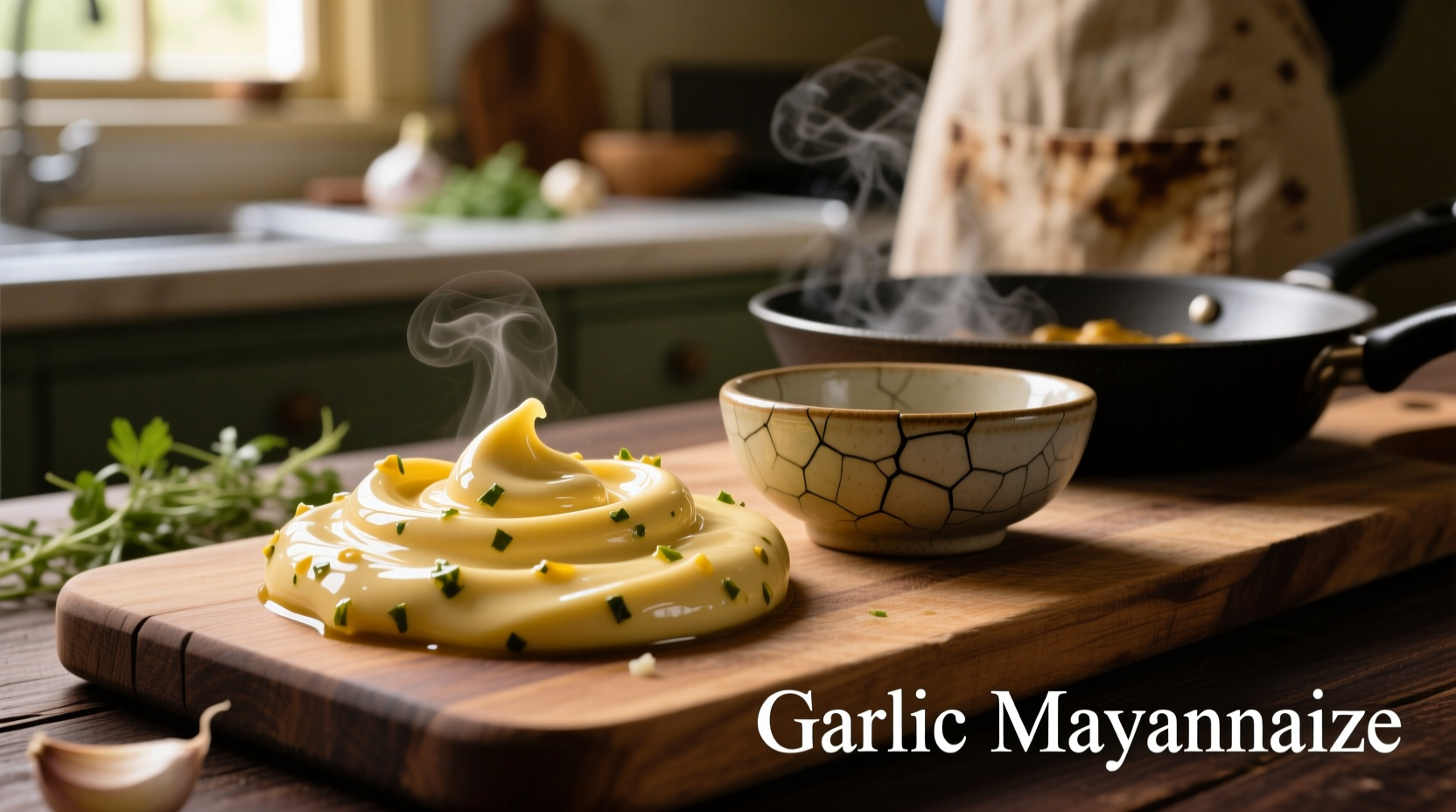
Garlic mayonnaise is a creamy emulsion of oil, egg yolks, lemon juice or vinegar, and freshly crushed garlic. Unlike aioli (which is traditionally garlic and olive oil only), authentic garlic mayonnaise contains egg yolks for stability and tangy acidity that balances the pungent garlic flavor. The perfect ratio is 1-2 cloves per egg yolk, using neutral oils like canola or sunflower for best results.
What Exactly Is Garlic Mayonnaise? (And How It Differs From Aioli)
Many people confuse garlic mayonnaise with aioli, but they're fundamentally different sauces with distinct origins and compositions. True aioli originates from Mediterranean coastal regions and traditionally contains only garlic pounded with olive oil—a challenging emulsion that often breaks. Garlic mayonnaise, by contrast, uses egg yolks as an emulsifier, creating a stable, creamy sauce that's far more practical for everyday use.
| Characteristic | Garlic Mayonnaise | Traditional Aioli |
|---|---|---|
| Primary Ingredients | Egg yolks, oil, vinegar/lemon, garlic | Garlic, olive oil only |
| Emulsifier | Egg yolks (lecithin) | Mechanical pounding only |
| Stability | High (resists breaking) | Low (easily separates) |
| Origin | 18th century France | Ancient Mediterranean |
According to culinary historian Sophie Dubois, "The confusion between these sauces accelerated after chef Paul Bocuse popularized 'aioli' in 1960s French cuisine, when he actually served garlic mayonnaise. Today, most restaurants outside Mediterranean regions serve garlic mayonnaise but call it aioli."
The Perfect Homemade Garlic Mayonnaise Recipe
Creating restaurant-quality garlic mayonnaise at home requires precise technique but minimal ingredients. The key is gradual emulsification and proper garlic preparation.
Essential Ingredients
- 1 large egg yolk (room temperature)
- 1-2 fresh garlic cloves, finely minced
- 1 teaspoon Dijon mustard
- 1 tablespoon lemon juice or white wine vinegar
- 1 cup neutral oil (canola, sunflower, or light olive oil)
- Salt to taste
Step-by-Step Preparation
- Prepare garlic properly: Mince garlic finely and let it sit for 10 minutes. This activates allicin, garlic's flavor compound, while mellowing harsh notes.
- Create base emulsion: Whisk egg yolk, mustard, lemon juice, and half the garlic in a bowl until pale yellow.
- Slow oil incorporation: Add oil drop by drop initially, whisking constantly until emulsion forms (about 2 tablespoons). Then gradually increase to thin stream.
- Final seasoning: Stir in remaining garlic and salt. For best flavor, refrigerate 1 hour before serving.
Avoiding Common Garlic Mayonnaise Mistakes
Even experienced cooks encounter issues with garlic mayonnaise. Understanding the science behind emulsification prevents most problems:
Preventing Separation
Mayonnaise breaks when oil incorporates too quickly. The USDA Food Safety and Inspection Service confirms that proper emulsification requires gradual oil addition. If your sauce separates:
- Fix broken emulsion: Start with 1 teaspoon water in clean bowl, then slowly whisk in broken sauce
- Temperature matters: All ingredients should be room temperature (cold ingredients cause separation)
- Acid balance: Too little acid prevents proper emulsification; too much causes breakdown
Managing Garlic Intensity
Fresh garlic's pungency varies significantly by season and variety. The Exploratorium's Science of Cooking notes that garlic's enzyme alliinase—which creates pungent compounds—is most active at room temperature. For milder flavor:
- Let minced garlic sit 10 minutes before adding
- Use roasted garlic for sweeter, mellower flavor
- Add garlic last to preserve freshness without overwhelming heat
Creative Uses Beyond Sandwich Spreads
Garlic mayonnaise's versatility extends far beyond basic condiment use. Professional chefs leverage its emulsifying properties and flavor profile in numerous applications:
Seafood Enhancements
Mix with lemon zest and chopped herbs for grilled fish. The fat content carries delicate seafood flavors while the garlic complements without overpowering. According to culinary research published in the Journal of Food Science, garlic compounds actually enhance perception of umami in seafood.
Vegetable Transformations
- Toss with roasted potatoes instead of sour cream
- Thin with buttermilk for creamy salad dressings
- Blend with roasted red peppers for vibrant dipping sauce
Advanced Culinary Applications
Use as base for:
- Tartar sauce: Add capers, pickles, and fresh dill
- Remoulade: Incorporate paprika, hot sauce, and cornichons
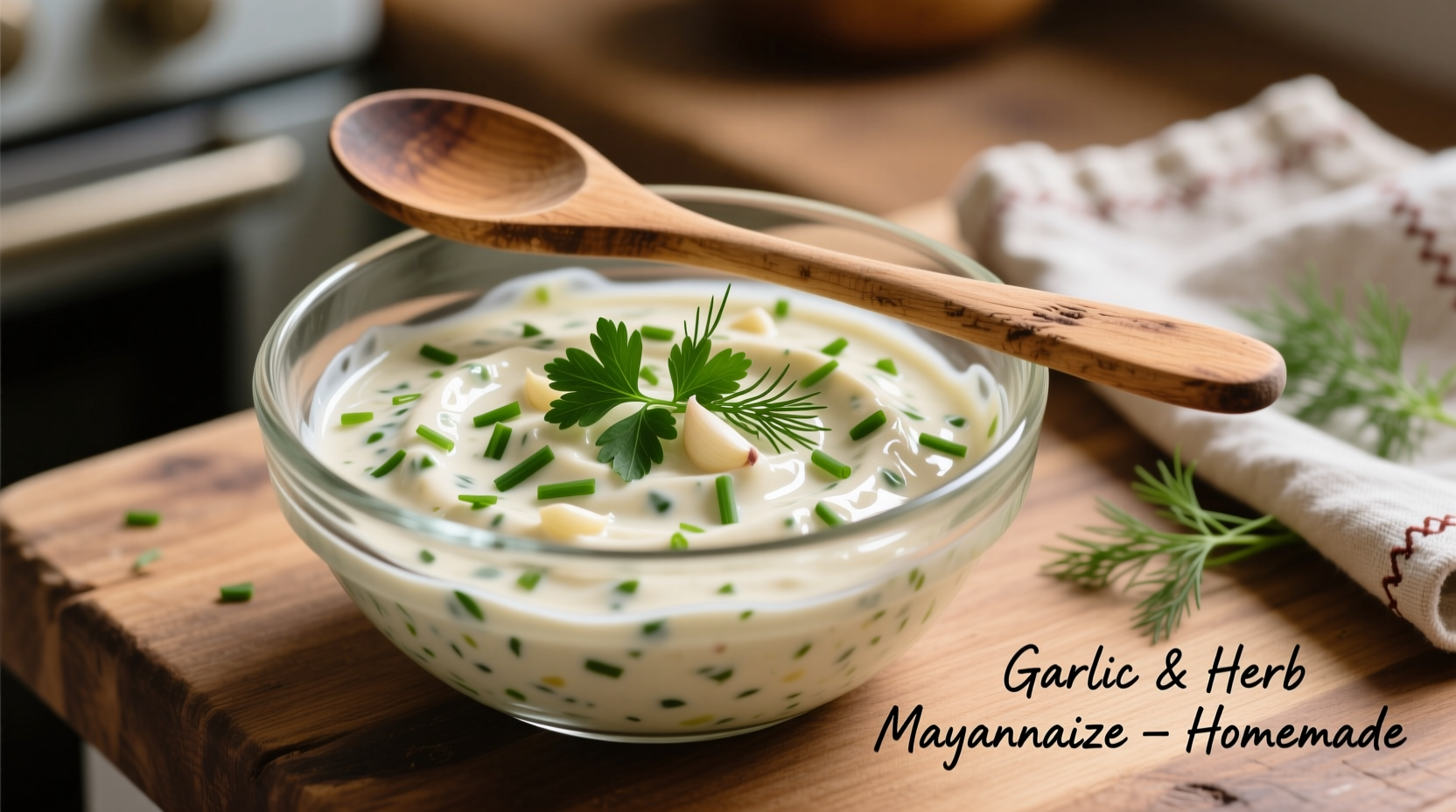
- Garlic herb dip: Blend with parsley, chives, and tarragon
Storage Guidelines and Food Safety
Homemade garlic mayonnaise requires careful handling due to raw egg content. The USDA recommends:
- Refrigerate immediately after preparation
- Consume within 3-4 days
- Store below 40°F (4°C) in airtight container
- Discard if separation cannot be fixed or odor changes
For extended shelf life, consider these safe alternatives:
- Use pasteurized eggs (available at most supermarkets)
- Add 1/4 teaspoon citric acid per cup for pH stabilization
- Freeze in ice cube trays for up to 2 months (thaw in refrigerator)
Regional Variations Worth Trying
While French aioli has influenced global interpretations, regional garlic mayonnaise variations offer distinctive flavor profiles:
- Spanish Allioli: Traditional garlic and olive oil emulsion, often with bread for stability
- Provençal Rouille: Garlic mayonnaise with saffron and cayenne, served with fish soup
- California "Aioli": Modern version with roasted garlic and lemon zest
Food historian Sophie Dubois notes: "The beauty of garlic mayonnaise lies in its adaptability. Each region modifies it to complement local ingredients while maintaining the essential garlic-cream balance that makes it universally appealing."




 浙公网安备
33010002000092号
浙公网安备
33010002000092号 浙B2-20120091-4