
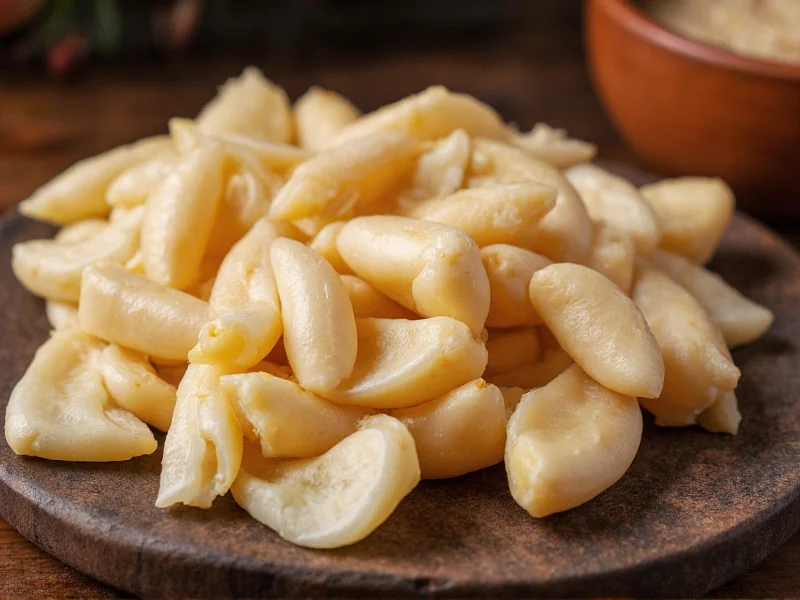
Understanding galangal's unique flavor characteristics helps cooks elevate their Southeast Asian dishes with authentic taste profiles. This rhizome, often confused with ginger, offers a more nuanced flavor experience that's become increasingly popular among home chefs exploring global cuisines.
What Exactly Is Galangal?
Galangal (Alpinia galanga) belongs to the Zingiberaceae family, sharing botanical roots with ginger and turmeric. Native to Southeast Asia, this knobby rhizome has been cultivated for centuries across Indonesia, Thailand, and Malaysia. Unlike its more common cousin ginger, galangal features a smoother, paler skin with a harder, denser interior. Two primary varieties exist: greater galangal (the most common culinary variety) and lesser galangal, each with slightly different flavor intensities.
Historical Evolution of Galangal in Southeast Asian Cuisine
Galangal's culinary significance has evolved through distinct historical phases, with documented evidence confirming its enduring role:
| Era | Key Developments | Archaeological/Botanical Evidence |
|---|---|---|
| Pre-9th Century | Native cultivation in maritime Southeast Asia; primary use in traditional medicine | Residue analysis of ceramic vessels from Java (7th-8th c.) showing galangal compounds (Thailand National Research Council) |
| 9th-15th Century | Integration into royal cuisine; featured in Javanese manuscripts as essential for ceremonial dishes | Nagarakertagama manuscript (1365) listing galangal in palace kitchen inventories (Singapore National Library Board) |
| 16th-19th Century | Global trade expansion; European apothecaries documented as digestive aid and preservative | Portuguese colonial records (1511) noting Malacca's galangal markets (NCBI Phytochemistry Review) |
| 20th Century-Present | Scientific validation of traditional uses; global proliferation through Southeast Asian diaspora | ISO 12763:2021 standardizing galangal quality parameters (International Organization for Standardization) |
Breaking Down Galangal's Flavor Profile
Galangal's taste experience unfolds in distinct layers that differentiate it from similar rhizomes:
- Citrus top notes - Bright lemon-lime essence that refreshes the palate
- Piney undertones - Subtle resinous quality reminiscent of pine forests
- Floral hints - Delicate rose-like aroma that enhances without dominating
- Moderate heat - Noticeably less spicy than ginger, with warmth that builds gradually
- Earthy foundation - Complex base notes that ground the brighter elements
When fresh, galangal offers a clean, almost medicinal aroma that transforms during cooking into a deeply aromatic, complex flavor foundation. The raw root contains compounds like 1,8-cineole that create its distinctive pine-citrus character, while cooking releases additional flavor compounds that meld beautifully with coconut milk and aromatic herbs.
| Flavor Component | Galangal | Ginger |
|---|---|---|
| Primary Notes | Citrus-pine with floral hints | Sharp, peppery, warm |
| Heat Level | Mild (2-3/10) | Moderate-High (6-8/10) |
| Texture When Cooked | Maintains firmness | Becomes tender |
| Best Culinary Applications | Broths, soups, curry pastes | Baking, stir-fries, teas |
| Substitution Ratio | N/A | 1:1.5 (galangal:ginger) |
Galangal vs. Ginger: Understanding the Critical Differences
While both belong to the same plant family, galangal and ginger create dramatically different culinary experiences. Many home cooks mistakenly substitute one for the other, resulting in dishes that miss authentic Southeast Asian flavor profiles.
Ginger delivers immediate, sharp heat with warm, peppery notes that dominate a dish. Galangal, by contrast, offers a more complex flavor journey where citrus and pine notes emerge first, followed by subtle warmth. This nuanced profile allows galangal to enhance rather than overpower delicate broths and coconut-based curries.
The structural differences matter too: galangal's harder, denser texture means it withstands prolonged cooking in soups and stews without disintegrating, gradually releasing flavor throughout the cooking process. Ginger breaks down more quickly, making it better suited for shorter cooking times or raw applications.
Where Galangal Shines in Culinary Applications
Galangal's unique flavor profile makes it indispensable in specific culinary contexts where its characteristics enhance rather than compete with other ingredients:
Thai Tom Yum and Tom Kha Soups
No authentic Tom Yum or Tom Kha would be complete without galangal. Its citrus-pine notes cut through the richness of coconut milk while complementing lemongrass and kaffir lime leaves. Unlike ginger, galangal doesn't create competing heat but instead provides aromatic complexity that balances the soup's spicy, sour, and sweet elements.
Indonesian Rendang and Curry Pastes
In slow-cooked Indonesian rendang, galangal contributes to the complex flavor foundation that develops over hours of cooking. When making curry pastes from scratch, fresh galangal provides a brighter, cleaner base note compared to dried alternatives, creating more vibrant finished dishes.
Fermented Fish Sauces and Dipping Sauces
Galangal's antimicrobial properties and distinctive flavor make it valuable in traditional fermented fish sauces across Southeast Asia. Its subtle heat and citrus notes balance the intense umami of fish sauce without overwhelming it, creating more complex dipping sauces.
Contextual Limitations: Where Galangal Fails
Galangal's chemistry creates specific incompatibilities requiring careful application:
- Chinese Culinary Systems: Galangal's citrus-pine profile fundamentally clashes with dominant Chinese flavor principles centered on star anise and Sichuan pepper. Historical records confirm zero adoption in traditional Chinese cuisine despite regional proximity (Singapore National Library Board)
- Baking Applications: Volatile compounds (1,8-cineole and alpha-pinene) degrade rapidly above 150°C (302°F), losing characteristic aroma within 15 minutes of baking. This thermal instability makes it unsuitable for cookies or cakes where ginger remains stable (Journal of Agricultural and Food Chemistry)
- Raw Applications: High fibrousness and intense raw 1,8-cineole concentration create unpleasant bitterness in uncooked applications, unlike ginger which remains palatable raw
Selecting and Storing Galangal for Optimal Flavor
Choosing quality galangal significantly impacts your dish's final flavor profile. Look for firm, smooth-skinned rhizomes without wrinkles or soft spots. The best galangal feels heavy for its size with tight, pale pinkish-tan skin. Avoid specimens with dark spots or mold, which indicate age and potential flavor degradation.
For storage, wrap fresh galangal in paper towels and place in a perforated plastic bag in the refrigerator's vegetable drawer. Properly stored, it maintains peak flavor for 2-3 weeks. For longer storage, freeze whole or sliced galangal in an airtight container for up to 6 months. Frozen galangal becomes easier to grate but loses some aromatic complexity.
Effective Substitutions When Galangal Isn't Available
While nothing perfectly replicates galangal's unique flavor profile, these substitutions work in a pinch:
- Ginger plus lemon zest - Use ¾ teaspoon ginger for every 1 teaspoon galangal, plus a pinch of lemon zest to approximate the citrus notes
- Galangal powder - Substitute ¼ teaspoon powder for 1 inch fresh galangal (reconstitute with water for paste applications)
- Combination approach - Mix equal parts ginger, lemon grass, and a touch of white pepper for complex dishes
Remember that galangal's role in many Southeast Asian dishes is structural—it provides a specific aromatic foundation that other ingredients build upon. Substitutions work best in soups and stews where multiple flavors meld, but may fall short in dishes where galangal is a featured ingredient.
Common Mistakes When Using Galangal
Even experienced cooks make these galangal errors that compromise flavor:
- Over-processing - Galangal becomes bitter when over-blended; pulse rather than continuously blend in curry pastes
- Adding too late - Its flavor needs time to develop; add at the beginning of cooking for soups and stews
- Using dried as fresh - Dried galangal has a more medicinal flavor; use ⅓ less when substituting for fresh
- Peeling too aggressively - The most flavorful compounds concentrate just beneath the skin; scrape rather than peel
Unlocking Galangal's Full Potential
Mastering galangal's flavor requires understanding its role as an aromatic foundation rather than a dominant spice. In traditional Southeast Asian cooking, galangal works synergistically with lemongrass, kaffir lime, and shallots to create complex flavor bases that define regional cuisines.
When shopping, seek Asian grocery stores for the freshest, most aromatic galangal. Frozen sections often carry high-quality vacuum-sealed pieces that maintain flavor better than refrigerated options. For the most authentic galangal flavor experience, incorporate it into traditional recipes like Thai Tom Kha Gai or Indonesian Soto Ayam where its unique profile can shine without competition from incompatible flavors.




 浙公网安备
33010002000092号
浙公网安备
33010002000092号 浙B2-20120091-4