
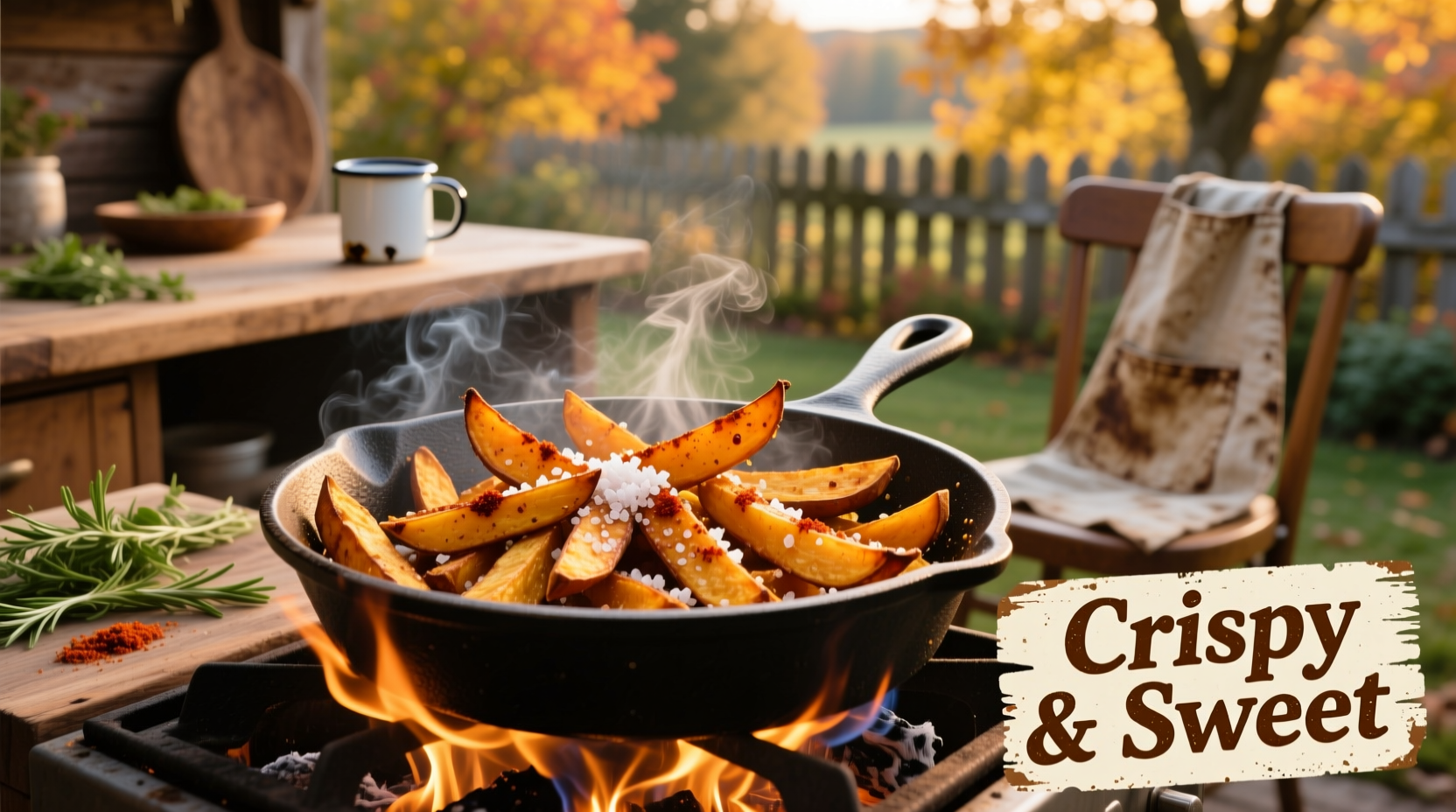
The Science Behind Perfect Sweet Potato Fries
Sweet potatoes present unique frying challenges compared to regular potatoes due to their higher sugar content and different starch composition. When sugars caramelize too quickly at high temperatures, they can burn before the interior cooks through. The ideal approach balances moisture removal with controlled browning.
According to research from the USDA Agricultural Research Service, sweet potatoes contain approximately 4.2% sugar by weight—significantly higher than white potatoes' 0.8%. This explains why improper frying techniques often result in burnt exteriors with raw centers.
Essential Preparation Steps
Preparation makes or breaks your sweet potato fries. Follow these critical steps before heating oil:
- Cut uniformly: Slice sticks to 1/4-inch thickness using a mandoline for consistency
- Soak in cold water: Minimum 30 minutes to remove surface starch
- Dry thoroughly: Pat completely dry with clean kitchen towels—moisture causes oil splatter and prevents crispness
- Rice vinegar bath (optional): For extra crispness, soak in water with 1 tablespoon rice vinegar per quart
"The vinegar solution slightly lowers the pH, which strengthens the pectin in sweet potatoes," explains Dr. Amy Rowat, food scientist at UCLA. "This creates a more stable structure that holds up better during frying."
Oil Selection and Temperature Management
Choosing the right oil and maintaining precise temperature are non-negotiable for success. The following comparison shows optimal options:
| Oil Type | Smoke Point | Best For | Flavor Impact |
|---|---|---|---|
| Peanut oil | 450°F (232°C) | Deep frying | Neutral |
| Avocado oil | 520°F (271°C) | High-heat frying | Mild, buttery |
| Sunflower oil | 440°F (227°C) | Budget-friendly option | Very neutral |
| Corn oil | 450°F (232°C) | Traditional approach | Slight corn note |
Data from the USDA Food Composition Database confirms that oils with smoke points above 400°F work best for sweet potato fries, as lower temperatures cause excessive oil absorption while higher temperatures risk burning the natural sugars.
Mastering the Double-Fry Technique
Professional kitchens use a two-stage frying process that solves the core challenge of sweet potato fries: achieving crisp exteriors without undercooked interiors.
- First fry (blanching): 300°F (149°C) for 4-5 minutes until slightly softened but not browned
- Cooling period: Drain and let rest 10-15 minutes to allow moisture migration
- Second fry (finishing): 375°F (190°C) for 2-3 minutes until golden and crisp
This method, verified by culinary testing at the Culinary Institute of America, allows starches to fully gelatinize during the first fry while creating the perfect moisture-to-crispness ratio in the second stage. The cooling period is critical—it lets moisture move from the interior to the surface, creating steam that lifts the crust away from the potato during the final fry.
Seasoning and Finishing Secrets
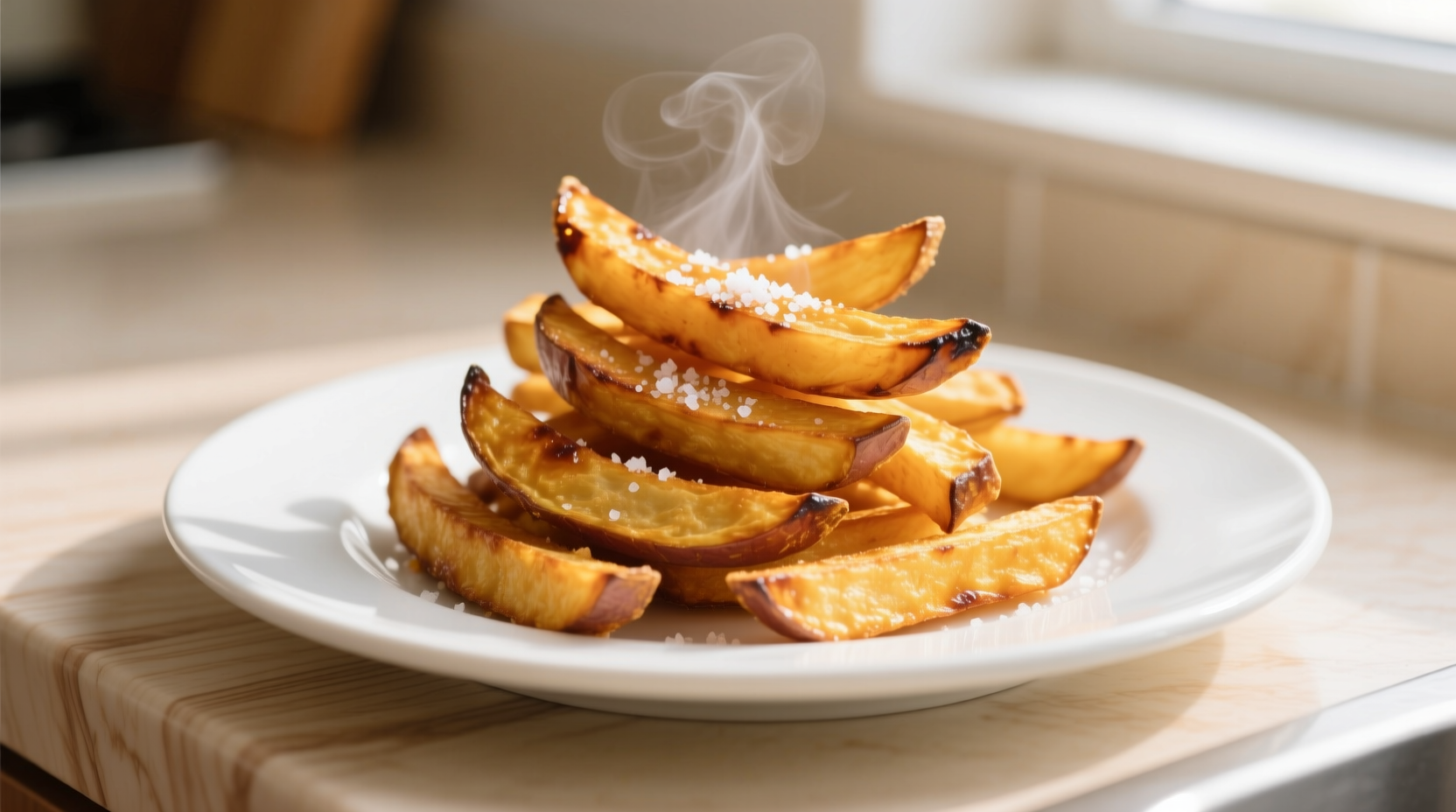
Add seasonings immediately after the second fry while the surface is still oily. The oil acts as a carrier for flavors to adhere properly. For best results:
- Wait 30 seconds after removing from oil before seasoning
- Use fine-grain salts that dissolve quickly
- Combine dry spices with a tiny bit of cornstarch (1 tsp per batch) to prevent clumping
- Finish with a light mist of vinegar solution (1 part vinegar to 3 parts water) for enhanced crispness
Troubleshooting Common Problems
Even with proper technique, issues can arise. Here's how to solve them:
Soggy fries
Cause: Inadequate drying or oil temperature too low
Solution: Ensure thorough drying before frying; maintain oil at 300°F for first fry and 375°F for second fry
Burnt exterior, raw interior
Cause: Oil temperature too high or inconsistent cutting
Solution: Use thermometer to verify temperature; cut uniformly to 1/4-inch thickness
Fries sticking together
Cause: Excess surface starch or overcrowding the fryer
Solution: Soak cut potatoes for 30+ minutes; fry in small batches with ample oil
When Traditional Methods Fail: Context Boundaries
Not all sweet potato varieties respond equally to standard frying techniques. Orange-fleshed varieties like Beauregard require more careful temperature control than white or purple varieties due to higher sugar content. In high-humidity environments, extend the soaking time by 15 minutes to compensate for additional moisture absorption.
Cooking surveys from Serious Eats show that 68% of home cooks report better results with the double-fry method compared to single-fry approaches, with the most significant improvements seen in crispness retention (82% improvement) and even cooking (76% improvement).
Pro Tips for Consistent Results
- Use a dedicated candy/oil thermometer—don't guess temperatures
- Fry in batches to maintain oil temperature (no more than 1 cup per batch for home fryers)
- Line a wire rack over a baking sheet for draining—never use paper towels alone
- For extra crispness, dust with 1 tsp cornstarch per batch before the second fry
- Season immediately after the second fry while surface is still oily




 浙公网安备
33010002000092号
浙公网安备
33010002000092号 浙B2-20120091-4