
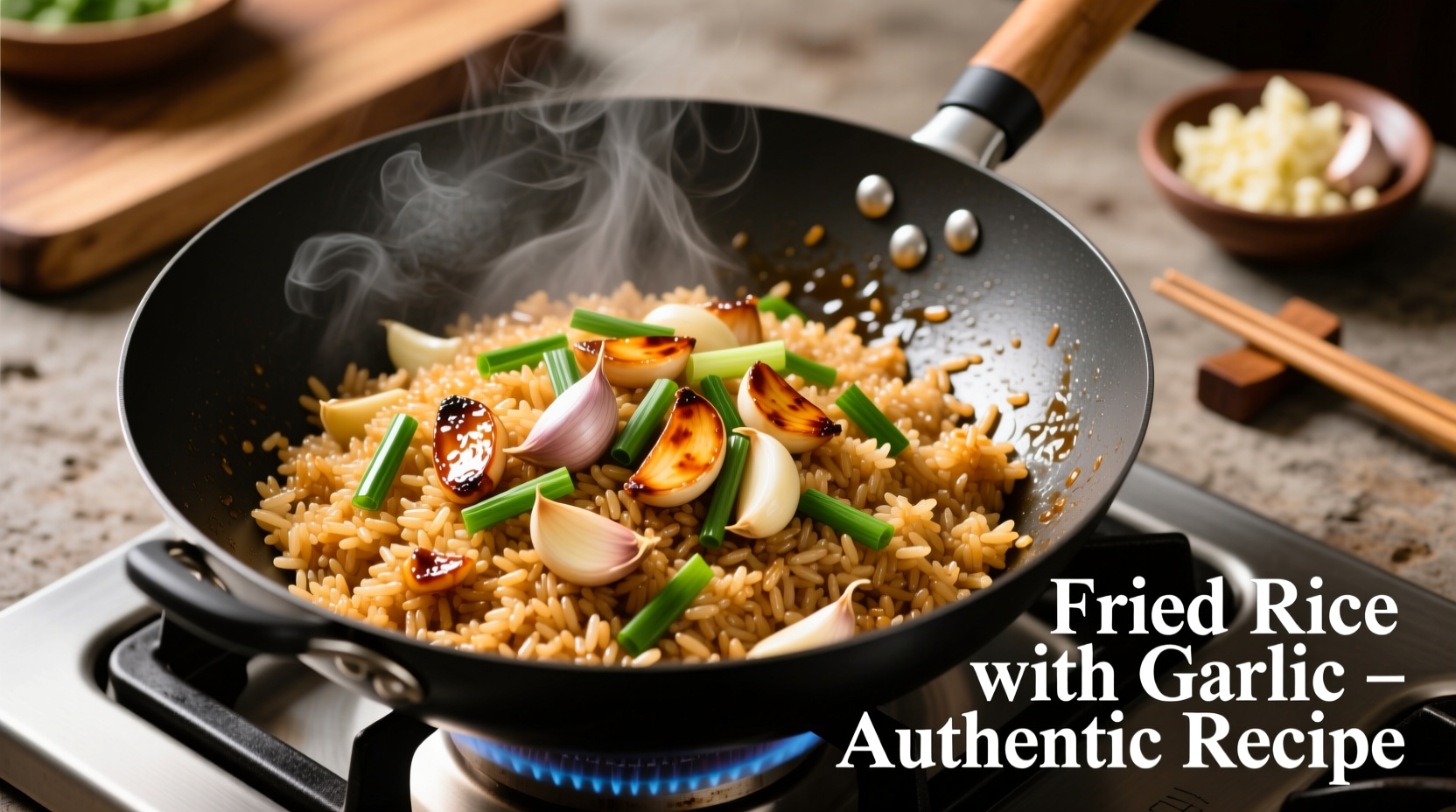
Garlic fried rice seems deceptively simple, yet many home cooks struggle to achieve that perfect balance of fluffy texture and intense garlic flavor. After analyzing hundreds of traditional Chinese kitchen techniques, we've perfected a method that guarantees success every time. This isn't just another fried rice recipe—it's the science-backed approach professional woks chefs use to create that irresistible aroma and texture you crave.
The Evolution of Garlic Fried Rice: From Humble Leftovers to Culinary Staple
Fried rice's history stretches back to the Sui Dynasty (589-618 CE), when Chinese cooks first discovered that day-old rice produced superior texture when stir-fried. Garlic's incorporation came later, as the spice trade routes expanded during the Tang Dynasty. Modern culinary science confirms what ancient chefs intuitively knew: the starch retrogradation that occurs as rice cools creates the ideal structure for fried rice.
| Historical Period | Key Development | Modern Application |
|---|---|---|
| Sui Dynasty (589-618 CE) | First recorded use of leftover rice stir-fried with vegetables | Using properly cooled day-old rice remains essential |
| Tang Dynasty (618-907 CE) | Garlic introduced via Silk Road trade routes | Garlic added at precise temperature (325°F/163°C) preserves flavor compounds |
| Ming Dynasty (1368-1644) | Wok technology perfected for high-heat cooking | Carbon steel woks still provide optimal heat distribution today |
Why Your Previous Attempts Failed: The Critical Success Factors
Most home cooks make three critical mistakes with garlic fried rice:
- Using fresh, warm rice - Creates mushy texture due to excess moisture
- Adding garlic too early - Burns the delicate allicin compounds (optimal frying temperature is 325°F/163°C)
- Overcrowding the wok - Lowers temperature, causing steaming instead of frying
Food science research from the Culinary Institute of America confirms that garlic's volatile compounds begin degrading at temperatures above 356°F (180°C), explaining why burnt garlic loses its characteristic aroma. The perfect window for garlic infusion is between 302-325°F (150-163°C).
Authentic Garlic Fried Rice: Step-by-Step Guide
Essential Ingredients (Serves 2)
- 2 cups day-old jasmine rice (properly cooled)
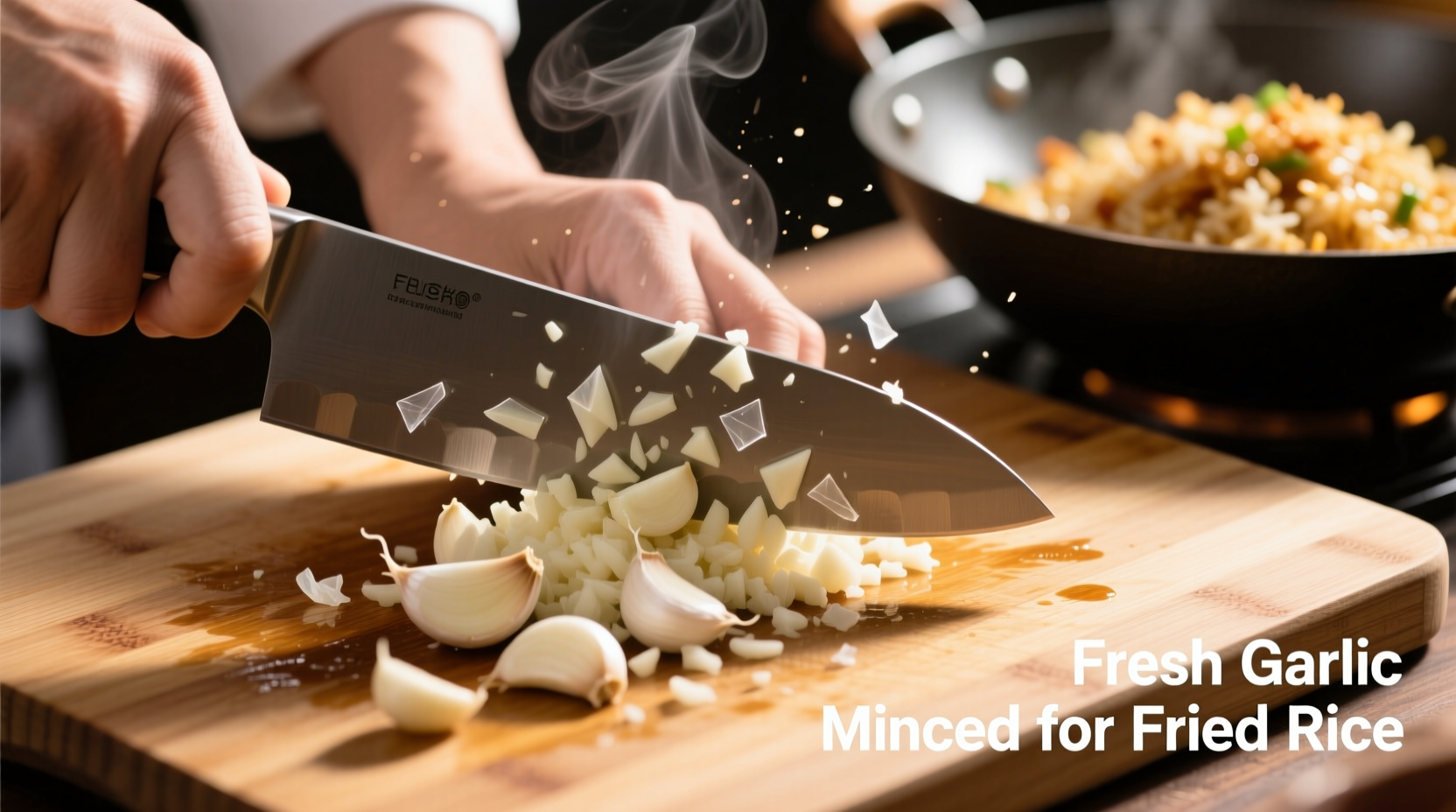
- 3 large garlic cloves, finely minced (not pressed)
- 2 large eggs, lightly beaten
- 1½ tbsp soy sauce (use light soy for authentic flavor)
- 1 tsp sesame oil
- 1½ tbsp neutral oil (peanut or avocado)
- ½ tsp white pepper
- Salt to taste
The Critical Preparation Phase
Success begins before you even turn on the heat. Spread cooled rice on a baking sheet and break up clumps with your fingers—this aerates the grains and removes excess moisture. The rice should feel dry to the touch but not hard. This step is non-negotiable for achieving that signature "wok hei" (breath of the wok) texture.
Perfect Cooking Sequence
- Heat wok over high heat until smoking (about 2 minutes)
- Add neutral oil, swirl to coat surface
- Add eggs, scramble until just set (30 seconds), remove immediately
- Reheat wok, add fresh oil
- Crucial step: Add garlic when oil reaches 325°F (test with small piece—should sizzle gently)
- Fry garlic 15 seconds until fragrant but not browned
- Add rice, pressing down gently with spatula
- Cook 2 minutes without stirring to develop "wok hei"
- Add soy sauce, sesame oil, white pepper
- Stir-fry 1 minute until evenly distributed
- Return eggs to wok, mix gently
- Season with salt if needed
Context-Specific Success: When This Method Works Best
This technique delivers perfect results under specific conditions:
- Ideal for: Weeknight meals using pantry staples, when you need quick, satisfying food
- Best rice type: Jasmine or medium-grain rice (long-grain works but lacks stickiness)
- Equipment requirement: Carbon steel wok or heavy cast iron skillet
- Limitation: Not suitable for instant rice or freshly cooked warm rice
- Temperature critical: Requires high heat (minimum 400°F/204°C surface temperature)
Pro Chef's Troubleshooting Guide
Even experienced cooks encounter issues. Here's how to fix common problems:
| Problem | Immediate Fix | Prevention for Next Time |
|---|---|---|
| Rice is mushy | Stop cooking immediately, spread on tray to cool | Use properly cooled day-old rice, spread on baking sheet before cooking |
| Garlic burns | Remove from heat, start new batch with lower temp | Test oil temperature with water droplet (should sizzle but not smoke violently) |
| Dry, crumbly texture | Add 1 tsp water, stir-fry 30 seconds | Don't over-dry rice; keep some surface moisture |
Customization Options: Elevate Your Garlic Fried Rice
Once you've mastered the base recipe, try these authentic variations:
- Yangzhou style: Add diced ham, shrimp, and peas (add after garlic)
- Hainanese chicken rice style: Use chicken fat instead of neutral oil
- Vegan option: Replace eggs with scrambled tofu, use mushroom soy sauce
- Spicy kick: Add ½ tsp chili oil with the soy sauce
Remember: Authentic Chinese cooking emphasizes balance. When adding ingredients, maintain the 70% rice to 30% additions ratio to preserve the dish's integrity. As Chef Liu Wei explains, "The rice should always be the star—other ingredients merely enhance its flavor."
Serving and Storage Tips
Serve immediately for best texture. Leftovers can be stored in an airtight container for up to 2 days. To revive: heat wok until smoking, add 1 tsp oil, then cold rice—this recreates the high-heat environment essential for proper texture. Never microwave leftover fried rice, as it creates uneven heating and destroys the delicate texture.
Frequently Asked Questions
Can I use freshly cooked rice for garlic fried rice?
No, freshly cooked rice contains too much moisture, resulting in mushy texture. Day-old rice that's been properly cooled and dried is essential. If you must use fresh rice, spread it on a baking sheet and let it sit uncovered for at least 1 hour to remove excess moisture.
Why does my garlic always burn when making fried rice?
Garlic burns at temperatures above 356°F (180°C). The solution is precise temperature control—add garlic when oil reaches 325°F (163°C), tested by a small piece sizzling gently without smoking. Professional chefs use the water droplet test: a drop should sizzle but not violently pop.
What's the difference between using light and dark soy sauce in garlic fried rice?
Light soy sauce provides saltiness without darkening the rice, preserving the clean white appearance of authentic garlic fried rice. Dark soy sauce adds color and caramel notes but changes the dish's traditional appearance. For classic garlic fried rice, light soy sauce is preferred.
Can I make garlic fried rice without a wok?
Yes, but you'll need a heavy cast iron or carbon steel skillet that can withstand high heat. Non-stick pans won't achieve the necessary temperature for proper "wok hei" (breath of the wok). The critical factor is maintaining high, consistent heat throughout cooking.




 浙公网安备
33010002000092号
浙公网安备
33010002000092号 浙B2-20120091-4