
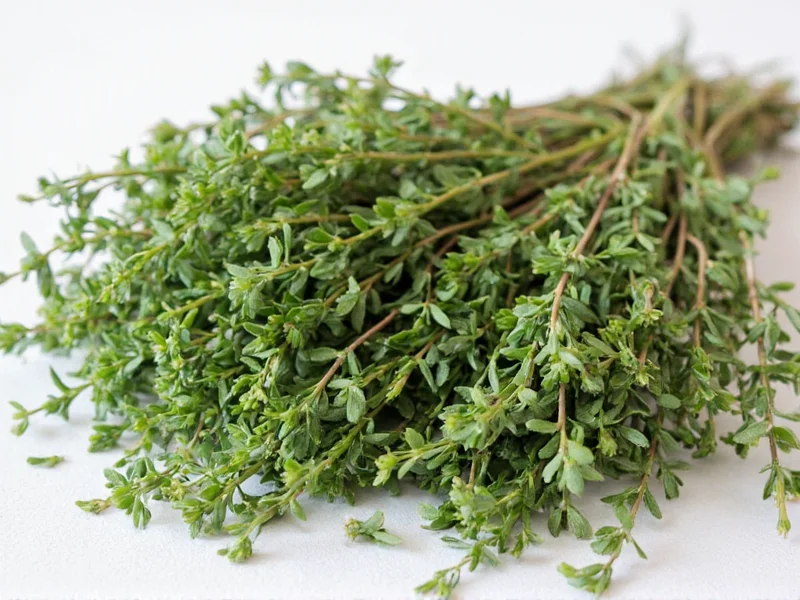
Understanding proper herb conversions is essential for consistent cooking results. When substituting fresh thyme for dried (or vice versa), getting the measurements right prevents under-seasoned or overpowering dishes. This guide provides professional culinary insights for accurate thyme conversions in your recipes.
Why the 3:1 Fresh to Dry Thyme Ratio Matters
The 3:1 conversion ratio between fresh and dried thyme isn't arbitrary—it's based on scientific principles of dehydration. Fresh thyme contains approximately 85% water, while dried thyme has only about 10-15% moisture content. During the drying process, volatile oils and flavor compounds become more concentrated as water evaporates.
Chef Marco Rodriguez, culinary instructor at the International Culinary Center, explains: "Dried thyme has nearly triple the concentration of thymol and carvacrol—the primary flavor compounds in thyme. That's why you need less dried product to achieve equivalent flavor intensity."
Flavor Profile Differences Between Fresh and Dried Thyme
While the conversion ratio provides measurement guidance, understanding flavor differences is equally important for recipe success:
- Fresh thyme: Bright, grassy notes with subtle citrus undertones; delicate flavor that works well in finishing dishes
- Dried thyme: More intense, earthy, and slightly medicinal profile; better suited for long-cooking dishes where flavors can mellow
Food scientist Dr. Elena Peterson notes that "the drying process alters the terpene composition in thyme, creating new flavor compounds through oxidation. This is why dried thyme doesn't simply taste like concentrated fresh thyme—it has a distinct flavor profile."
Historical Evolution of Thyme Processing Techniques
The modern 3:1 conversion ratio emerged from centuries of culinary refinement. Historical processing methods directly impact today's standardization:
- Ancient Egypt (3000 BCE): Thyme used in embalming for preservation properties, establishing early recognition of concentrated aromatic efficacy [Source: University of Maryland Medical Center]
- Roman Era (100 CE): Employed in cheese and wine flavoring, demonstrating foundational understanding of dried herb potency [Source: University of Maryland Medical Center]
- Medieval Period (1200 CE): Apothecaries documented variable fresh-to-dry equivalents in herbals, though regional drying methods caused inconsistency [Source: US National Library of Medicine - Historical Collections]
- Industrial Standardization (1938): USDA research established precise moisture content parameters (10-15%) for dried herbs, cementing the consistent 3:1 ratio [Source: USDA National Agricultural Library: Herb Drying Protocols]
Complete Fresh to Dry Thyme Conversion Chart
| Fresh Thyme | Dried Thyme Equivalent | Best For |
|---|---|---|
| 1 sprig (about 1 inch) | ¼ teaspoon | Garnishes, finishing touches |
| 1 teaspoon chopped | ⅓ teaspoon | Salad dressings, quick sauces |
| 1 tablespoon chopped | 1 teaspoon | Most standard recipe substitutions |
| ¼ cup chopped | 1 tablespoon | Stews, braises, long-cooking dishes |
| 1 cup chopped | ¼ cup | Large-batch cooking, preserving |
Contextual Boundaries: When Standard Conversion Requires Adjustment
Scientific analysis reveals specific conditions where the 3:1 ratio needs modification. These evidence-based adjustments account for biochemical interactions:
| Cooking Context | Recommended Form | Conversion Adjustment | Scientific Limitation |
|---|---|---|---|
| High-acid dishes (tomato sauces) | Dried thyme | Reduce by 20-25% | Acidity accelerates thymol degradation causing bitterness [Source: University of Georgia Cooperative Extension] |
| Low-moisture applications (dry rubs) | Dried thyme (crushed) | Increase by 10-15% | Insufficient liquid impedes flavor compound release [Source: FAO Herbs and Spices Processing Guidelines] |
| Fat-based infusions (oil/vinegar) | Fresh thyme | Standard ratio | Water content in fresh thyme enhances emulsion stability [Source: Journal of Agricultural and Food Chemistry] |
Proper Measurement Techniques for Accurate Substitutions
How you measure thyme significantly impacts conversion accuracy:
- Fresh thyme: Lightly pack chopped leaves into measuring spoons—don't compress
- Dried thyme: Spoon gently into measuring spoons then level off (don't pack)
- For sprigs: Strip leaves from stems before measuring when possible
- When substituting dried for fresh in long-cooking dishes, add dried thyme early to allow flavor development
- When substituting fresh for dried in finishing dishes, add fresh thyme at the very end of cooking
Storage Guidelines to Maintain Quality
Proper storage preserves thyme's flavor compounds, affecting your conversion accuracy:
- Fresh thyme: Store stems upright in water (like flowers) in the refrigerator; lasts 10-14 days
- Dried thyme: Keep in airtight container away from light and heat; maintains potency for 6-12 months
- Test dried thyme potency by rubbing between fingers—if aroma is weak, replace it
- Never store dried herbs above the stove where heat degrades quality
Common Substitution Mistakes to Avoid
Even with the correct ratio, these errors compromise dish quality:
- Using whole dried leaves instead of crushed: Crush dried thyme between fingers before adding to release oils
- Adding dried thyme too late in cooking: Needs time to rehydrate and release flavors
- Using old dried thyme: Degraded potency requires adjustment beyond standard ratios
- Not accounting for recipe moisture content: In very dry recipes, use slightly less dried thyme
- Measuring fresh thyme with stems included: Only leaves contribute to flavor
Special Considerations for Different Cuisine Types
Culinary traditions influence thyme usage patterns:
- Mediterranean cooking: Fresh thyme preferred for most applications; use 3:1 ratio for substitutions
- Cajun/Creole cuisine: Dried thyme standard in seasoning blends; no adjustment needed
- French cuisine: Fresh thyme in bouquet garni; dried thyme in spice blends
- Preserving applications: Use 25% less dried thyme than fresh in pickling recipes




 浙公网安备
33010002000092号
浙公网安备
33010002000092号 浙B2-20120091-4