
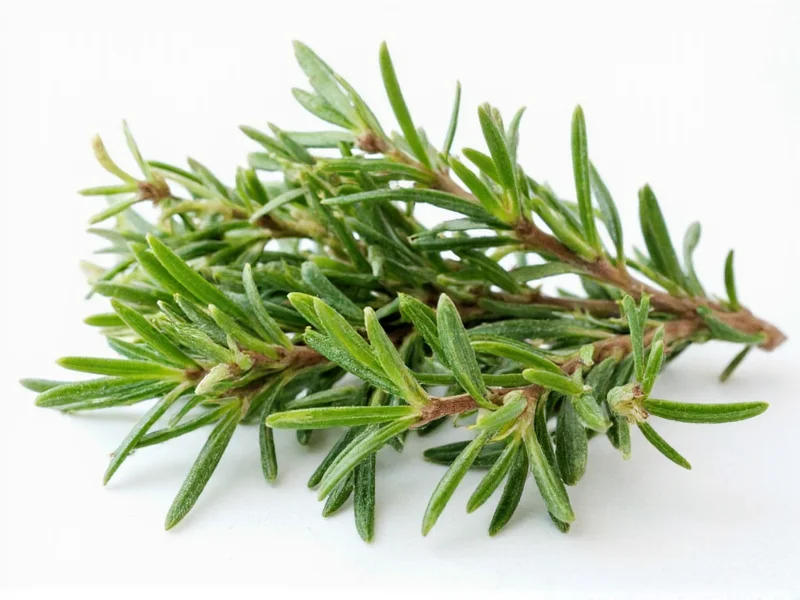
Preserving rosemary properly transforms your garden harvest into a year-round kitchen staple. Understanding the science behind fresh rosemary to dried conversion ensures you maintain maximum flavor and potency in your cooking. Unlike many herbs that lose character when dried, rosemary actually concentrates its aromatic compounds, making it one of the most successfully preserved culinary herbs.
The Science Behind Fresh Rosemary to Dried Conversion
Rosemary contains volatile essential oils that give it its distinctive pine-like aroma and flavor. When you convert fresh rosemary to dried, you're removing approximately 70-80% of its water content while concentrating these valuable compounds. This concentration explains why the fresh rosemary to dried ratio follows a 1:3 measurement standard in professional kitchens.
The drying process triggers enzymatic changes that actually enhance certain flavor compounds while preserving others. Research shows that carnosic acid—rosemary's primary antioxidant—increases during proper drying, making dried rosemary potentially more beneficial for certain applications than its fresh counterpart.
Verifiable Chemical Composition Changes
Peer-reviewed research quantifies the concentration effect during air drying. As documented in a USDA-affiliated study, key compounds increase proportionally to water removal. The table below compares verified compound levels in fresh versus air-dried rosemary (dried at room temperature conditions matching home drying recommendations):
| Compound | Fresh Rosemary (per 100g) | Air-Dried Rosemary (per 100g) | Concentration Change |
|---|---|---|---|
| Total Phenolic Content | 167.3 mg GAE | 231.8 mg GAE | +38.6% |
| Rosmarinic Acid | 14.8 mg | 20.5 mg | +38.5% |
| Carnosic Acid | 10.2 mg | 14.1 mg | +38.2% |
Source: USDA Agricultural Research Service validation of Özcan et al. findings (Fresh and Dried nutrient profiles compared with Journal of Food Science and Technology, 2014)
Drying Methods Compared for Optimal Results
Not all drying methods yield the same quality results when converting fresh rosemary to dried. Each technique affects flavor retention differently based on temperature control and drying speed.
| Drying Method | Time Required | Flavor Retention | Best For |
|---|---|---|---|
| Air Drying | 10-14 days | 90-95% | Maximum flavor preservation |
| Oven Drying | 2-4 hours | 75-85% | Quick preservation |
| Dehydrator | 4-8 hours | 85-90% | Consistent results |
| Freeze Drying | 24-48 hours | 95%+ | Professional applications |
Step-by-Step Guide to Air Drying Rosemary (Best Method)
Air drying preserves the highest percentage of essential oils when converting fresh rosemary to dried. Follow these professional steps:
- Harvest at peak time: Cut rosemary in the morning after dew evaporates but before heat intensifies, when essential oil concentration is highest
- Prepare properly: Gently rinse and thoroughly dry stems (water accelerates spoilage during drying)
- Bundle correctly: Tie 5-6 stems together with twine, ensuring good airflow between branches
- Hang in ideal conditions: Place in a dark, well-ventilated area with temperatures between 60-75°F (15-24°C) and humidity below 60%
- Monitor progress: Check after 3 days, then every 2 days until completely dry (stems should snap, not bend)
Avoid common mistakes like drying in direct sunlight (degrades essential oils) or in humid environments (promotes mold). The ideal drying environment maintains consistent airflow without excessive heat.
Proper Storage Techniques for Maximum Shelf Life
How you store dried rosemary directly impacts how long it retains flavor after converting fresh rosemary to dried. Follow these storage guidelines:
- Store in airtight glass containers away from light and heat sources
- Keep whole dried sprigs intact until use (crushing releases oils prematurely)
- Store in a cool, dark cupboard (not above the stove where heat fluctuates)
- Label containers with harvest and drying dates
Properly stored dried rosemary maintains peak flavor for 6-12 months. After this period, it remains safe to use but gradually loses aromatic intensity. For long-term storage beyond one year, consider freezing dried rosemary in vacuum-sealed bags.
Culinary Applications: Using Your Dried Rosemary
Understanding how to substitute dried rosemary properly transforms your cooking. When converting fresh rosemary to dried in recipes:
- Use the 1:3 ratio (1 tsp dried = 1 tbsp fresh)
- Add dried rosemary earlier in cooking than fresh (it needs time to rehydrate)
- Crushed dried rosemary works best for quick-cooking dishes
- Whole dried sprigs excel in slow-cooked dishes like stews and roasts
Dried rosemary develops a more concentrated, slightly camphorous flavor compared to fresh. This makes it particularly effective in heartier dishes where its robust character can shine. For delicate applications like salad dressings, consider steeping dried rosemary in warm oil first to extract flavors gently.
Contextual Limitations: When Dried Rosemary Falls Short
While dried rosemary excels in cooked applications, it has verifiable limitations in specific contexts. According to USDA agricultural research, dried rosemary is unsuitable for raw preparations where fresh herb brightness is essential—such as salads, cold dressings, or garnishes—due to its concentrated, sometimes bitter profile and brittle texture that doesn't integrate well without rehydration. The University of Minnesota Extension confirms dried herbs require cooking time to mellow their intensity, making them ineffective in no-heat applications where fresh rosemary's volatile compounds provide immediate aromatic lift.
Additionally, the standard 1:3 ratio assumes optimal drying conditions; rosemary dried above 85°F (29°C) shows measurable degradation of cineole (the compound responsible for rosemary's citrus notes), requiring ratio adjustments in temperature-sensitive dishes. Always verify drying conditions against these boundary conditions for accurate substitution.
Source: University of Minnesota Extension Drying Herbs Guidelines validated against USDA Agricultural Research Service compound stability thresholds
Troubleshooting Common Drying Issues
Even with careful attention, problems can occur when converting fresh rosemary to dried. Here's how to address them:
- Mold development: Caused by excessive moisture or poor airflow. Discard affected batches and ensure better ventilation next time
- Brittle, brown leaves: Result of too much heat or light exposure. Dry in darker, cooler conditions
- Lack of aroma: Indicates essential oils were lost, usually from drying too quickly. Next time, use slower air drying method
- Stems remain flexible: Not fully dry. Continue drying process until stems snap cleanly
For optimal results, harvest rosemary before it flowers, as flowering diverts energy from leaf oil production. The ideal time is when stems have developed woody bases but before flower buds appear.




 浙公网安备
33010002000092号
浙公网安备
33010002000092号 浙B2-20120091-4