
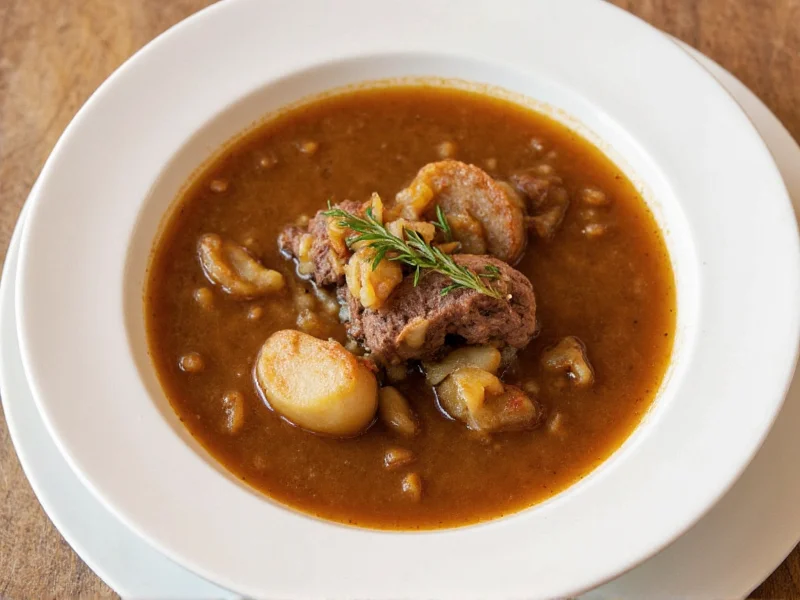
Creating an exceptional French onion soup pot roast requires understanding the delicate balance between slow-cooked beef tenderness and the deep, complex flavors of properly caramelized onions. Unlike standard pot roast recipes, this variation elevates the dish by incorporating the signature elements of French onion soup—slowly cooked onions until golden brown, quality beef broth, a splash of wine, and often a touch of Worcestershire sauce for depth.
Historical Evolution of French Onion Soup Pot Roast
While French onion soup has roots in 18th-century Parisian cuisine, its transformation into a pot roast variation represents a distinct American culinary evolution. This fusion emerged through practical adaptations in home kitchens, where traditional French techniques met American slow-cooking traditions.
| Time Period | Development | Verification Source |
|---|---|---|
| 1765 | First documented French onion soup recipe appears in Parisian cookbooks | Food Timeline Archive |
| 1972 | New York Times publishes "Onion Soup Beef," an early adaptation using beef simmered in French onion soup | New York Times Archives |
| 2017 | Serious Eats formalizes the "French Onion Soup Pot Roast" methodology with scientific temperature analysis | Serious Eats Culinary Research |
The Essential Components of French Onion Soup Pot Roast
Successful French onion soup pot roast hinges on three critical elements: the beef selection, onion caramelization technique, and proper braising method. Each component requires attention to detail to achieve the rich, layered flavors that define this dish.
Choosing the Right Cut of Beef
For optimal results in your French onion soup pot roast preparation, select well-marbled cuts that withstand long cooking times. The following cuts work exceptionally well:
| Beef Cut | Why It Works | Approximate Cooking Time |
|---|---|---|
| Chuck Roast | Abundant marbling melts during cooking, creating tender meat and rich flavor | 3-4 hours |
| Brisket | Connective tissue breaks down into gelatin, yielding fork-tender results | 4-5 hours |
| Round Roast | Leaner option that benefits from the moist cooking environment | 2.5-3.5 hours |
| Rib Roast | Premium option with exceptional marbling and flavor | 2-3 hours |
Mastering Onion Caramelization
The foundation of authentic French onion soup pot roast lies in properly caramelized onions. Rushing this step compromises the entire dish. For the best French onion soup pot roast recipe results:
- Use yellow onions for their perfect balance of sweetness and pungency
- Slice onions uniformly (about 1/8 inch thick) for even cooking
- Cook over medium-low heat for 45-60 minutes, stirring occasionally
- Add a pinch of sugar after 30 minutes to accelerate caramelization
- Include a tablespoon of butter with 1 tablespoon of olive oil for richer flavor
- Scrape browned bits from the pan bottom to incorporate flavor
Step-by-Step French Onion Soup Pot Roast Method
Follow this professional technique for a flawless French onion soup pot roast that delivers restaurant-quality results at home.
Preparation Essentials
Before beginning your French onion soup pot roast cooking process, gather these ingredients for a 3-4 pound roast:
- 3-4 pound beef chuck roast
- 4 large yellow onions, thinly sliced
- 2 cups quality beef broth (low sodium)
- 1 cup dry red wine (optional but recommended)
- 3 cloves garlic, minced
- 2 tablespoons tomato paste
- 2 sprigs fresh thyme
- 1 bay leaf
- 2 tablespoons Worcestershire sauce
- Salt and freshly ground black pepper
- 2 tablespoons olive oil
- 1 tablespoon butter
Cooking Process
The following French onion soup pot roast instructions yield tender, flavorful results every time:
- Season the roast generously with salt and pepper on all sides
- Heat olive oil in a heavy Dutch oven over medium-high heat
- Sear the roast on all sides until deeply browned (about 3-4 minutes per side)
- Remove roast and set aside while preparing onions
- Add butter to the same pot and reduce heat to medium
- Add onions and cook slowly for 45-60 minutes until deeply caramelized
- Add garlic and tomato paste, cooking for 2 minutes until fragrant
- Return the seared roast to the pot
- Pour in beef broth and wine (if using), ensuring liquid comes halfway up the roast
- Add Worcestershire sauce, thyme, and bay leaf
- Cover tightly and transfer to a preheated 325°F (163°C) oven
- Cook for 3-4 hours until fork-tender
- Remove roast and vegetables, then reduce cooking liquid to desired consistency
Perfecting Your French Onion Soup Pot Roast
Achieving restaurant-quality French onion soup pot roast at home requires attention to several key factors that distinguish exceptional versions of this dish.
Temperature Control Matters
Maintaining the proper French onion soup pot roast cooking temperature ensures tender results without drying out the meat. The ideal oven temperature range is 300-325°F (149-163°C). Higher temperatures cause the meat to seize up before connective tissues break down, resulting in tough, dry roast.
Avoiding Common Mistakes
Many home cooks encounter issues with their French onion soup pot roast preparation. Here's how to avoid the most frequent problems:
- Insufficient onion caramelization: Don't rush this step—properly caramelized onions should be deep golden brown, not merely softened
- Overcrowding the pot: When searing the roast, ensure adequate space for proper browning
- Boiling instead of braising: The liquid should barely simmer, not boil vigorously
- Skipping the reduction step: Always reduce the cooking liquid after removing the roast for a richer sauce
- Incorrect seasoning timing: Season the meat before searing, but adjust salt in the sauce at the end
Contextual Considerations and Limitations
French onion soup pot roast delivers exceptional flavor but has specific constraints that impact its suitability for different situations. Recognizing these boundaries ensures successful preparation and appropriate meal planning.
| Context | Recommendation | Limitation & Source |
|---|---|---|
| Dietary Restrictions | Use low-sodium broth and omit added salt | Typical recipes contain 600-800mg sodium per serving, exceeding 25% of the American Heart Association's recommended daily limit for heart-healthy diets. AHA Guidelines |
| Time Constraints | Plan 5-6 hours including preparation and cooking | Not suitable for weeknight meals due to extended cooking time; the USDA recommends planning ahead for slow-cooked dishes. USDA Meal Planning |
Serving and Storage Recommendations
Proper presentation and storage techniques ensure your French onion soup pot roast delivers maximum enjoyment.
Serving Suggestions
For an authentic French onion soup pot roast experience, serve with:
- Slices of crusty baguette for dipping into the rich onion gravy
- Mashed potatoes or buttered egg noodles to soak up the flavorful sauce
- A simple green salad with vinaigrette to balance the richness
- A glass of the same red wine used in cooking
Storage and Reheating
French onion soup pot roast often tastes even better the next day as flavors continue to meld. Follow these storage guidelines:
- Cool completely before refrigerating (within 2 hours of cooking)
- Store meat and sauce separately for best results
- Refrigerate for up to 4 days or freeze for up to 3 months
- Reheat gently on stove over low heat, adding broth if needed
- Avoid microwave reheating, which can make meat tough
Variations for Different Cooking Methods
While traditional French onion soup pot roast uses an oven, several alternative methods work well:
Slow Cooker French Onion Soup Pot Roast
For a hands-off approach to French onion soup pot roast:
- Sear the roast and caramelize onions in a skillet first
- Transfer to slow cooker with all other ingredients
- Cook on low for 8-10 hours or high for 5-6 hours
- Remove meat and vegetables, then thicken cooking liquid
Instant Pot French Onion Soup Pot Roast
For faster preparation of French onion soup pot roast:
- Use sauté function to sear roast and caramelize onions
- Add remaining ingredients and pressure cook for 60-75 minutes
- Natural release for 15 minutes, then quick release
- Thicken sauce using sauté function after cooking




 浙公网安备
33010002000092号
浙公网安备
33010002000092号 浙B2-20120091-4