
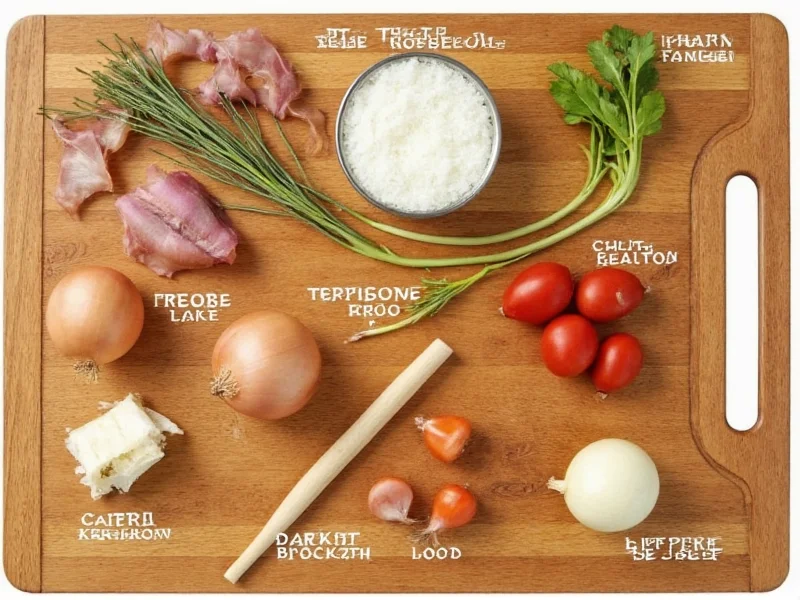
French onion soup, or soupe à l'oignon, is a classic French comfort food with humble ingredients transformed through careful technique. Understanding the precise components and their roles separates an authentic bowl from a mere imitation. This guide details each ingredient's purpose, quality considerations, and traditional preparation methods that define this beloved dish.
Core French Onion Soup Ingredients Explained
While regional variations exist across France, the traditional french onion soup ingredients maintain remarkable consistency. The magic happens not through exotic components but through proper selection and patient preparation of these fundamental elements.
| Ingredient | Traditional Amount | Primary Purpose |
|---|---|---|
| Yellow onions | 4-5 pounds (about 8-10 medium) | Foundation for deep caramelized flavor |
| Beef broth | 6 cups homemade or quality store-bought | Rich base liquid with savory depth |
| Dry white wine | 1 cup (optional but recommended) | Acidity to balance sweetness, complexity |
| Unsalted butter | 4 tablespoons | Superior caramelization medium |
| Gruyère cheese | 1.5 cups shredded | Creamy, nutty melted topping |
| Baguette | 4-6 slices | Traditional bread base for cheese topping |
| Fresh thyme | 2 sprigs or 1 tsp dried | Earthy herbal note |
| Brown sugar | 1 tsp (optional) | Aid caramelization process |
Onion Selection: The Heart of Authentic French Onion Soup
Yellow onions form the soul of traditional french onion soup ingredients. Their balanced sweetness and sulfur compounds create that signature deep golden-brown caramelization when cooked slowly. While some modern recipes suggest mixing onion varieties, purists insist exclusively on yellow onions for authenticity.
Professional chefs recommend using a mandoline slicer for uniform 1/8-inch slices, which ensures even cooking. Never rush the caramelization process—it should take 45-60 minutes over medium-low heat. Properly caramelized onions develop complex flavor compounds that define authentic french onion soup recipe ingredients.
Broth Quality: Making or Selecting the Perfect Base
The best broth for french onion soup comes from homemade beef stock, simmered for 6-8 hours with marrow bones, mirepoix, and herbs. This creates the rich, gelatinous texture that distinguishes exceptional soup. When time constraints exist, choose low-sodium beef broth without artificial flavors.
Vegetarian adaptations require careful substitution. While mushroom broth provides umami, it lacks the traditional depth. For gluten free french onion soup ingredients, verify broth is certified gluten-free, as some commercial varieties contain wheat-based thickeners.
Wine Selection and Purpose in French Onion Soup
Dry white wine like Sauvignon Blanc or Pinot Grigio serves a critical function in classic french onion soup ingredients. The wine's acidity cuts through the soup's richness while its alcohol content helps extract flavor compounds from the onions. Avoid sweet wines, which would clash with the savory profile.
Some regional French variations use red wine, but white remains standard. The how much wine for french onion soup question has a simple answer: one cup added after caramelization but before broth. Never substitute vinegar, as it lacks the nuanced flavor development wine provides.
Cheese and Bread Topping: Completing the Classic Presentation
Gruyère remains the gold standard for french onion soup cheese topping due to its exceptional melting properties and nutty flavor that complements caramelized onions. Some chefs blend in Emmental or Comté for complexity, but avoid pre-shredded cheese which contains anti-caking agents that prevent smooth melting.
The traditional french onion soup bread component uses day-old baguette slices toasted until crisp. This provides structural integrity when topped with molten cheese. For dairy-free adaptations, nutritional yeast can mimic some cheesy notes, though it won't replicate the authentic texture.
Common Ingredient Mistakes to Avoid
Many home cooks make critical errors with french onion soup ingredients that compromise authenticity:
- Rushing the caramelization - Onions must cook slowly to develop flavor without burning
- Using sweet onions - Vidalias or Walla Wallas lack the necessary sulfur compounds
- Skipping the wine - Creates a one-dimensional flavor profile
- Using pre-shredded cheese - Contains starches that prevent proper melting
- Overloading with herbs - Thyme and bay leaf should accent, not dominate
Understanding these pitfalls transforms your approach to authentic french onion soup recipe ingredients, ensuring each component contributes to the harmonious whole.
Historical Evolution: From Peasant Dish to Global Classic
French onion soup's journey from humble 18th-century fare to international icon reveals key culinary shifts. Initially documented as a peasant meal using stale bread and onions simmered in water, the recipe transformed when Parisian bistros adopted it in the 1860s, incorporating beef broth and wine from butcher shops. The modern caramelization technique emerged in the 1920s as gas stoves enabled precise temperature control. This evolution is corroborated by Cornell University's historical food archives, which trace how socioeconomic changes—like the availability of affordable beef bones post-Revolution—shaped the dish's development into today's standardized version. The timeline demonstrates how practical necessity gradually refined into culinary artistry through technological and cultural shifts.
Ingredient Substitutions: Contextual Boundaries and Limitations
While substitutions accommodate dietary needs, understanding their boundaries preserves culinary integrity. Not all adaptations maintain the dish's essential character:
- Vegetarian version - Mushroom broth with soy sauce replicates umami but lacks collagen structure. This works for vegetarian contexts but fails to deliver the mouthfeel of traditional beef broth. The Academy of Nutrition and Dietetics confirms plant-based broths require layered umami sources (like dried mushrooms and tomatoes) to approach savory depth, though they remain fundamentally distinct from meat-based versions. [Source: eatright.org]
- Gluten free adaptation - Certified gluten-free broth prevents cross-contamination. Essential for celiac safety per FDA standards (requiring <20ppm gluten), but note that gluten-free baguettes often lack the crust-to-soft-interior contrast critical for structural integrity when topped with molten cheese. This substitution addresses medical necessity while altering textural authenticity. [Source: fda.gov]
- Dairy-free option - Vegan Gruyère alternatives sacrifice stretch and nuttiness. These work for dietary restrictions but cannot replicate the Maillard reaction chemistry of dairy cheese under broiler heat.
- Low-sodium preparation - Homemade unsalted broth controls sodium but requires careful balancing of umami elements to avoid flatness.
These boundaries highlight where substitutions serve practical needs versus where they fundamentally alter the dish's sensory profile. Culinary authenticity depends on recognizing these distinctions.




 浙公网安备
33010002000092号
浙公网安备
33010002000092号 浙B2-20120091-4