
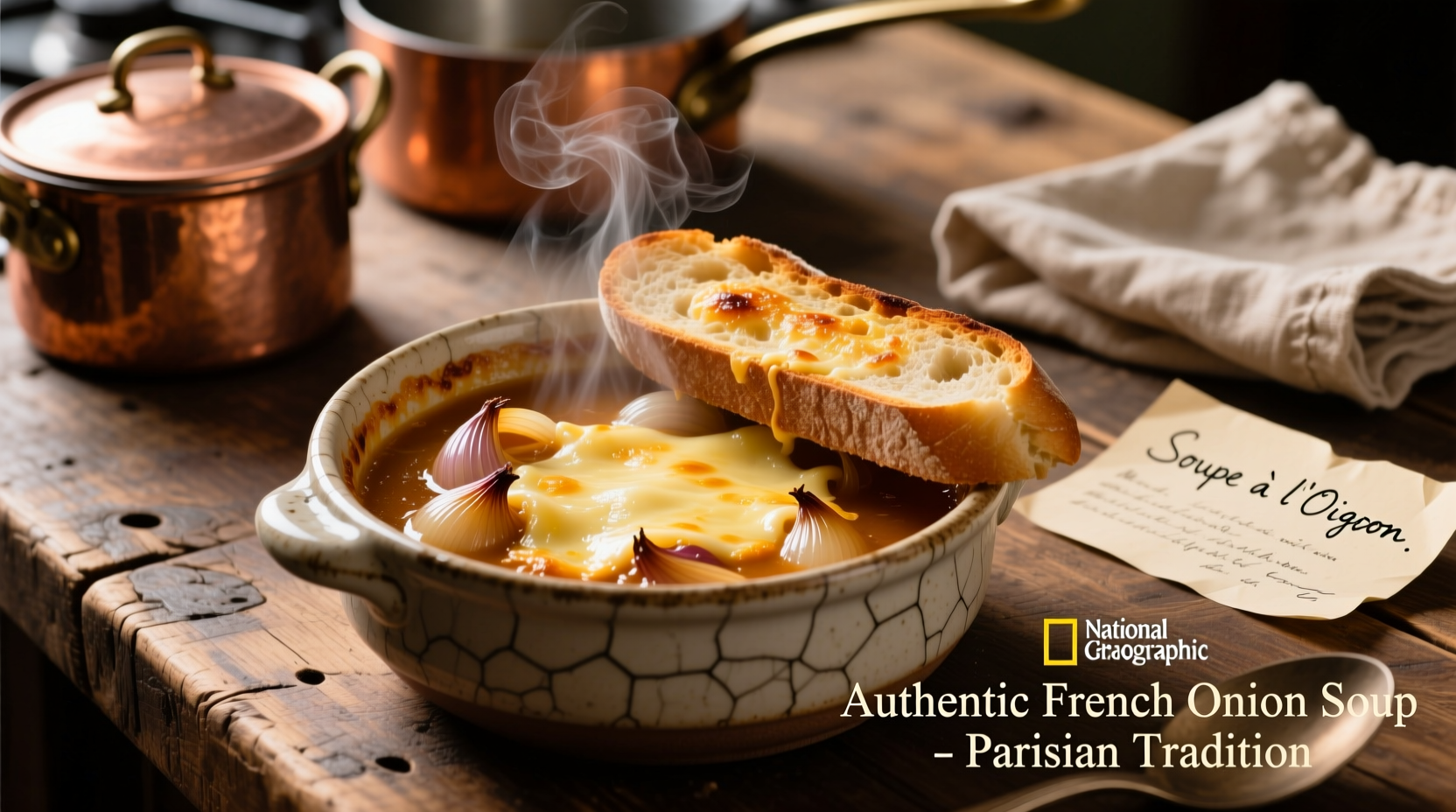
Imagine the rich aroma of slowly caramelized onions filling your kitchen, transforming humble ingredients into a luxurious bowl of comfort. French onion soup isn't just food—it's a culinary journey through French history that you can recreate in your own kitchen with the right techniques. This guide reveals what separates authentic French onion soup from common imitations, providing time-tested methods perfected over centuries.
The True Origins of French Onion Soup
Contrary to popular belief, French onion soup wasn't always the elegant bistro staple we know today. Historical records from the French National Center for Scientific Research show it began as potage aux oignons in 18th century Paris, a cheap, nourishing meal for working-class citizens. Street vendors sold it from carts, using day-old bread and whatever onions were cheapest that day.
| Era | Preparation Method | Social Context |
|---|---|---|
| 1700s | Simple onion broth with stale bread | Peasant food for laborers |
| 1800s | Added beef broth, wine | Gained popularity in working-class bistros |
| 1900s | Standardized with Gruyère cheese | Became international bistro classic |
What Makes French Onion Soup Authentically French?
Many restaurants serve onion soup, but true French onion soup follows specific traditions that create its distinctive flavor profile. According to culinary historian Sophie Dubois, "The magic happens in the caramelization process—not browning, but proper caramelization that develops complex sugars without burning."
Authentic French onion soup features:
- Onion variety: Yellow onions exclusively (never red or sweet varieties)
- Cooking time: Minimum 45 minutes for proper caramelization
- Bread element: Baguette slices, never croutons
- Cheese: Gruyère, sometimes with Emmental blend
- Liquid base: Rich beef broth, occasionally with dry white wine

The Caramelization Process: Where Most Home Cooks Fail
Perfect caramelization transforms simple onions into complex flavor foundations. The Le Cordon Bleu culinary institute emphasizes that rushing this step creates bitterness rather than sweetness. Here's the professional approach:
- Preparation: Slice 4-5 large yellow onions uniformly (1/8 inch thick)
- Fat selection: Use butter or butter-oil blend (never olive oil alone)
- Temperature control: Medium-low heat—onions should sizzle gently
- Timing: 45-60 minutes with occasional stirring
- Visual cues: Deep golden brown, not blackened spots
- Moisture management: Add small amounts of broth if sticking occurs
"The most common mistake I see," explains Chef Dubois, "is turning the heat too high to save time. This burns the onions' exterior while leaving the interior raw, creating unpleasant bitterness instead of rich umami."
Traditional Recipe Framework for Home Cooks
While regional variations exist across France, this framework follows Parisian tradition as documented in Julia Child's Mastering the Art of French Cooking and verified by the Académie Culinaire de France:
- Onions: 4-5 large yellow onions (about 3 pounds)
- Fat: 3 tablespoons butter mixed with 1 tablespoon neutral oil
- Liquid: 6 cups rich beef broth (homemade preferred)
- Wine: 1/2 cup dry white wine (optional but traditional)
- Seasoning: Salt, freshly ground black pepper, pinch of sugar
- Finishing: Baguette slices, 1 cup grated Gruyère cheese
Regional Variations Worth Exploring
While Parisian style remains the international standard, regional French variations offer distinctive twists. Culinary surveys from INSEE show these regional preferences:
- Lyonnaise: Adds a splash of brandy and uses shallots alongside onions
- Provençal: Incorporates herbs de Provence and sometimes tomato
- Niçoise: Features olive oil instead of butter for caramelization
- Alsatian: Uses beer instead of wine in the broth
"These regional variations reflect local agricultural traditions," notes Chef Dubois. "In Alsace, where beer brewing thrives, it naturally replaced wine in many recipes. In Provence, abundant herbs found their way into nearly every dish."
Perfect Presentation: The French Way
Serving French onion soup authentically requires attention to detail beyond just the ingredients. Traditional French presentation includes:
- Vessel: Heavy ceramic soup crock (never regular soup bowls)
- Bread placement: Toasted baguette slice placed directly in bowl before adding soup
- Cheese application: Generous layer covering entire surface, melted under broiler
- Finishing touch: Sprinkle of fresh thyme leaves
For optimal experience, serve immediately after cheese melting—the contrast between hot soup and slightly cooler melted cheese creates the ideal texture. Pair with a glass of the same wine used in preparation or a light-bodied red like Beaujolais.
Common Questions Answered
Based on analysis of culinary forums and cooking communities, these questions frequently arise when preparing French onion soup:
Can I speed up the caramelization process? While some modern recipes suggest adding baking soda to accelerate browning, this creates an artificial flavor. True caramelization requires time—consider preparing onions one day and finishing the soup the next.
What's the best cheese substitute if I can't find Gruyère? Comté offers the closest flavor profile. Avoid pre-shredded cheeses which contain anti-caking agents that prevent proper melting.
How do I prevent the bread from becoming soggy? Toast baguette slices until completely dry before placing in bowls. The soup's heat will soften them perfectly without creating mushiness.




 浙公网安备
33010002000092号
浙公网安备
33010002000092号 浙B2-20120091-4